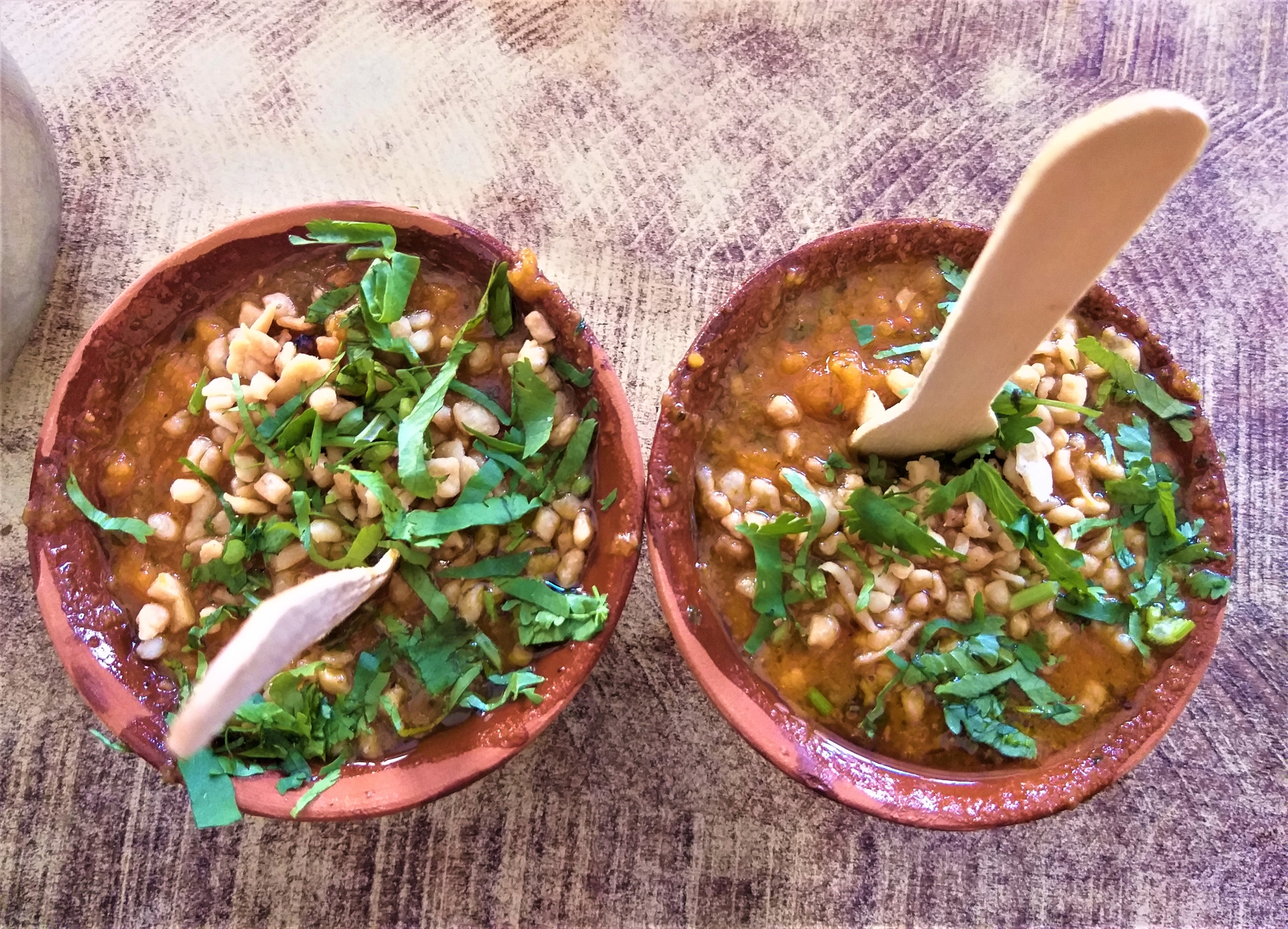
In the narrow, lively streets of Varanasi, where prayers mingle with incense smoke and the murmur of the Ganges marks the rhythm of the day, another scent defines the city’s sensory and cultural landscape: that of tamatar chaat. Served steaming in small clay bowls —the humble kulhad— this modest street food has become a gastronomic emblem of northern India’s most emblematic city. Its story, however, speaks not only of flavor but of adaptation, coexistence, and popular traditions that carry depth without solemnity.
A modern origin in an ancient city
Tamatar chaat—literally “tomato chaat”—was born in Varanasi, a city known both for its riverfront ghats and its unceasing urban pulse. In the 1940s, a young street vendor named Deena Nath Kesari began selling this preparation from a small cart in Luxa Bazaar. His recipe combined cooked tomatoes and potatoes with an intricate balance of sweetness, acidity, and spice. The result quickly became a favorite among locals and visitors alike.
Today, his legacy continues through Deena Chaat Bhandar, still operated by his descendants and regarded as the benchmark for this specialty. While the broader concept of chaat dates back to the Mughal period of the 17th century CE—when court physicians advised adding spices to water and food for health reasons—the tomato-based version is a much later creation. It reflects how urban Indian cuisine evolves through available ingredients and community inventiveness, shaping dishes that are at once local and contemporary.
Chaat: The Northern Indian street ritual
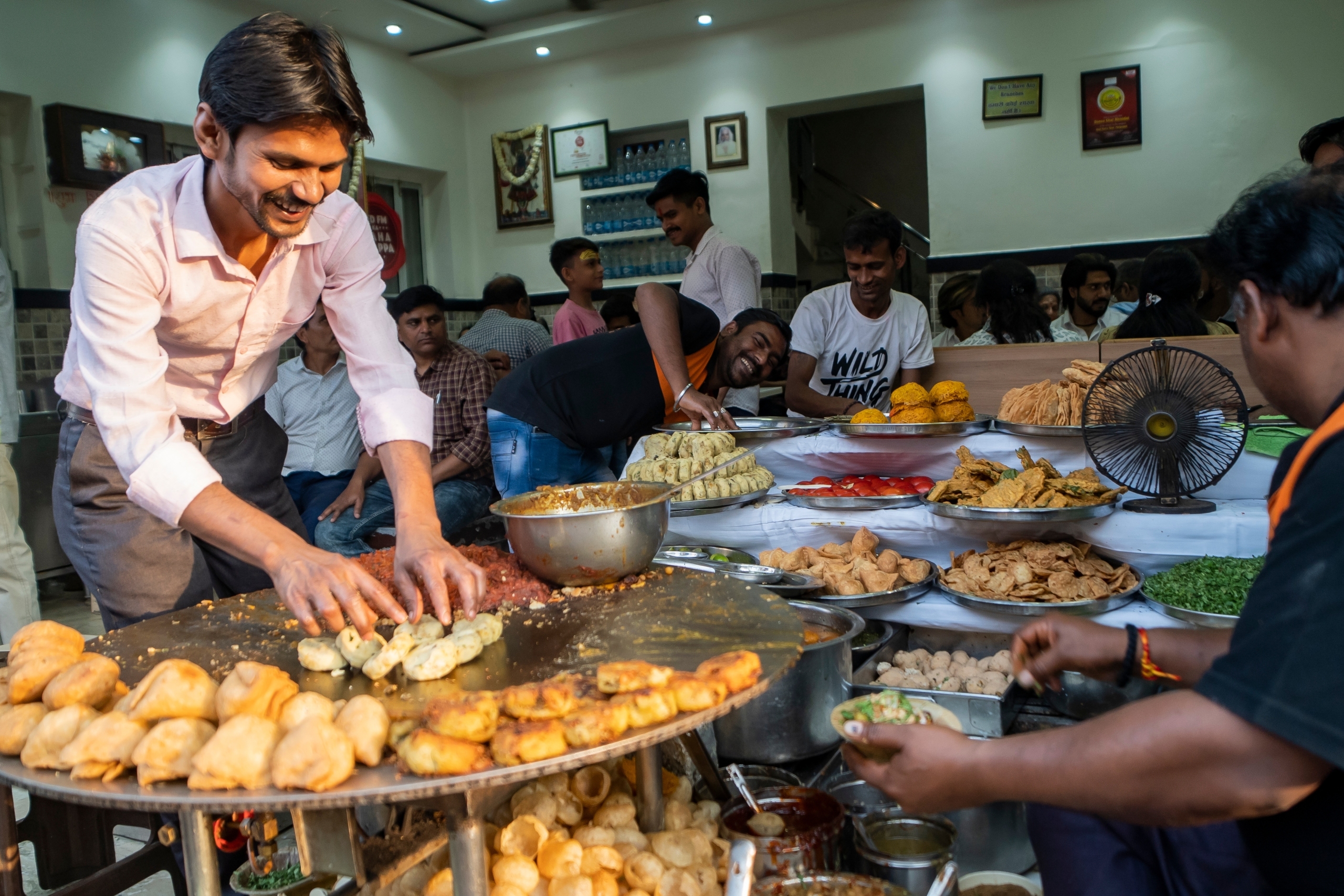
Across northern India, chaat represents a culinary institution. The term encompasses a wide range of savory snacks known for their chatpata flavor profile —a dynamic mix of sweet, tangy, salty, and spicy notes. Typically enjoyed standing at roadside stalls, chaat brings people together in the informal atmosphere of the street.
Each city has developed its own variation—Delhi, Lucknow, Agra—but Varanasi’s tomato-centered version stands out for its warm, slightly smoky tone, well suited to the city’s cool evenings by the river.
A daily custom
Tamatar chaat is not eaten at breakfast or as a main course. It belongs to the late afternoon, a time when work and religious activity ease into leisure. After witnessing the Ganga Aarti ceremony, many pilgrims and visitors walk toward the stalls of Chowk or Dashashwamedh Ghat to savor the dish.
The act itself has the rhythm of a small ritual: approaching the cart, watching the vendor stir the steaming mixture, receiving the clay bowl, and tasting a spoonful of history and spice. Serving it in kulhad bowls adds not only authenticity but also continuity with sustainable, traditional practices in which earth and fire remain central materials. Its low cost—traditionally just a few rupees—makes it accessible to everyone: students, families, traders, and travelers.
Simplicity and respect
Though tamatar chaat is not tied to formal ritual use, it holds a distinctive place in Varanasi’s devotional landscape. Its recipe aligns with sattvic dietary principles—those that avoid garlic and onion, ingredients considered too stimulating in some spiritual contexts. Instead, cooks use hing (asafoetida) and ghee (clarified butter), which bring aroma and depth while maintaining dietary purity.
This composition allows it to be consumed even during fasting periods such as Navaratri, when many observant Hindus restrict their diets to sattvic foods. A simple adjustment—substituting rock salt for regular salt—makes it acceptable within those boundaries. Thus, while not a ritual offering (prasad), the dish illustrates how street food can coexist with devotional customs without adopting their formality.
From street stall to gourmet menu
For decades, this dish remained a local secret. In recent years, however, its reputation has expanded beyond Uttar Pradesh. Restaurants in Delhi and Mumbai—and even high-end chefs—have attempted to recreate or reinterpret it. One notable example is The Bombay Canteen, which introduced a modern version featuring burrata and tamarind-infused tomato, translating the essence of tamatar chaat into a contemporary idiom.
The founding family’s stall has attracted culinary figures from across India, and food writers now list tamatar chaat among the must-try experiences of Indian street cuisine. What began as an inventive response to local tastes has become a recognizable part of India’s gastronomic identity.
Tasting a city
To eat tamatar chaat in Varanasi is to participate in the city’s everyday life. It invites pause amid the noise of traffic, bells, and prayer chants. The warmth of the clay bowl, the layered spice, and the fleeting community around a street cart offer a moment that captures Varanasi’s character—direct, convivial, and grounded in shared experience.
Tamatar chaat does not rely on antiquity or ritual status for meaning. Its significance lies in the simplicity it represents: a dish that connects people across backgrounds, honors culinary restraint, and offers, within a single bite, a vivid sense of place.
AI Transparency Notice
PilgriMaps uses artificial intelligence tools to assist in the research, drafting and translation of editorial content. All AI-assisted content is reviewed, edited and verified by our editorial team before publication. We contrast information against primary sources, specialist literature and on-the-ground knowledge to ensure accuracy, cultural sensitivity and editorial integrity.
AI is one tool among many in our workflow. The judgement, curation and responsibility for everything published on this platform remain entirely human.
Viator Media S.L. — in compliance with the EU Artificial Intelligence Act (Regulation EU 2024/1689).
This post is also available in: