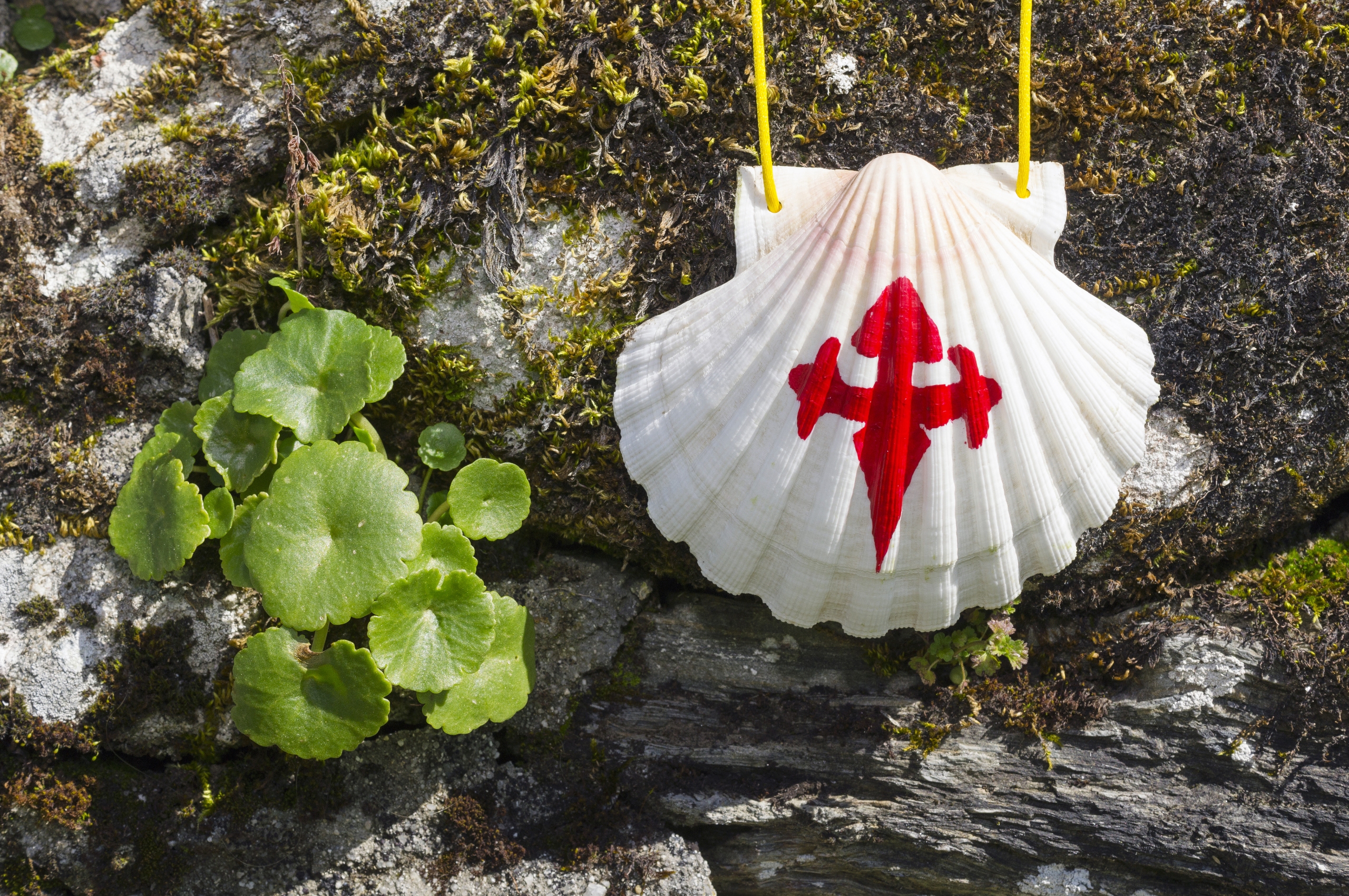
The beginning of a new year often prompts reassessment: habits, priorities, direction. To frame this moment of reflection, it can be useful to look backward rather than forward—to the routines of medieval pilgrims. These were individuals who walked hundreds, sometimes thousands, of kilometers toward destinations such as Santiago de Compostela, Jerusalem, or Rome, traveling under conditions marked by uncertainty, limited resources, and physical strain.
Over time, these travelers developed morning practices that were not merely devotional acts but functional strategies for preparing body and mind for the day ahead. Read today through the lenses of neuroscience and mindfulness studies, many of these routines reveal a striking relevance.
The practices described here are a contemporary reinterpretation inspired by documented medieval monastic schedules (such as the Rule traditionally attributed to Benedict of Nursia) and by historically plausible pilgrim habits reconstructed from travel accounts and social context. This is not a philological exercise, but a dialogue between past and present.
Rather than unrealistic resolutions or exhaustive to-do lists, the following six ancestral rituals—adapted to contemporary life—offer a way to transform waking up into a deliberate act of awareness.
1. Gradual Awakening: From Darkness to Light
Then: Pilgrims often woke to the sound of monastic bells, rising in low light and allowing the body to emerge slowly from sleep.
Now: Avoid reaching immediately for your phone. Instead, allow the first five minutes to function as a conscious transition. Remain in bed, breathe deeply, notice bodily sensations, and observe early thoughts without evaluation. If possible, use a dawn-simulating light rather than a jarring alarm. Research on circadian rhythms suggests that gradual awakenings help regulate cortisol levels and support more stable mood throughout the day.
2. Gratitude with the First Breath
Then: Before standing, pilgrims commonly articulated a brief expression of thanks for the new day, shaped by the awareness that nothing could be assumed.
Now: Regardless of personal beliefs, consider the “three gratitudes” practice. While still in bed, identify three things—simple or significant—for which you feel grateful. Examples might include physical comfort, absence of pain, or the opportunity of a new day. Gratitude practices are associated with parasympathetic activation, fostering openness rather than vigilance at the start of the day.
3. Ritual Ablution: Physical and Mental Reset
Then: Washing face and hands with cold water functioned as both hygiene and symbolic preparation for travel.
Now: Turn your morning washing or shower into a moment of focused attention. Notice water temperature, scent, and the sensation of skin waking up. Ending with 20–30 seconds of cool water on the face can stimulate the vagus nerve, increase alertness, and introduce a manageable physical challenge that supports mental resilience. This is not deprivation, but deliberate activation.

4. A Contemporary Lectio: Feeding the Mind
Then: After washing, pilgrims and monks engaged in slow, attentive reading—reading not to accumulate information, but to absorb meaning.
Now: Set aside 10–15 minutes for intentional reading before emails or social media. The text may be a sacred passage, a poem, a philosophical paragraph, or a reflective essay. Apply the classic structure: read slowly, pause on a phrase that resonates, reflect on its relevance today, then sit briefly in silence. This practice prioritizes sense-making over information intake, preparing the mind to respond rather than react.
Read not to escape yourself, but to encounter yourself through words.
5. Conscious Movement: Preparing the Body for the Day
Then: Before setting out, pilgrims performed simple stretches, recognizing the body as the vehicle of the journey.
Now: Even without a long walk ahead, the body benefits from preparation. Spend five to ten minutes in gentle, attentive movement: stretching, yoga sun salutations, qigong, or slow joint rotations. The emphasis is not intensity, but presence—feeling muscles and joints engage. Studies suggest that combining movement with awareness integrates body and mind more effectively than mechanical exercise alone.
6. Setting the Day’s Intention: Choosing Direction
Then: Before departure, pilgrims oriented themselves, visualized the next stage, and framed the day with a specific intention.
Now: Before entering the day’s tasks, take three minutes to define an intention—not a task list, but a quality you wish to embody. Examples include patience, attentiveness, or lightness. Writing it down can help. Known in some traditions as sankalpa, this practice functions as a compass, offering orientation when the day becomes fragmented.
Shaping Your Own Practice
These six rituals are not meant to be adopted all at once or followed rigidly. Medieval pilgrims offer a lesson beyond discipline: ritual as a form of care toward oneself and one’s environment.
Begin with one or two practices that resonate. Try them consistently for several weeks—the approximate time required for the brain to begin forming new neural patterns. Observe what shifts: sleep quality, stress tolerance, or a subtle sense of inhabiting your day more fully.
The value of morning ritual lies not in precision but in conscious repetition. Each morning becomes a small journey—from sleep to wakefulness, from automatism to attention. As historical pilgrims understood, transformation emerges less from the destination than from the quality of the step.
The journey begins each morning. Each day offers a choice between moving through it unconsciously or walking it with intention.
In 2026, before accelerating toward objectives, consider slowing down at the threshold of waking. Medieval pilgrims covered vast distances across landscapes, yet they recognized that the most consequential journey unfolded internally. Its first step occurred within the first moments after opening one’s eyes.
AI Transparency Notice
PilgriMaps uses artificial intelligence tools to assist in the research, drafting and translation of editorial content. All AI-assisted content is reviewed, edited and verified by our editorial team before publication. We contrast information against primary sources, specialist literature and on-the-ground knowledge to ensure accuracy, cultural sensitivity and editorial integrity.
AI is one tool among many in our workflow. The judgement, curation and responsibility for everything published on this platform remain entirely human.
Viator Media S.L. — in compliance with the EU Artificial Intelligence Act (Regulation EU 2024/1689).
This post is also available in: