Some streets are crossed; others are lived. San Gregorio Armeno, a narrow artery in the heart of Naples, belongs to the latter. Whether in the heat of August or the damp chill of February, the street carries a season of its own. Here, it is always December. For many locals, Naples’ winter atmosphere does not begin with Advent or with the lights of Via Toledo—it begins each morning when San Gregorio Armeno opens its shutters.
From ancient offerings to contemporary Pastori
The street’s history reaches back to Greek Neapolis, where it formed part of the early urban grid. In Roman times, a temple dedicated to Ceres, associated with fertility and agriculture, stood nearby. Worshippers offered small terracotta figurines purchased from the workshops on this same street. Remarkably, the descendants of those early artisans still work here, producing the pastori, or nativity figures, that define the neighbourhood today.
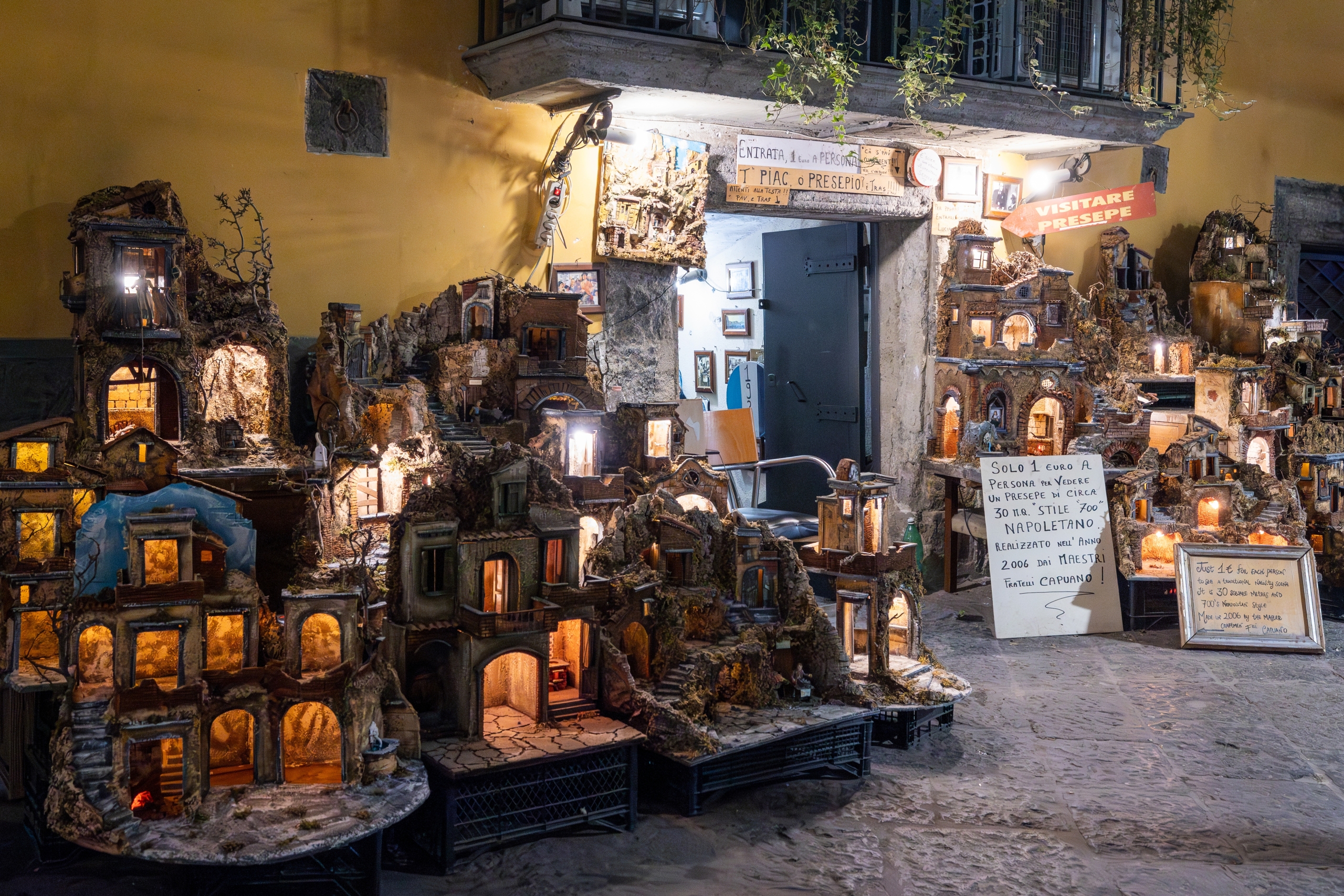
By the 10th century CE, a Byzantine monastery replaced the earlier temple. Nuns who arrived from Constantinople brought relics linked to Gregory of Armenia, giving the street its current name. Over the following centuries, the area became a hub for the creation of votive objects and small sculptural pieces commissioned by churches and noble families.
The 18th century marked a turning point. Under the influence of Charles III of Bourbon and the flourishing of the Neapolitan baroque, nativity art reached extraordinary craftsmanship: terracotta heads painted with precision, articulated bodies, and clothing made from silk, brocades, and lace. These figures soon entered palaces, convents, and European collections. From that point on, San Gregorio Armeno became synonymous with the making of winter tradition.
A living museum
The street can surprise first-time visitors with its scale. It is narrower than photographs suggest, and its rhythm is set by the flow of people. In December, visitors move almost as a single current, drawn to displays that emerge without warning.
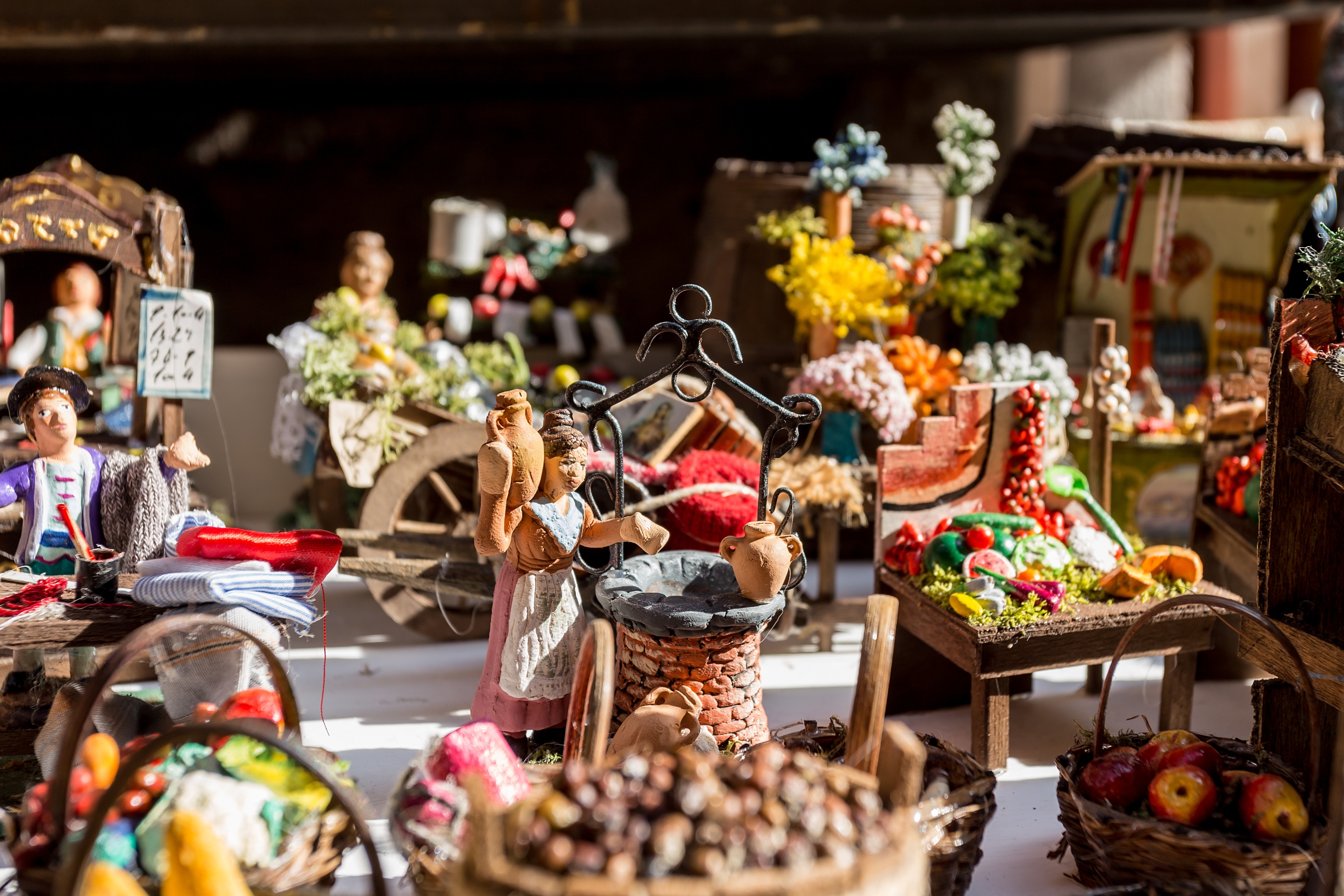
The first figurines appear in clusters: miniature shepherds carrying baskets of fruit no larger than a fingernail, vegetable sellers sculpted with such detail that their expressions seem to animate, terracotta animals, grottoes carved from cork, and table scenes abundant with tiny cheeses, fish, bread, and grapes. Eighteenth-century nobles stand alongside washerwomen bent over their work.
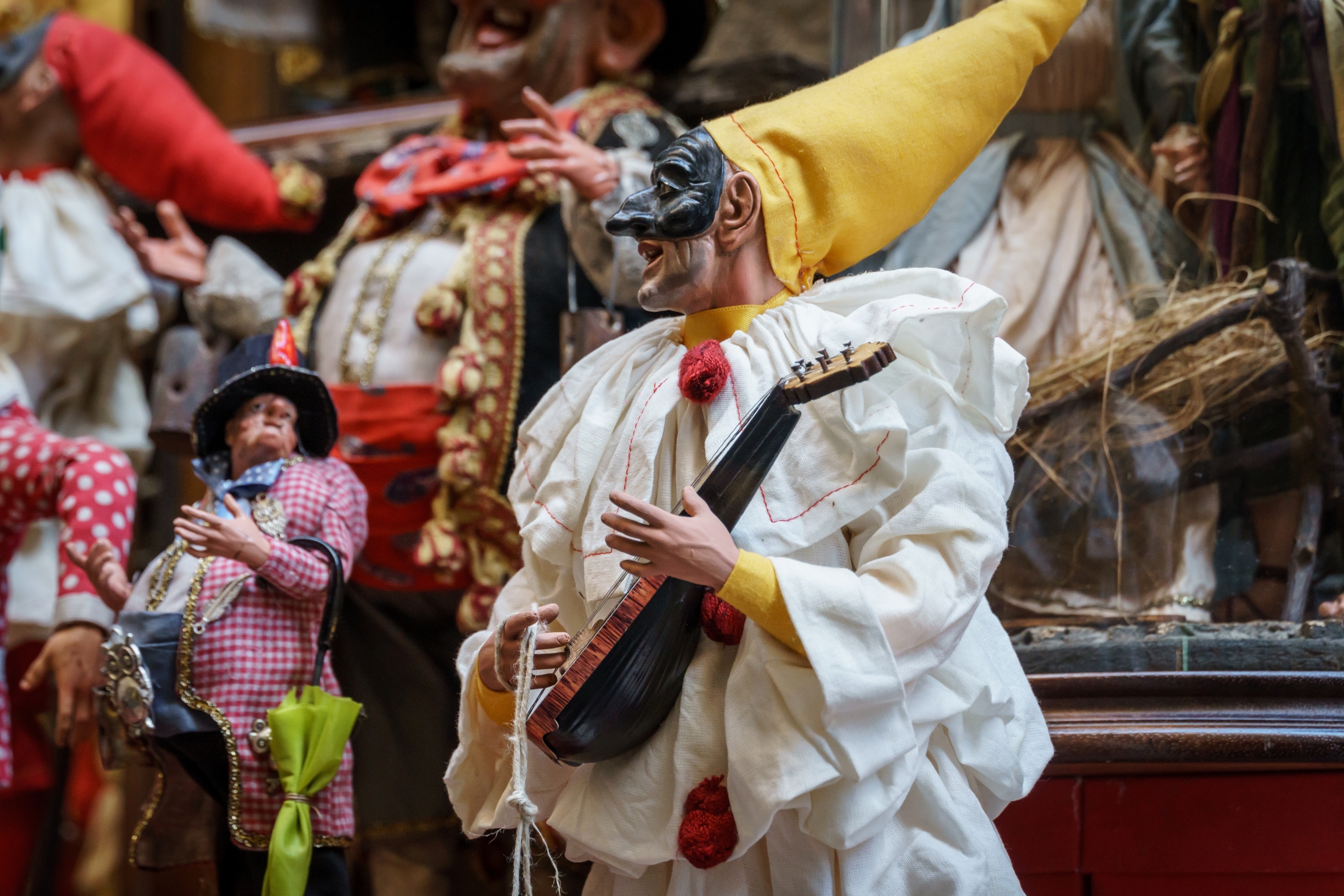
But San Gregorio Armeno is not frozen in time. Its artisans engage with the present as easily as they preserve the past. A traditional shepherd might share a shelf with a pop-culture character, a political figure, or a celebrity reinterpreted in clay. The Neapolitan sense of irony places classical figures beside Maradona, an actor beside an allegorical figure, and contemporary leaders in unexpected combinations. Pulcinella appears everywhere with a familiar, enigmatic smile.
Behind the displays lies the labour itself: unpainted heads, wire and tow bodies, stacked fabrics, tiny brushes, and modelling tools. Raw clay, steady hands, and patience define the craft.
Tradition and contemporary craft
What distinguishes San Gregorio Armeno is the authenticity of its workshops. Many have remained within the same families for generations. Wooden benches carry marks from decades of artisans shaping clay in the same place. Conversations rise quietly from behind worktables. Here, tradition is not explained; it is visible in the act of making.
How to Look – A Guide for Visitors
- Study the faces. Skilled artisans express emotion through minute details: glass eyes that catch the light, barely parted lips, hands posed with intention. Take time to look closely.
- Observe posture. Body language indicates quality—how a tavern keeper leans, how a washerwoman distributes her weight, how a fisherman holds his net. These gestures distinguish handcrafted work from mass-produced pieces.
- Examine the textiles. Silk, linen, and lace reference the aesthetics of the 18th century and reflect Naples’ layered history. Clothing is not ornament; it is context.
- Distinguish craft from industry. Handmade figures and industrial reproductions coexist. Both have their place, but craftsmanship involves time, skill, and materials shaped by hand.
- Move slowly. The street invites a different rhythm. It rewards patience, close attention, and quiet observation.

Many visitors leave with more than they intended. Taking home a small piece is part of the unspoken ritual between the street and those who wander through it.
Visiting San Gregorio Armeno
Location: In Naples’ historic centre, between Spaccanapoli and Via dei Tribunali. Best reached on foot or by public transport.
When to go: Open all year. The winter atmosphere begins in autumn. Typical hours: 9:30–19:00. Weekdays and early mornings offer fewer crowds.
Access: No ticket required. Workshops are open to the street, and some allow visitors to observe work in progress.
Tips:
– Allow time.
– Be respectful when photographing artisans at work.
– Visit nearby monasteries and churches for broader historical context.
Fragility and resilience
During the pandemic, the street fell silent. Workshops closed for weeks, and some artisans faced the possibility of ending family traditions that had survived for centuries. A few sold personal pieces from their archives to endure the shutdown. Naples feared the loss of a craft not only tied to local economy but to cultural identity.
Recovery arrived gradually. Tourism returned, cultural associations launched support programs, and workshops expanded to online sales. Local institutions emphasized the need to protect the area from generic commercial development. Efforts to include the Neapolitan nativity tradition on UNESCO’s lists of intangible cultural heritage gained renewed urgency.
Today, San Gregorio Armeno remains active. The clay, the workshops, and the hands that shape the figures continue their work with renewed purpose. The street endures as a space where history lives through craftsmanship, and where each small figure carries a fragment of Naples’ enduring relationship with time, material, and imagination.
AI Transparency Notice
PilgriMaps uses artificial intelligence tools to assist in the research, drafting and translation of editorial content. All AI-assisted content is reviewed, edited and verified by our editorial team before publication. We contrast information against primary sources, specialist literature and on-the-ground knowledge to ensure accuracy, cultural sensitivity and editorial integrity.
AI is one tool among many in our workflow. The judgement, curation and responsibility for everything published on this platform remain entirely human.
Viator Media S.L. — in compliance with the EU Artificial Intelligence Act (Regulation EU 2024/1689).
This post is also available in: