High in the central highlands of Sri Lanka, nestled between misted hills and encircled by a man-made lake, the city of Kandy stands as the island’s spiritual capital. At its heart lies the Sri Dalada Maligawa, or Temple of the Sacred Tooth Relic, a revered destination for pilgrims from across the Buddhist world. More than a shrine, the temple is a living monument to the entwined histories of religion, kingship, and identity in Sri Lanka.
Relics and Pilgrimage in the Buddhist World
The veneration of bodily relics—śarīra in Sanskrit and Pali—has been central to Buddhist devotional geography since the 5th century BCE. According to canonical accounts, following the death (or parinirvāṇa) of the historical Buddha, his cremated remains were divided among several claimants. These were eventually enshrined in stūpas, marking the beginning of a relic-centered form of pilgrimage that has spread across Asia.
Relics in Buddhist traditions often carry more than commemorative value. They are seen as continuing to embody the presence, merit, and power of the Buddha himself. Pilgrimage to such relics is therefore not simply symbolic—it offers proximity to sanctity, an encounter with the past embedded in the material.
While many sites throughout South and Southeast Asia house fragments of relics, the Tooth Relic in Kandy is unique: its significance is not only spiritual but also political. The relic became, in effect, a symbol of sovereignty.
The Tooth Relic: From India to Kandy
Historical chronicles recount that the Tooth Relic—a left upper canine of the Buddha—was smuggled out of India in the 4th century CE during a time of political upheaval, hidden in the hair of a princess from the Kalinga kingdom. It was brought to Anuradhapura, the ancient capital of Sri Lanka, where it quickly became a potent symbol of royal legitimacy. The notion developed that whoever possessed the relic had a mandate to rule the island.
Over the centuries, as capitals shifted and foreign invasions disrupted royal power, the Tooth Relic was relocated multiple times. It finally came to rest in Kandy in the late 16th century, when the city became the last stronghold of the Sinhalese monarchy. There, under the patronage of King Vimaladharmasuriya I, a temple was constructed within the royal palace complex to house the relic—a clear assertion that temporal power and spiritual authority were interlinked.
The Temple of the Tooth: Ritual and Architecture
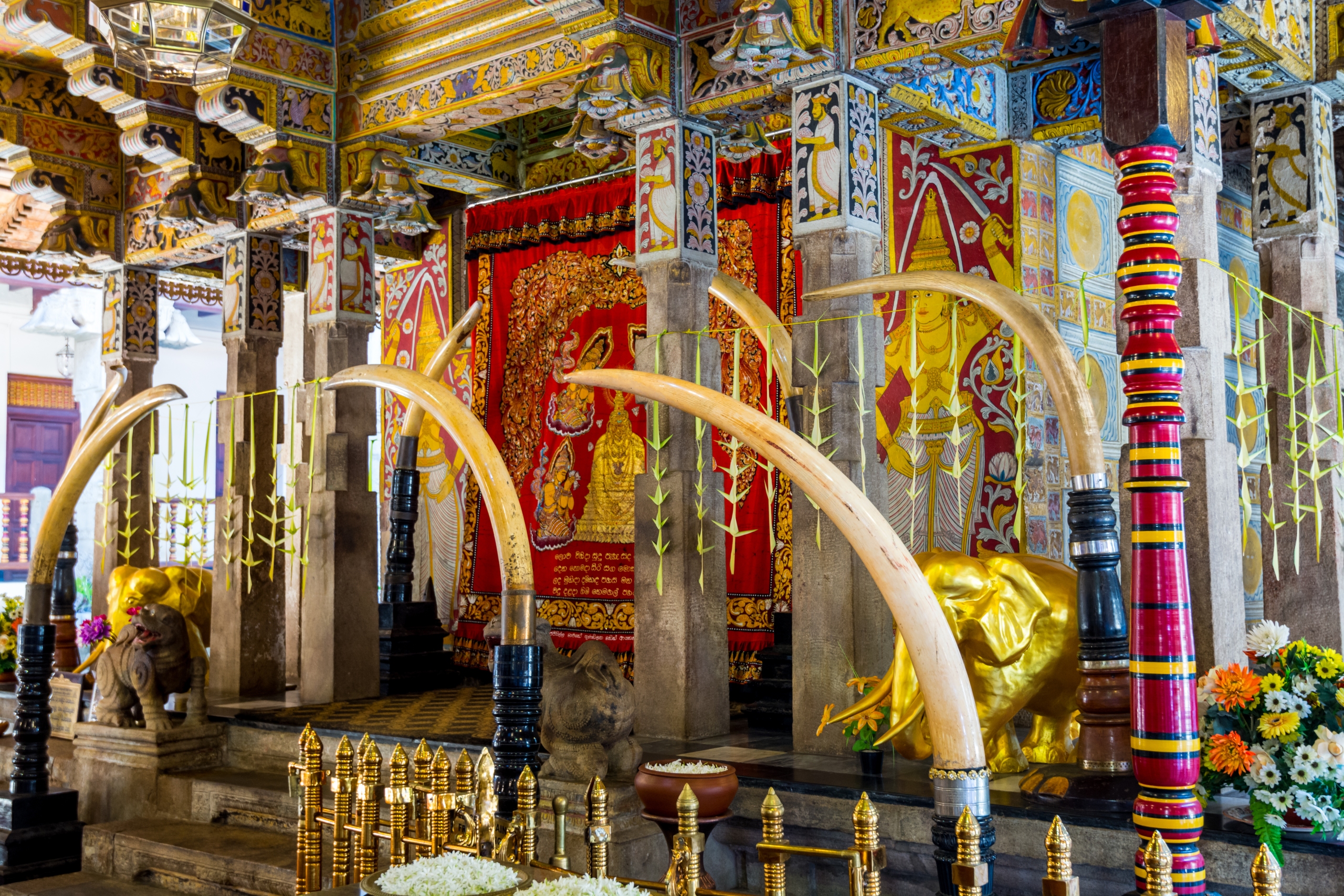
The present-day Temple of the Sacred Tooth Relic is a blend of traditional Kandyan architecture, colonial additions, and devotional structures. Its whitewashed walls, red-tiled roofs, and decorative wood carvings evoke both serenity and sovereignty. The relic itself is kept in a golden casket inside the Handun Kunama, the inner sanctum, which is not visible to the public. Instead, devotees pay homage before the doorways, often offering lotus flowers, candles, and incense.
Daily rituals (pujas) are conducted three times a day—at dawn, midday, and evening—accompanied by traditional drumming (hewisi). These ceremonies, once performed by royal appointment, are now maintained by lay custodians and monks, preserving an unbroken chain of practice.
The Esala Perahera: Pageantry and Pilgrimage
Each year, during the lunar month of Esala (July–August), Kandy becomes the stage for one of the most vibrant processions in Asia: the Esala Perahera. Originally linked to the monsoon and fertility cycles, the festival has been adapted over centuries into a grand civic ritual centered on the Tooth Relic.
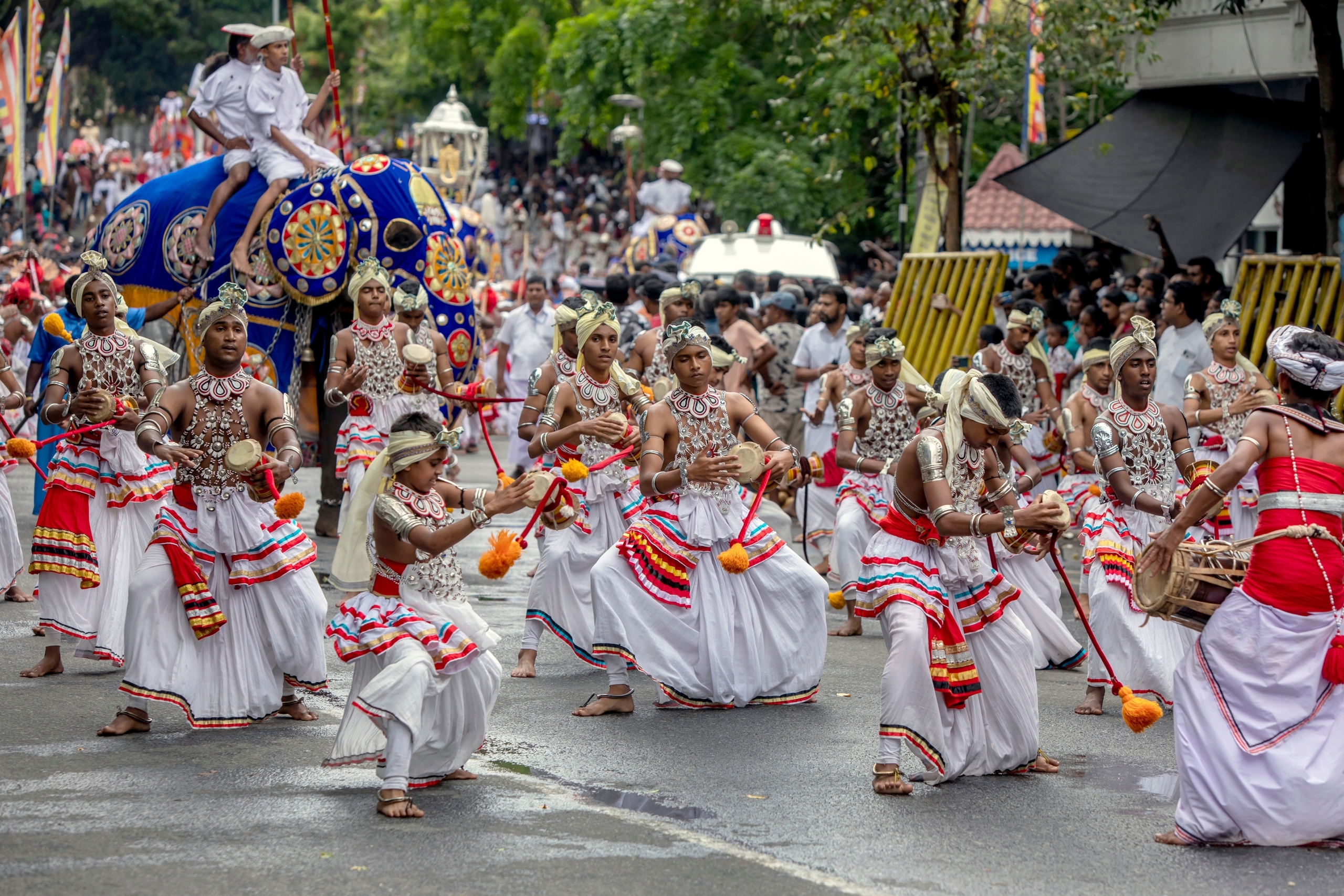
The festival unfolds over ten nights. At its height, a replica casket representing the Tooth is carried on the back of a caparisoned elephant through the streets of Kandy, accompanied by drummers, dancers, fire performers, and torchbearers. Multiple processions from other temples also join, symbolizing the incorporation of different religious and cultural groups into a unified spectacle.
For pilgrims, attending the Esala Perahera is not merely an act of celebration—it is a ritual journey into shared memory, one that fuses spectacle with sacred geography.
Navigating Kandy as a Pilgrim
Today, Kandy remains a key destination on both domestic and international pilgrimage routes. The city is accessible via road and rail from Colombo, and the Temple of the Tooth is situated adjacent to Kandy Lake, near the city center.
In addition to the temple complex, pilgrims often visit surrounding sites such as:
- Natha Devalaya: One of Kandy’s oldest shrines, with connections to bodhisattva worship.
- Udawattakele Forest Reserve: A former royal forest with hermitages and cave temples.
- Lankatilaka and Gadaladeniya Temples: Situated on the outskirts, offering panoramic views and historical depth.
Visiting during the Esala Perahera requires advance planning, as accommodations fill quickly and access to viewing points is in high demand.
Relic Veneration Today
Pilgrimage to the Tooth Relic reflects a broader pattern within Buddhist cultures: the localization of the sacred through relics, and the transformation of political centers into spiritual nodes. In Kandy, this dynamic is especially visible. The relic has outlasted the monarchy, the colonial powers, and the many regimes that followed, yet it continues to shape public life through ritual, architecture, and seasonal movement.
For the contemporary pilgrim—whether religious or culturally motivated—Kandy offers not only a site of devotion but also a space in which to reflect on how sacred objects map themselves onto landscapes and societies, across time.
AI Transparency Notice
PilgriMaps uses artificial intelligence tools to assist in the research, drafting and translation of editorial content. All AI-assisted content is reviewed, edited and verified by our editorial team before publication. We contrast information against primary sources, specialist literature and on-the-ground knowledge to ensure accuracy, cultural sensitivity and editorial integrity.
AI is one tool among many in our workflow. The judgement, curation and responsibility for everything published on this platform remain entirely human.
Viator Media S.L. — in compliance with the EU Artificial Intelligence Act (Regulation EU 2024/1689).
This post is also available in: