Between bread and dessert lies a narrow borderland where flour meets sugar and everyday food becomes celebration. In Italy’s Aosta Valley, that threshold has two names—Micooula and Mecoulin—related yet distinct, like two dialects of the same Alpine language.
First, clarity: they are not the same product. Micooula belongs to the Champorcher Valley, especially the town of Hône; Mecoulin is rooted in Cogne. In local patois, micooula means “smaller, special bread,” while mecoulin reflects the Francophone heritage of the Cogne area. Both are recognized as Traditional Agri-Food Products (PAT), a status that reflects quality and a long-standing tie to place.
The Mecoulin of Cogne
Mecoulin is a soft, enriched bread traditionally prepared with the first snows, often in the communal wood-fired ovens that once structured village life. Tasks followed established roles: women tended and renewed the sourdough culture passed across generations; men mixed and kneaded heavy doughs in deep wooden troughs; families shaped loaves while the oven crew managed the fire.
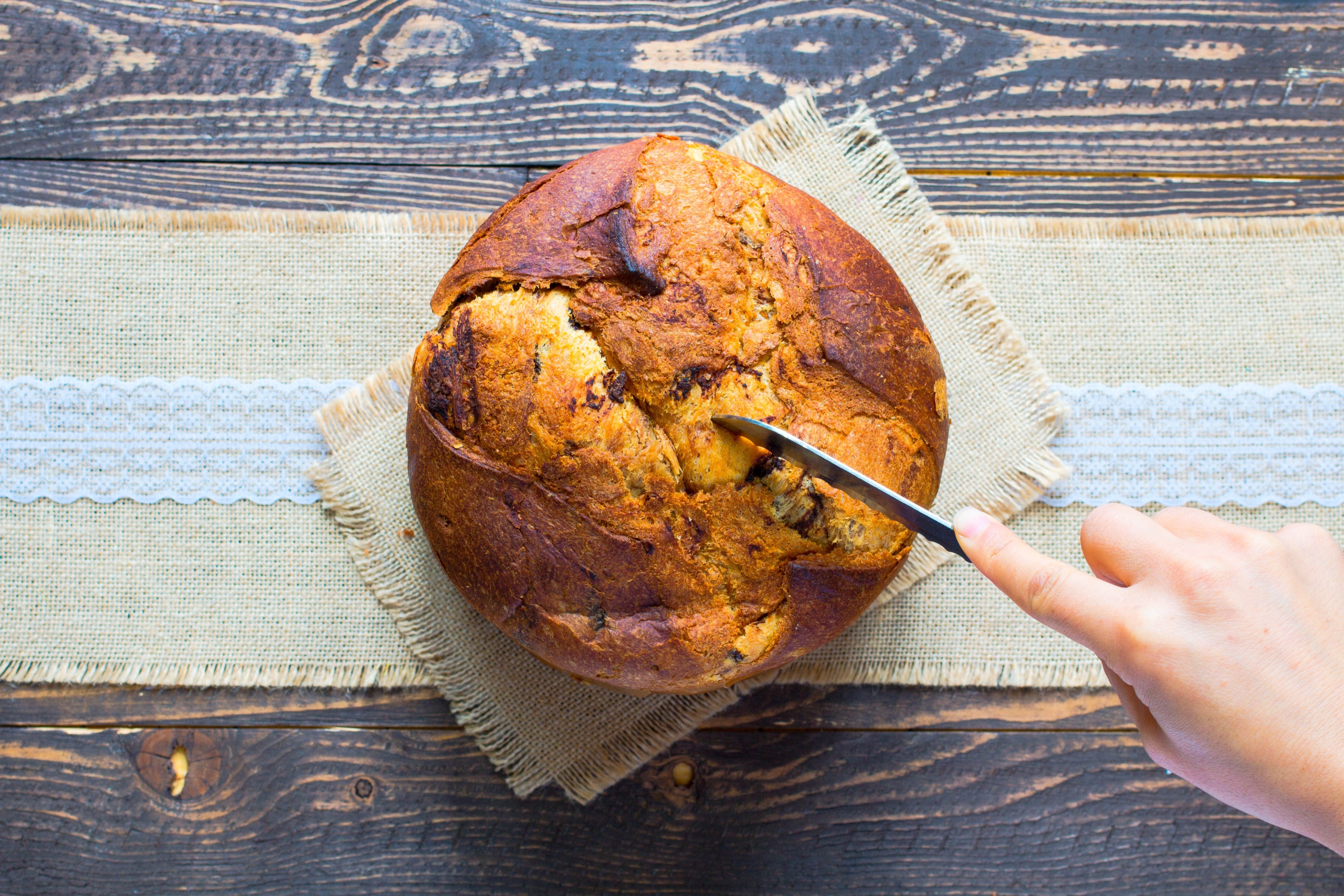
Ingredients reflect mountain availability: wheat flour, eggs, butter, milk from the high pastures, and raisins often macerated in rum. After baking, some bakers glaze the surface with honey for sheen. Fermentation is unhurried, and loaves are scored—commonly a cross—to guide the rise. The cut, said to echo surrounding peaks, gives the bread a domed, “mountain” profile.
The Micooula of Hône
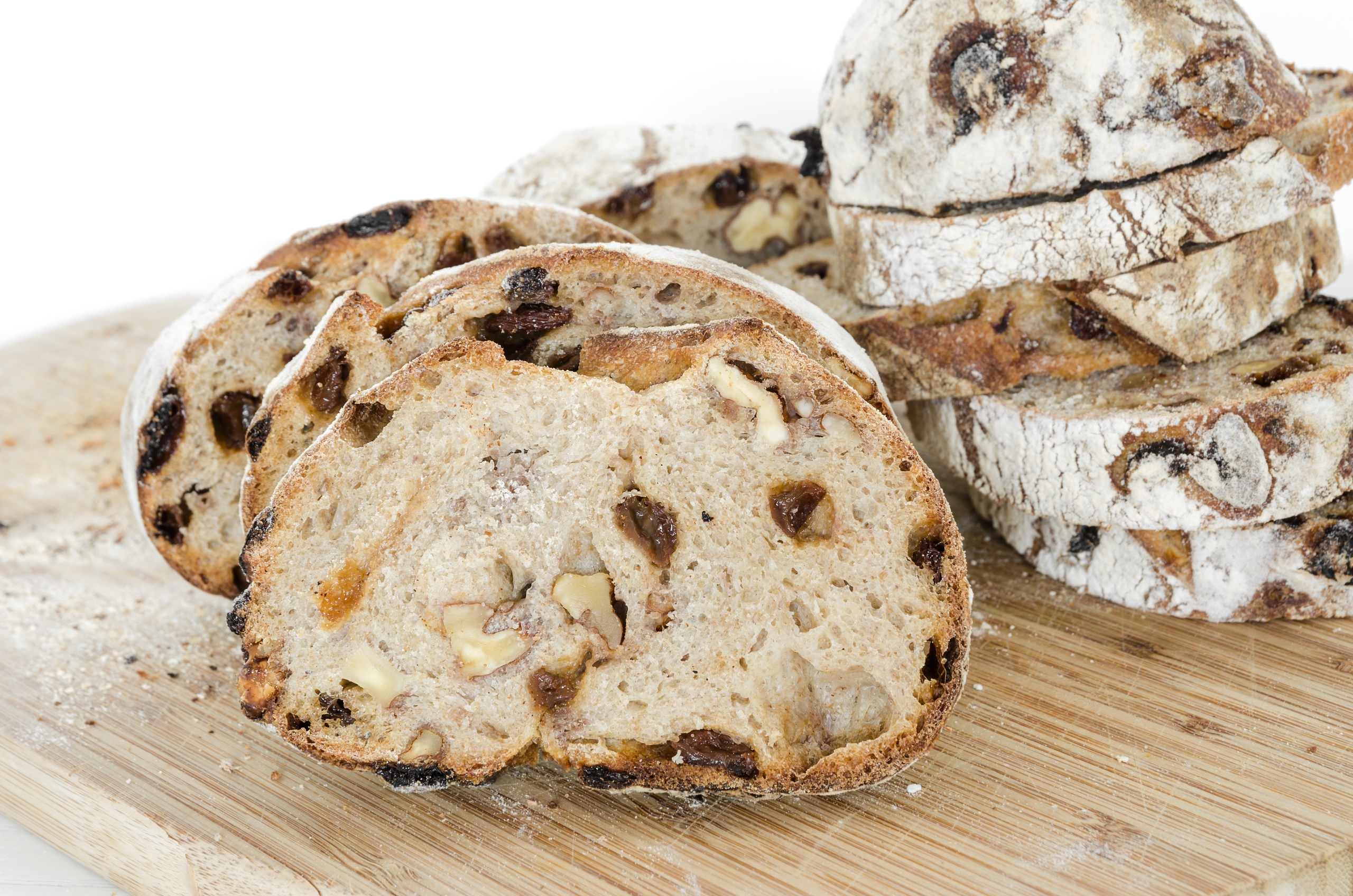
Micooula tells a more rustic story tied to resourcefulness. It combines rye and wheat flours with boiled chestnuts, raisins, dried figs, walnuts, and sometimes shards of dark chocolate. The result is compact, dark, and robust—far denser than Mecoulin.
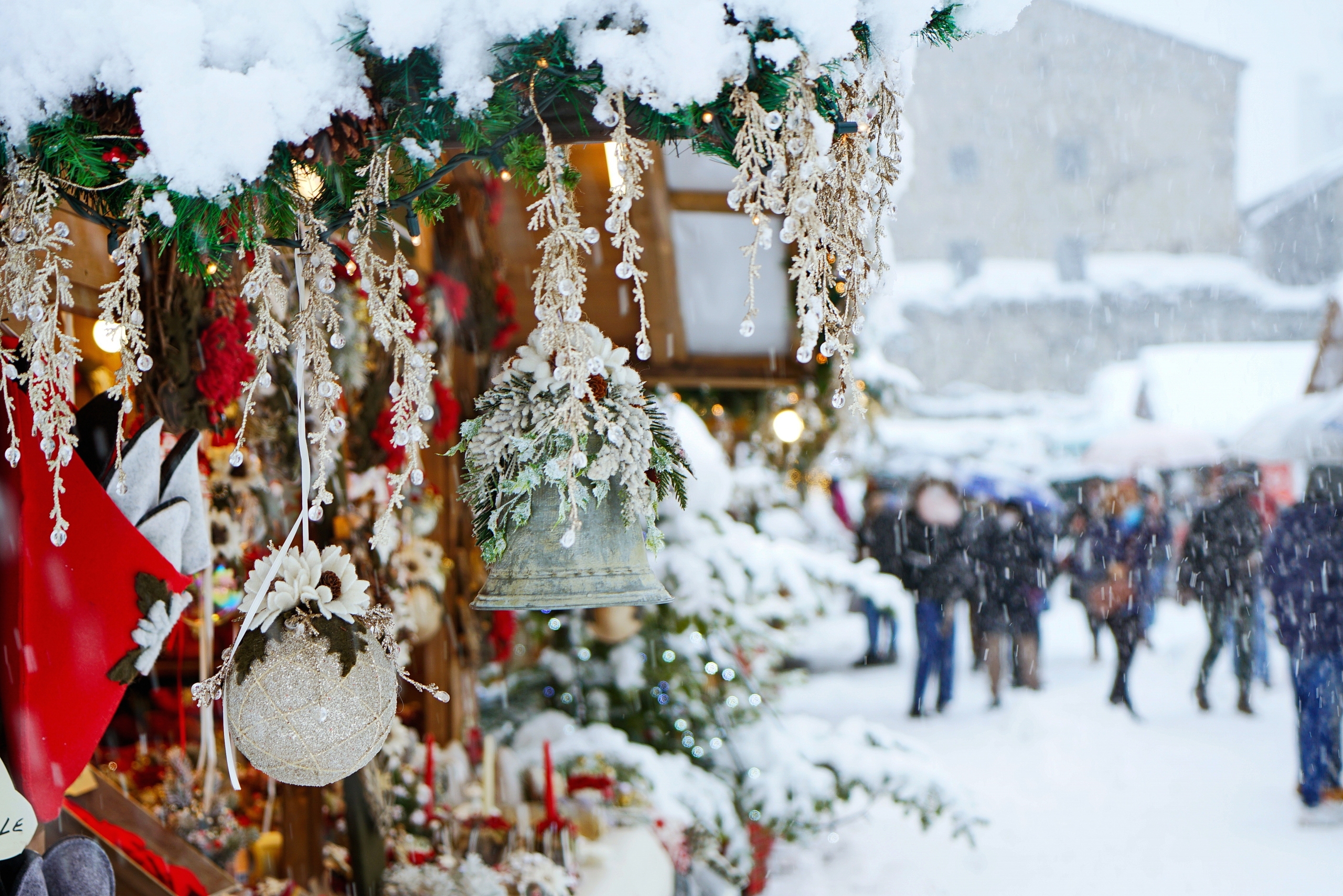
The recipe was transmitted orally; “Micooula” as a name is officially protected and reserved to Hône. Local stewardship is strong. Since 2008, the association Les Amis de la Micooula has cultivated rye and wheat, gathered and dried chestnuts, grapes, and figs, and supported the December Festa della Micooula (held around 8 December). Their work keeps farming practices and seasonal rhythms visible, not merely commemorative.
The bread calendar
Historically, both breads were linked to Christmas bakes when communal ovens fired up and villages filled with the scent of raisins and spice. Lunar phases sometimes influenced the schedule; repetition built memory.
Today, Mecoulin is available year-round in Cogne’s bakeries and often appears as a local alternative to Easter colomba. Yet families still bake with the first snows, using the few communal ovens that remain—continuity without nostalgia. Micooula maintains its December focus, anchored by Hône’s festival and by the association’s yearly cycle of cultivation and processing.
How to eat them
Mecoulin is served as a sweet bread, but it stands up to savory pairings: lightly toasted with blue cheese or pâté works well. Festival tastings in Hône often feature Micooula topped with Lardo di Arnad DOP and local chestnut honey—an assertive, site-specific combination.
In Cogne, tradition pairs Mecoulin with fiocca, hand-whipped cream historically cooled in ice caves, sometimes aromatized with grappa and dusted with dark chocolate. The contrast—warm bread, cold cream—captures the Alpine palate: simple ingredients, sharp temperature play, and a preference for textures you can feel.
Traditional recipes (Home-baking scale)
These versions reflect common practice; home ovens vary. Use quality ingredients and allow time for slow fermentation.
Mecoulin (Cogne)
Ingredients
- 500 g wheat flour
- 25 g fresh yeast
- 200 ml whole milk
- 100 g butter (soft)
- 100 g sugar
- 3 eggs
- 150 g raisins
- 50 ml rum (for soaking)
- Finely grated lemon zest
- 30 ml neutral oil
- Pinch of salt
- Glaze (50 g sugar + 50 ml water – syrup, or warm honey)
Method
Soak raisins in rum ~2 hours; drain. Crumble yeast into flour. Warm milk gently; whisk in eggs, sugar, softened butter, oil, and salt. Combine liquids with flour/yeast; mix to a soft, elastic dough. Knead in raisins and lemon zest. First rise: covered, warm place, ~2 hours. Divide into two loaves; score tops (traditionally a cross). Proof ~1 hour. Bake 180 °C (static) 45–50 min. Place a small pan of hot water in the oven for initial humidity; remove after ~20 min. Tent with foil if browning too fast. Brush hot loaves with syrup (or honey) for shine. Cool fully.
Micooula (Hône)
Ingredients
- 1.2 kg wheat flour
- 800 g rye flour
- 50 g fresh yeast
- 400 g boiled chestnuts, chopped
- 150 g raisins
- 100 g walnuts, chopped
- 250 g dried figs, chopped
- 250 g dark chocolate, chopped
- ~1 liter warm water
- Pinch of salt
Method
Mound flours; mix in salt. Dissolve yeast in a little warm water; add to the well. Add remaining water gradually; knead to a soft, cohesive dough. First rise ~1 hour. Knead in raisins, chestnuts, walnuts, figs, and chocolate. Shape into small loaves (6–10 cm high; 10–15 cm wide). Bake 180 °C 60–90 min, depending on size. Cool before slicing.
Tourism and authenticity
In December, Hône hosts the Micooula festival, where residents and visitors share tastings and demonstrations tied to the winter baking cycle. In Cogne, restaurants and bakeries offer traditional preparations and pairings. Amid a global market dominated by industrial holiday breads, Mecoulin and Micooula endure as markers of identity—foods that carry memory, reinforce community, and keep the communal oven at the center of local life.
These breads are more than seasonal treats. They are practical archives: methods, crops, and social structures preserved in dough. To bake them is to read the valley’s history with your hands.
AI Transparency Notice
PilgriMaps uses artificial intelligence tools to assist in the research, drafting and translation of editorial content. All AI-assisted content is reviewed, edited and verified by our editorial team before publication. We contrast information against primary sources, specialist literature and on-the-ground knowledge to ensure accuracy, cultural sensitivity and editorial integrity.
AI is one tool among many in our workflow. The judgement, curation and responsibility for everything published on this platform remain entirely human.
Viator Media S.L. — in compliance with the EU Artificial Intelligence Act (Regulation EU 2024/1689).
This post is also available in: