Winter in the Austrian Alps carries a distinctive atmosphere: snowbound valleys, dim light, and a rhythm of seasonal customs shaped by centuries of local practice. Among these traditions stands Krampus, a horned figure who appears each 5 December alongside the benevolent St. Nicholas. While St. Nicholas distributes small gifts to children, Krampus embodies the unruly side of mid-winter ritual—an element of controlled fear, spectacle, and communal play.
A face built to startle
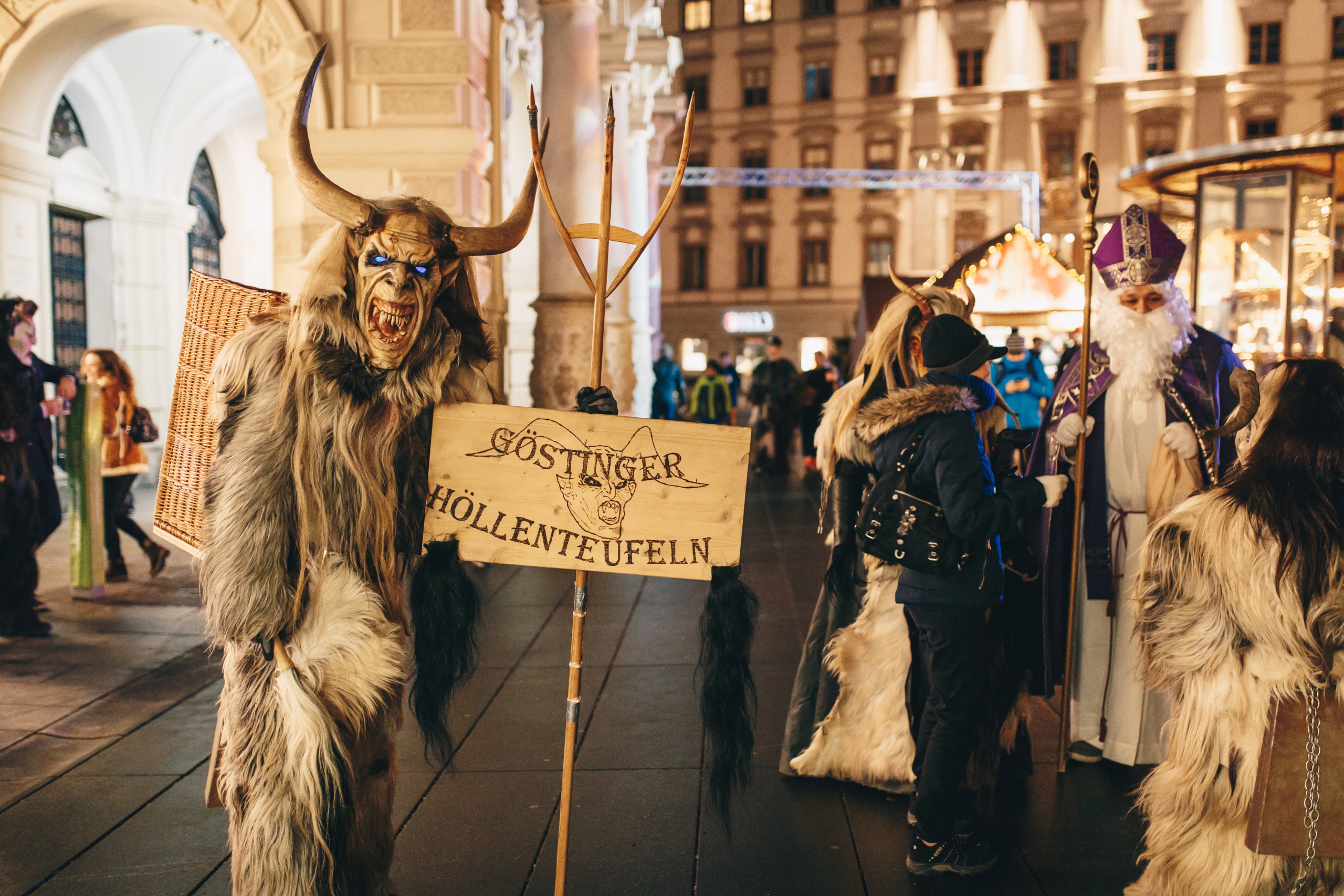
Krampus is portrayed as a human–animal hybrid with heavy fur, curved horns, bright eyes, and an exaggerated red tongue. Performers often carry bundles of birch twigs and wear clattering chains, which amplify the creature’s presence both visually and acoustically. Each attribute draws from layers of Alpine lore: animal pelts and horns recall winter spirits and the figure of the “wild man”; birch has long appeared in rites of renewal; and noise-making was historically used to confront the perceived dangers of the solstice season. Taken together, the character reflects local understandings of liminality and transformation during the darkest weeks of the year.
Roots beneath the snow
The origins of Krampus lie in pre-Christian Alpine customs that marked the transition into winter. Communities dressed in skins, darkened their faces, and moved from house to house sounding bells or drums to symbolically challenge the cold and its imagined forces. The term Krampus likely derives from the Old High German krampen, meaning “claw,” and the figure shares traits with related winter entities such as the Perchten, which appear in regional rites of passage.
Some strands of folklore position Krampus near mythic beings associated with the underworld and seasonal change, underscoring its role as a threshold creature linked to endings and renewal.
From forest lore to the seasonal calendar
When Christianity spread through the Alpine regions, many local practices were reshaped rather than erased. Krampus became part of the eve of St. Nicholas, forming a tandem in which order and mischief coexist. From the 17th century onward, this pairing gained structure, functioning as a culturally accepted method for teaching social boundaries through performance and symbolism. Instead of removing the frightening figure, local communities reinterpreted it within a broader festive setting.
Attempts to regulate a winter icon
The figure’s intensity has, at various points, provoked official resistance. Authorities in different eras deemed the custom disruptive or unsuitable for public life. In the 1930s, the authoritarian government of Engelbert Dollfuss prohibited Krampus activities, framing them as inconsistent with state ideals. Policies tightened further under the Nazi regime, which promoted a standardized winter calendar and discouraged local practices seen as incompatible with its cultural narrative. Even in the 1950s, postwar Austrian authorities distributed school pamphlets warning children about Krampus, reflecting continued efforts to domesticate the tradition.
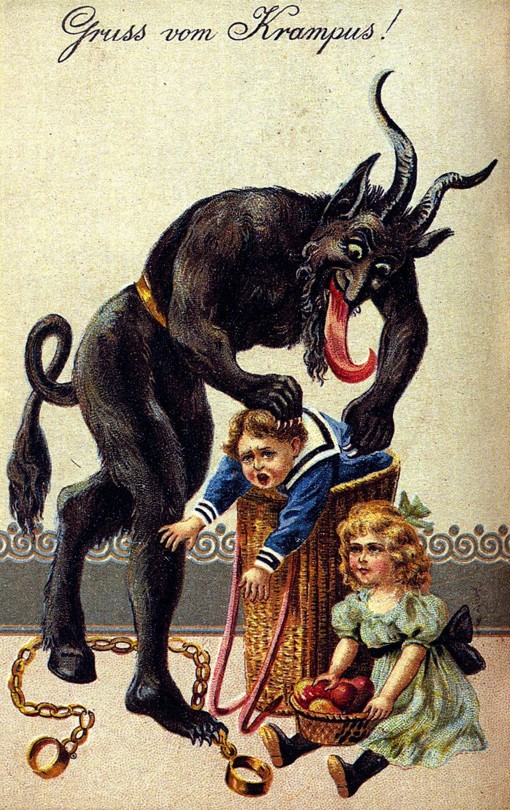
Yet the custom persisted. Nineteenth-century Krampuskarten—holiday postcards depicting the creature in humorous or exaggerated scenes—circulated widely and anchored Krampus within the Alpine imagination. These cards helped solidify the figure’s visual vocabulary and ensured its survival through periods of suppression.
Where Krampus still walks
Every 5 December, Krampusnacht (Krampus Night) unfolds across towns and villages in Austria. Krampuslauf processions feature groups of costumed participants who parade through streets with bells, masks, and chains. The events combine choreography, humor, and carefully managed fright.
In Lower Austria, Puchberg am Schneeberg, Baden, and Höflein an der Hohen Wand hold particularly popular parades. In the western Alpine regions—Tyrol, Salzburg, Styria, and Carinthia—communities such as Öblarn and Bad Mitterndorf stage Krampusspiel, folk plays featuring scripted encounters between figures from local winter lore. Bad Goisern in Upper Austria hosts another well-known event. Even in Vienna, Krampus costumes appear at seasonal markets and cultural gatherings.
The craftsmanship behind the masks remains central. Artisans carve them from wood, often following family styles transmitted across generations. Heavy cowbells, goat hides, and detailed paintwork give each costume a distinctive identity. While the appearance may seem intimidating, the performances emphasize coordination, artistry, and community heritage.
Beyond the Alpine Arc
Versions of the figure appear in Bavaria, South Tyrol, Slovenia, and Hungary, maintaining similar roles as winter companions to St. Nicholas. In recent decades, Krampus has gained visibility in North America, motivated by interest in lesser-known seasonal traditions and by diasporic communities eager to preserve Alpine customs. Cities such as Los Angeles, Chicago, and Toronto now host Krampus-themed parades, often blending folklore with contemporary performance culture.
A shadow that joins the celebration
Krampus endures because it occupies a distinctive space within winter ritual: a figure that channels fear into festivity and frames the season’s darkness as something to acknowledge rather than avoid. Its presence in the Austrian Alps highlights how communities negotiate boundaries, humor, and collective identity during mid-winter gatherings. For one night, the shadow becomes part of the celebration—an echo of older customs that continue to evolve while remaining firmly rooted in local tradition.
Speculoos: The Traditional Saint Nicholas Cookies with a Global Appeal
AI Transparency Notice
PilgriMaps uses artificial intelligence tools to assist in the research, drafting and translation of editorial content. All AI-assisted content is reviewed, edited and verified by our editorial team before publication. We contrast information against primary sources, specialist literature and on-the-ground knowledge to ensure accuracy, cultural sensitivity and editorial integrity.
AI is one tool among many in our workflow. The judgement, curation and responsibility for everything published on this platform remain entirely human.
Viator Media S.L. — in compliance with the EU Artificial Intelligence Act (Regulation EU 2024/1689).
This post is also available in: