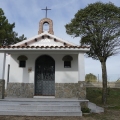
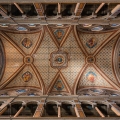
Saint Virgin Mary’s Coptic Orthodox Church—best known as the Hanging Church—stands in Coptic Cairo above the southern gatehouse of the Roman Babylon Fortress. Its “hanging” name is literal: the nave is suspended over the old passageway, reached by a long staircase that early travellers nicknamed the “Staircase Church.” Tradition places this area within the landscape of the Holy Family’s journey through Egypt, linking Old Cairo and the fortress zone to the family’s passage and refuge. With roots that go back to the 3rd–4th centuries (and later rebuilding phases), the Hanging Church is among Egypt’s oldest churches and a landmark of early Coptic basilican architecture, approached through courtyards and an outer porch that preserves the layered feel of centuries of worship.
Historically, it became a central stage for Coptic life in Cairo: after the patriarchal seat moved from Alexandria, the church served as the residence of the Coptic patriarch from the 11th to the 13th centuries and hosted major ceremonies, including the selection of patriarchs, the consecration of holy oil, and key liturgical decisions such as setting the date of Easter. The church is also tied to famous Marian tradition, especially the story of Pope Abraham in the 970s and the miracle of the Mokattam Mountain. Inside, the Hanging Church is celebrated for its icon-filled atmosphere – 110 icons in total, with the oldest dating to the 8th century – alongside a finely carved iconostasis and a striking ambon (pulpit) resting on 15 slender columns, where art, devotion and history meet in one of Cairo’s most powerful Christian spaces.
- Address
Ibrahim Ali, Kom Ghorab, Old Cairo, Cairo Governorate 4244001, Egypt - Web
http://www.coptic-cairo.com/oldcairo/church/mollaqa/mollaqa.html - Visiting Hours
Every day from 9:00 to 16:00 - What to see
Coptic Mona Lisa, pulpit
AI Transparency Notice
PilgriMaps uses artificial intelligence tools to assist in the research, drafting and translation of editorial content. All AI-assisted content is reviewed, edited and verified by our editorial team before publication. We contrast information against primary sources, specialist literature and on-the-ground knowledge to ensure accuracy, cultural sensitivity and editorial integrity.
AI is one tool among many in our workflow. The judgement, curation and responsibility for everything published on this platform remain entirely human.
Viator Media S.L. — in compliance with the EU Artificial Intelligence Act (Regulation EU 2024/1689).
This post is also available in: