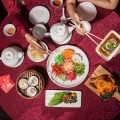
In the Philippine archipelago, where ocean tides embrace more than 7,000 islands, the story of adobo is not simply about taste – it is about survival, identity, and ingenuity. This stewed dish, now widely recognized as the culinary soul of the islands, predates colonial contact and showcases a deep-rooted tradition of preservation turned into artistry.
Vinegar as lifeline
Long before European colonizers arrived in the 16th century CE, Indigenous communities in the Philippines had already mastered food preservation through acidification. In a climate where tropical heat accelerates spoilage, vinegar emerged as a crucial ally. The technique involved cooking meat or seafood in vinegar and salt, extending shelf life in a world without refrigeration.
But this was not a monolithic approach. An entire ecosystem of vinegars – sukang tuba (coconut sap vinegar), sukang Iloco (cane vinegar derived from fermented basi wine), and sukang maasim (naturally soured sugarcane vinegar) – developed across regions. Each island, province, and family often maintained its own method and flavor profile, contributing to a decentralized but deeply unified culinary identity.
Naming misunderstandings, indigenous roots
Spanish colonizers, upon encountering this vinegar-based method, likened it to their own adobo, a marinated dish from the Iberian Peninsula. The term adobar, meaning “to marinate”, stuck – but the resemblance was superficial. Filipino adobo was not a copy of the Spanish dish. It was, and remains, an Indigenous preparation known historically by names such as kiniláw, dayok, danglusi, and guinamós.
The Spanish label endured, transforming the dish linguistically while leaving its technical foundations largely intact. Today, adobo continues to be considered the Philippines’ unofficial national dish precisely because it remains one of the few precolonial culinary practices to persist with minimal foreign modification.
Four pillars of acidic cooking
Filipino cuisine maintains four foundational vinegar-based preparations:
- Kiniláw: raw seafood cured in vinegar and spices.
- Paksíw: slow-cooked meat or fish in vinegar-based broth.
- Sangkutsá: pre-braising of meat in vinegar and aromatics before final cooking.
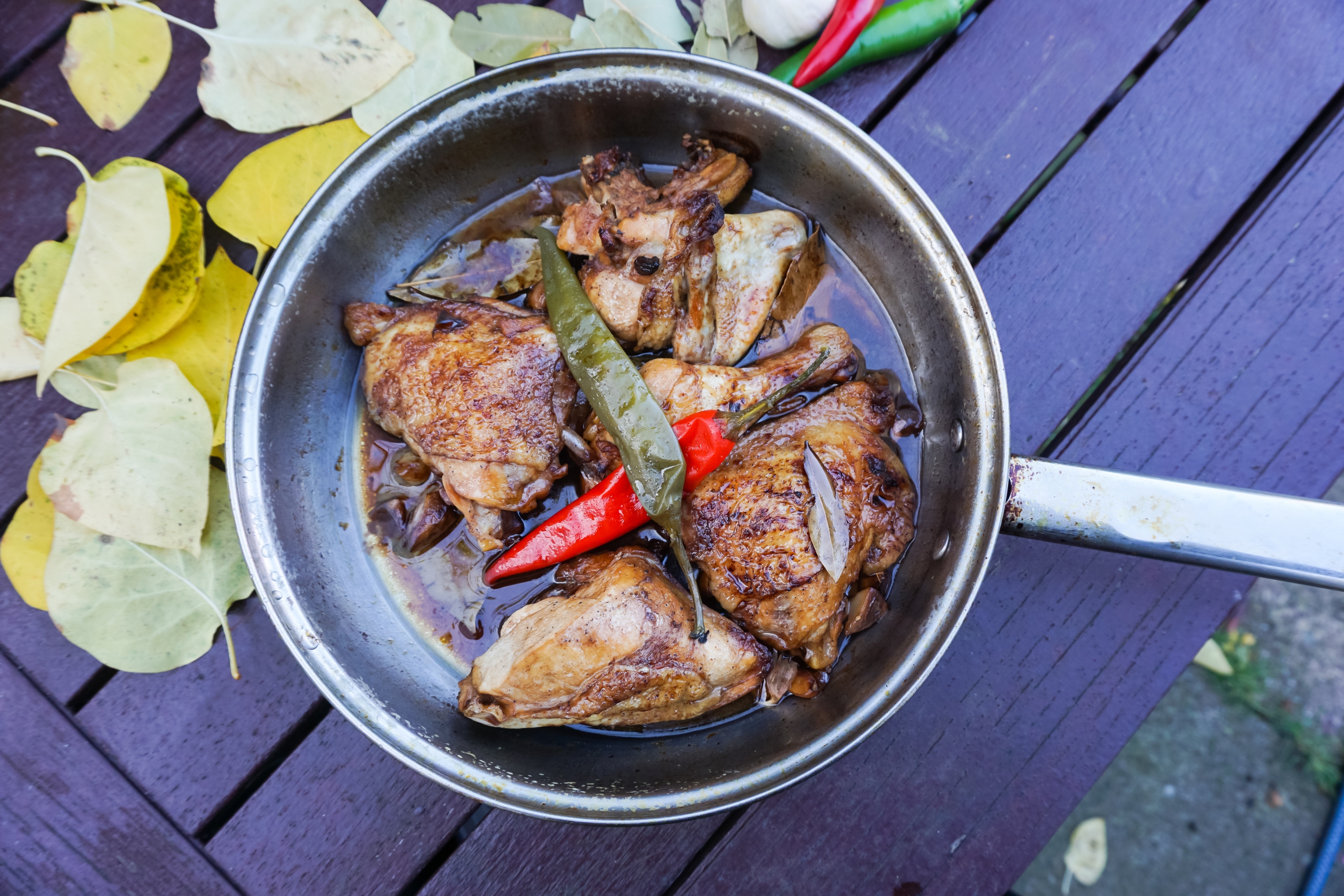
- Adobo: the most versatile, cooked by first searing the meat and then simmering it in a vinegar-based marinade until it reduces into a richly flavored sauce.
Among these, adobo holds preeminence due to its adaptability, storability, and cultural resonance.
Adobo as culinary multiverse
Adobo is not a fixed recipe but a diverse family of dishes. It spans proteins – adobong manok (chicken), baboy (pork), baka (beef), pugò (quail), itik (duck), kambing (goat) – and seafood: fish, catfish, shrimp, squid. Vegetarian versions use water spinach (kangkóng), bamboo shoots (labóng), eggplant (talong), banana blossoms (pusô ng saging), and okra.
Regional interpretations abound. In Bicol and Quezon, coconut milk adds creaminess (adobo sa gatâ). Cavite favors the addition of minced pork liver. Batangas and Laguna infuse turmeric, resulting in the distinct yellow hue of adobong dilaw. These layers of adaptation have made adobo both deeply local and widely shareable.
Science of preservation
Adobo’s resilience is part of its genius. Its core ingredients—vinegar, salt, garlic—not only contribute flavor but also create a biochemical shield against spoilage. The acidic environment inhibits bacterial growth, while garlic offers antimicrobial properties. The two-stage process – marination followed by slow cooking – ensures that flavors penetrate thoroughly, and spoilage is delayed.
This made adobo ideal for travel, especially in earlier centuries and among contemporary hikers or seafarers. Even now, it remains a staple for Filipino travelers because it requires no refrigeration for several days.
Ritual of preparation
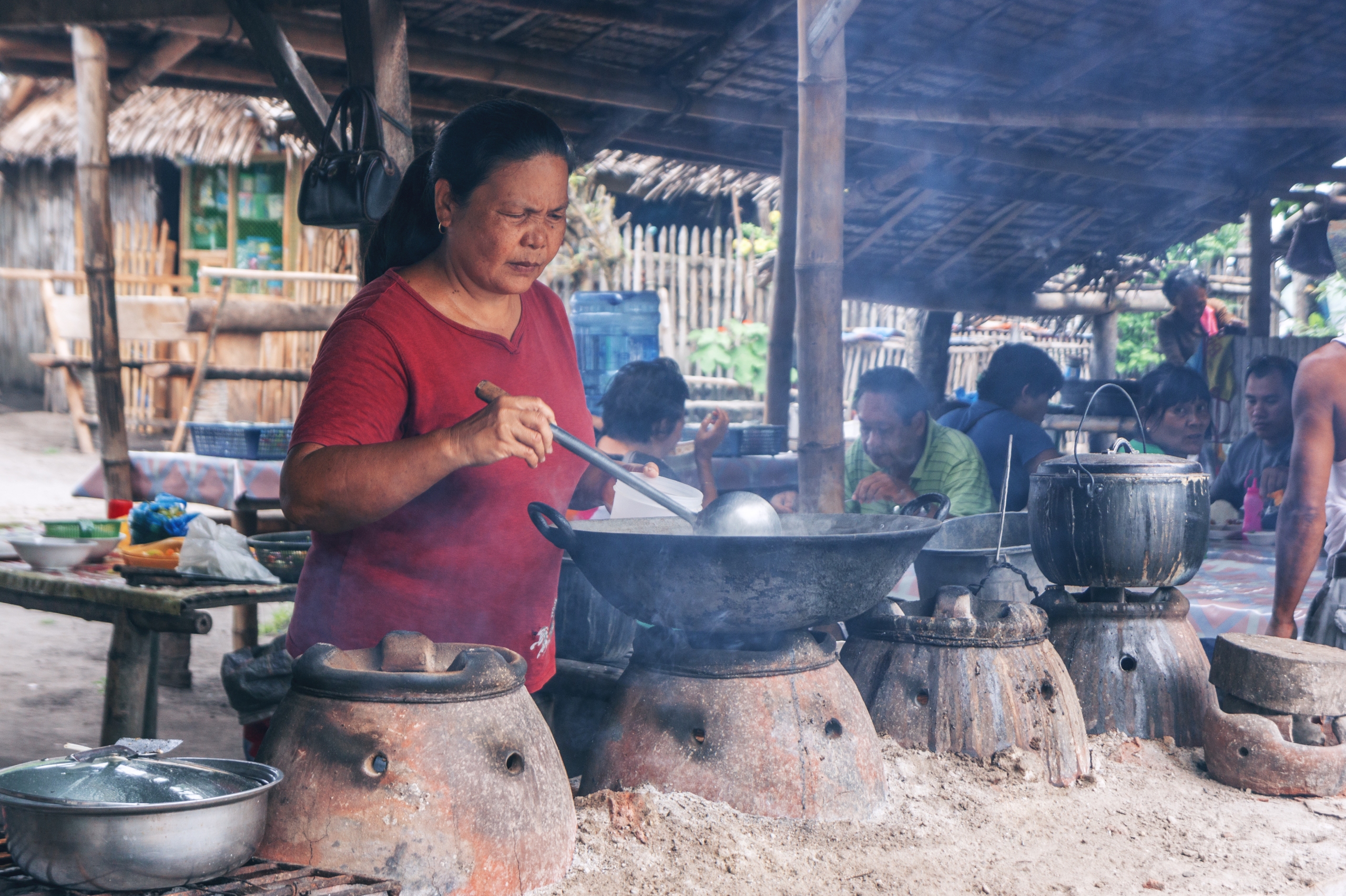
Central to adobo is its method: the discipline of double cooking. First, meat is browned to induce the Maillard reaction, developing complex flavors. Then it is simmered in a marinade of vinegar, garlic, peppercorns, bay leaves, and sometimes soy sauce until the liquid thickens into a dense glaze.
A commonly followed rule, steeped in both tradition and chemistry, is not to stir once the vinegar is added. This preserves its sharp acidity and allows the fat to render slowly, enriching the sauce without disrupting the meat’s caramelization.
Spectrum of colors, depths of meaning
Adobo reveals its cultural history through color:
- Adobong puti: a pale, soy sauce-free version using only vinegar and salt, often seen as the closest link to precolonial versions.
- Adobong itim: darker, with soy sauce, the most commonly recognized variant.
- Adobong dilaw: yellow-hued from turmeric, specific to some southern provinces.
These colorations are not only visual cues but culinary philosophies, representing the pluralism of the Filipino palate.
The diaspora’s emblem
Adobo has traveled with Filipino migrants across the globe. It is found in home kitchens from Toronto to Dubai, as well as on menus in Los Angeles food trucks and New York restaurants. For many in the diaspora, it is a dish of belonging.
Its international journey has inspired reinterpretations – Filipino-Japanese adobo hybrids, sous-vide adobo, and even molecular gastronomic takes like adobo ice cream. Still, vinegar remains the throughline.
The adage that adobo tastes better the next day is supported by food science. The acids continue to break down proteins overnight, deepening flavor cohesion. This time-enhanced profile has helped adobo earn a reputation not just as comfort food but as a dish that matures with grace.
An ongoing evolution
In contemporary Filipino kitchens, chefs blend tradition and innovation. Some experiment with combining cane vinegar and rice syrup into a glossy, sweet-sour gastrique; others distill adobo into minimalist essences. Yet the fundamentals endure—acidity, patience, and an elemental respect for ingredients.
Adobo is more than a national symbol. It is a gastronomic chronicle of survival, migration, and cultural memory. Its mastery of time and technique, rooted in the pragmatic need to preserve, has become a vehicle for expression and reinvention.
As the flavors of the Philippines gain global attention, adobo remains the country’s most resonant culinary ambassador – a dish where vinegar speaks not only of sourness, but of heritage.
AI Transparency Notice
PilgriMaps uses artificial intelligence tools to assist in the research, drafting and translation of editorial content. All AI-assisted content is reviewed, edited and verified by our editorial team before publication. We contrast information against primary sources, specialist literature and on-the-ground knowledge to ensure accuracy, cultural sensitivity and editorial integrity.
AI is one tool among many in our workflow. The judgement, curation and responsibility for everything published on this platform remain entirely human.
Viator Media S.L. — in compliance with the EU Artificial Intelligence Act (Regulation EU 2024/1689).
This post is also available in: