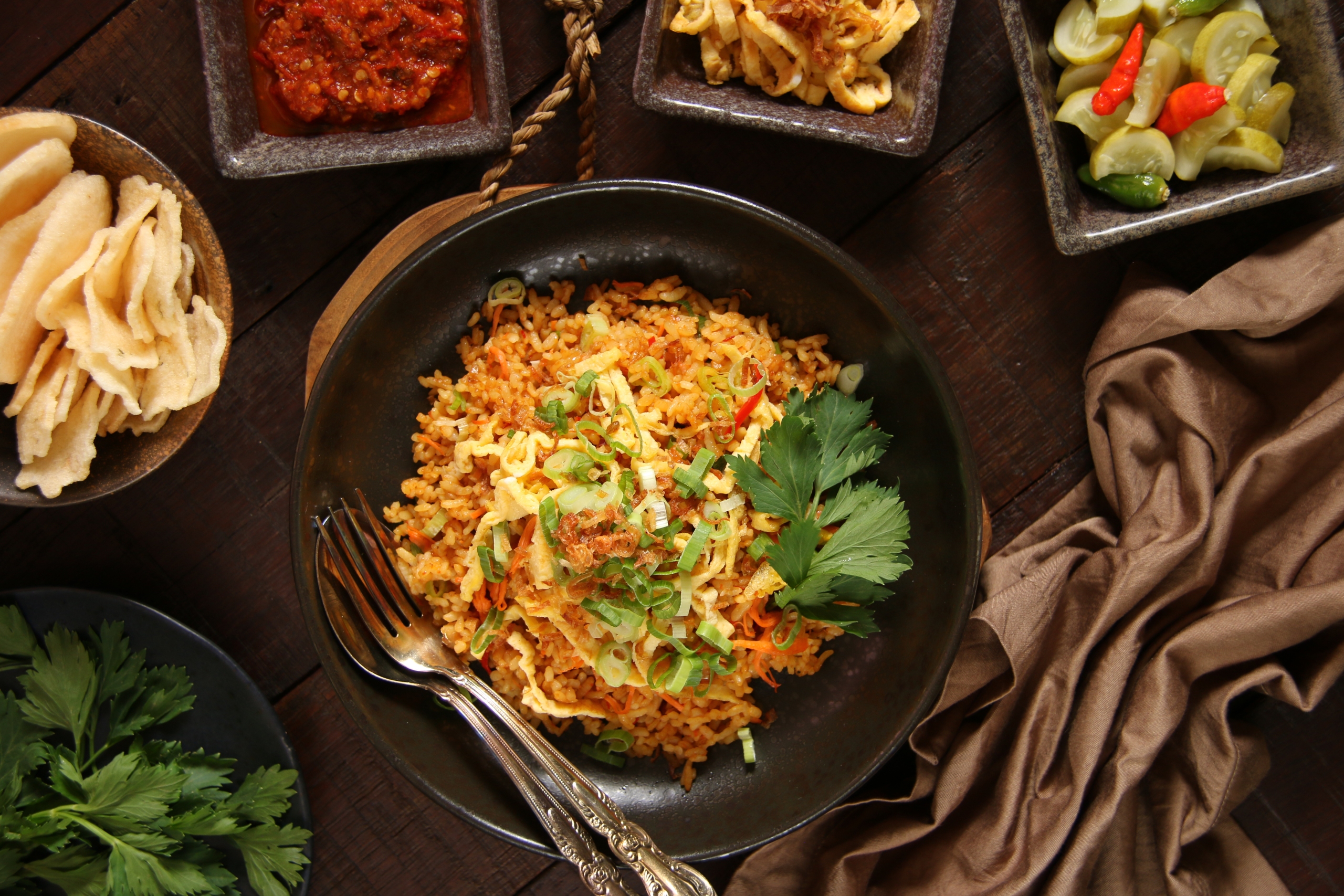
Jakarta greets the morning with the sharp rhythm of car horns and the aroma of spices rising from roadside warung. Among the city’s sensory signatures is a metallic beat—tek-tek-tek—the sound of spatulas striking hot iron woks. This cadence signals the making of nasi goreng, Indonesia’s national dish. More than a staple meal, it is a culinary archive of over a thousand years of trade, migration, and cultural fusion.
Nasi goreng, literally “fried rice” in Bahasa Indonesia, is a wok-tossed dish that embodies the nation’s layered identity. It combines Chinese frying techniques with Malay ingredients, enriched further by Dutch colonial influences and the regional variations of an archipelago spanning more than 17,000 islands.
Roots of a long tradition
The story of nasi goreng reaches back to the 10th century CE, when traders from southern China sailed into the Indonesian archipelago. They introduced the wok and the principle that food should be eaten hot and that waste should be avoided.
Before refrigeration, rice cooked the previous evening needed to be reheated to prevent spoilage. In Indonesia, prior to Chinese influence, leftover rice was commonly dried in the sun, pressed into crackers, and later ground into flour. Stir-frying offered a new method that fit the tropical climate and daily rhythms of local life.
While the technique remained Chinese, the defining flavors of modern nasi goreng are distinctly Indonesian. Shrimp paste (belacan) and kecap manis—a palm sugar-sweetened soy sauce—have been part of the archipelago’s culinary repertoire since at least the 2nd century CE. Their presence bridges ancient local traditions with imported innovation.
Shaped by colonial and regional exchange
During the Dutch colonial era, the dish absorbed additional influences. Meat, including bacon, entered the mix through European tastes, while Malay communities contributed rempah, a spice blend of lemongrass, turmeric, ginger, and other herbs.
The dish became a fixture of the rijsttafel—a colonial-era banquet featuring dozens of Indonesian dishes presented together. This elevated nasi goreng into an international showcase, paving the way for its spread beyond Southeast Asia.
Symbolism of ingenuity
Nasi goreng is often prepared with rice from the previous day, a practice that represents resourcefulness and the ability to transform limitations into opportunities. This aspect has made the dish a symbol of ingenuity across Indonesian society.
Its accessibility also gives it a democratic character. One can find it for a few rupiah at roadside stalls or in refined versions at luxury hotels, yet its essence remains the same. Many Indonesians note that it tastes better when made with day-old rice than with freshly cooked grains, underscoring a cultural approach to adaptation and resilience.
Regional diversity
Indonesia counts more than 100 documented variations of nasi goreng. Java alone, with its high population density, has about 20 distinct styles across Sunda, Betawi, Semarang, Yogyakarta, Surakarta, and East Java.
- Central Java favors tempeh and spicy sambal.
- West Java draws on coastal traditions, adding fresh seafood.
- Bali incorporates coconut and peanuts, staples of local cooking.
- West Sumatra pairs the dish with rendang, the region’s celebrated spiced beef stew.
Other versions highlight local tastes and humor: nasi goreng gila (“crazy fried rice”), nasi goreng pete with pungent stinky beans, and nasi goreng merah (“red fried rice”), known for its chili-based coloring. Each reflects a specific community’s environment and palate.
The alchemy of ingredients
At the heart of nasi goreng lies kecap manis, the thick, molasses-like soy sauce that imparts its deep brown color and characteristic sweet-salty flavor. Caramelizing at high heat, the sauce creates a smoky aroma considered the hallmark of the dish.
Day-old rice is essential: fresh rice holds too much moisture and becomes clumpy when fried. Drier grains retain their structure, absorbing flavors while staying distinct.
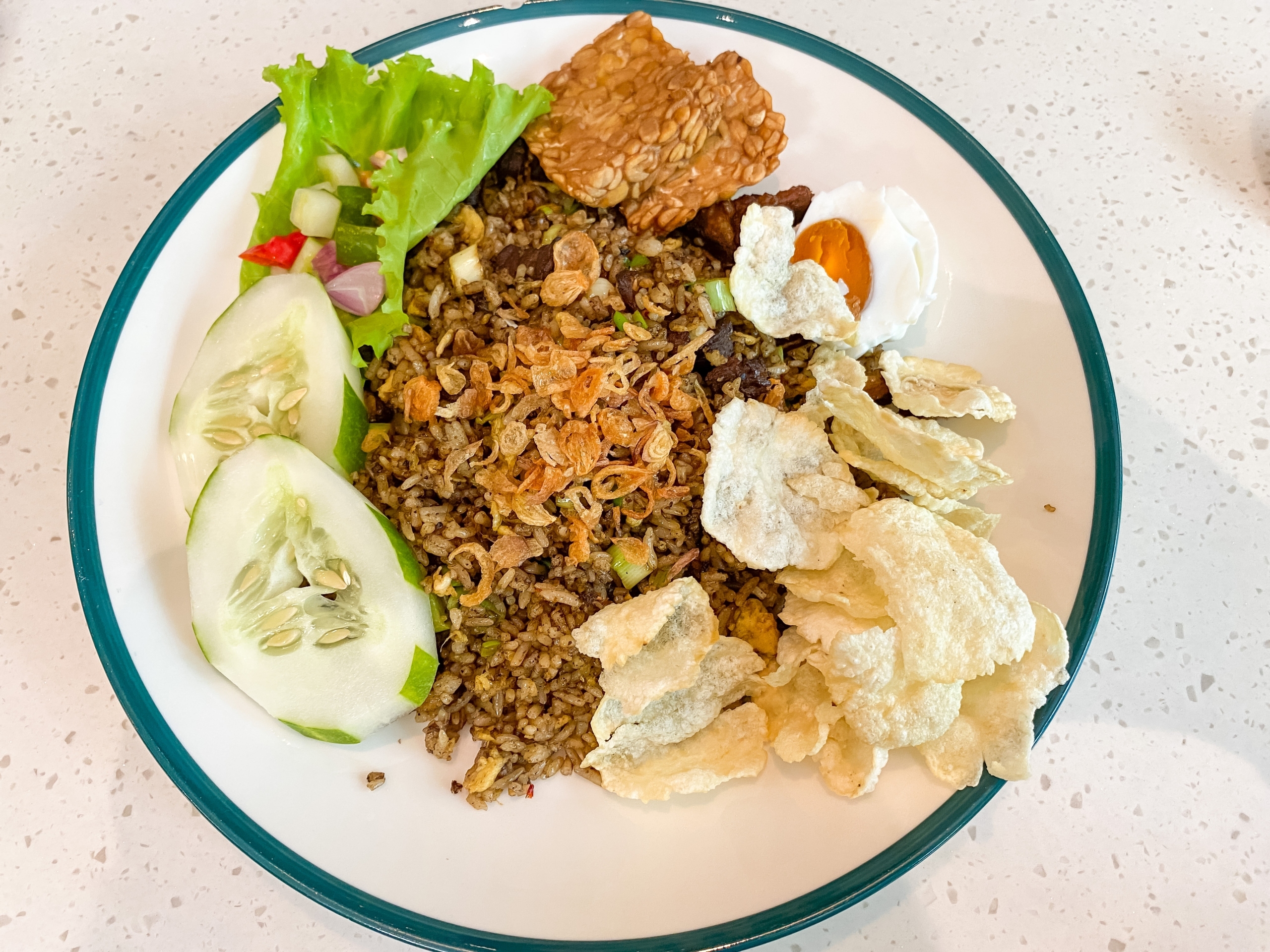
Other core ingredients include shallots, garlic, chili, shrimp paste, and often eggs, scrambled directly into the wok. A fried egg placed on top has become a visual icon of nasi goreng, with its runny yolk blending into the rice as a natural sauce.
Eating traditions
Historically, nasi goreng was a breakfast food, offering energy at the start of the day while using up the previous night’s leftovers. Today it is eaten at any time, from dawn to late-night street snacks.
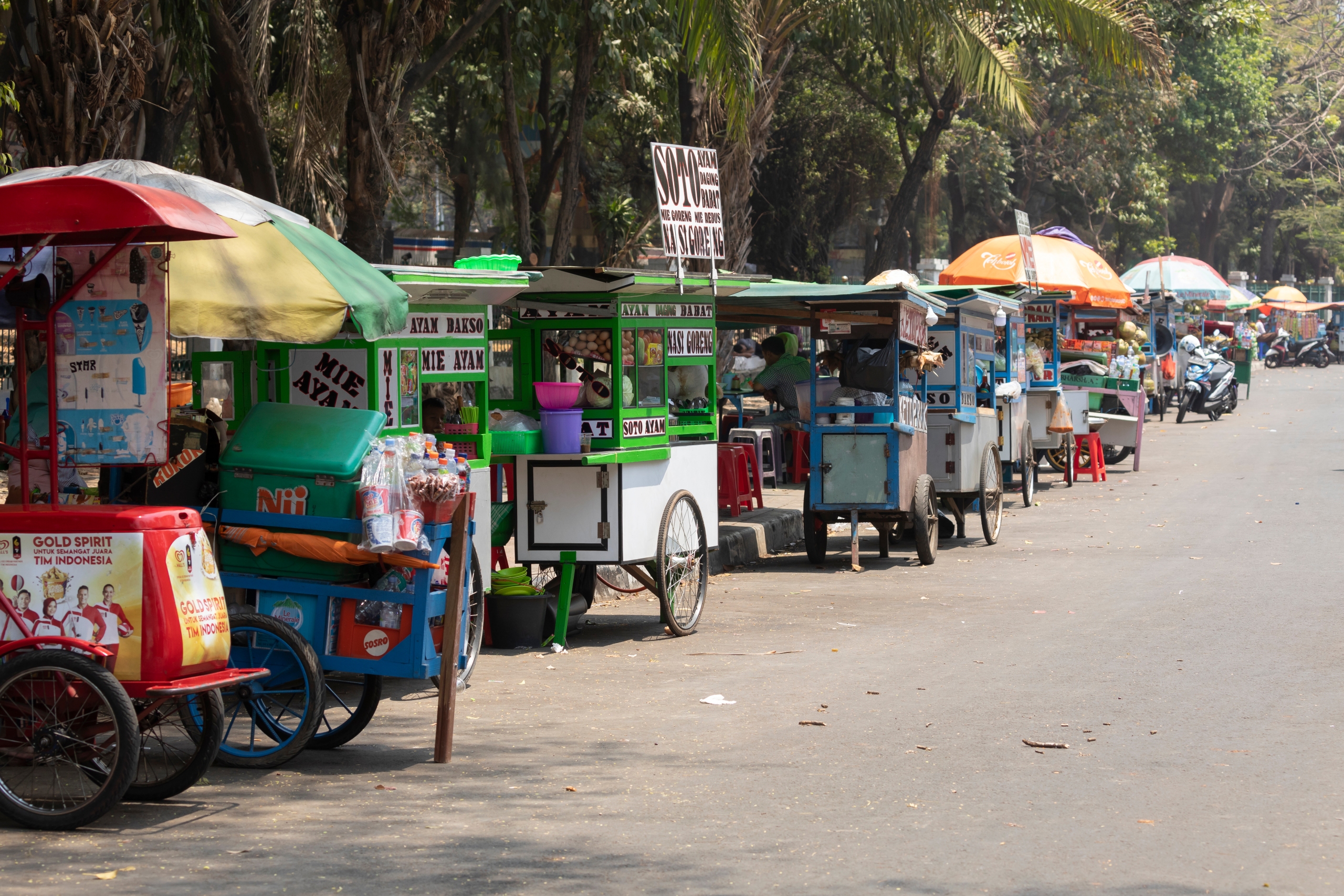
The rhythmic clanging that announces nasi goreng tek-tek vendors is part of the dish’s cultural soundtrack. Each vendor often guards a personal “secret sauce” passed down within families, adding further layers of identity.
Typical accompaniments include kerupuk (shrimp crackers), bawang goreng (crispy fried shallots), and slices of cucumber or tomato that refresh the palate against the richness of the fried rice.
From street food to soft diplomacy
Nasi goreng has become more than a beloved dish—it functions as cultural diplomacy. In 2010, it was served to U.S. President Barack Obama during his visit to Jakarta, a gesture underscoring national pride in this culinary emblem.
Today, its presence in Indonesian restaurants worldwide—from Malaysia to the Netherlands—illustrates its role in promoting cultural identity abroad.
The dish also embodies an early lesson in sustainability. Its guiding principle of minimizing waste aligns with global efforts to reduce food loss and environmental impact.
A living symbol of Indonesia
From bustling Jakarta intersections to quiet coastal villages, the sound of spatulas hitting woks remains a familiar call. Nasi goreng continues to evolve, shaped by history, geography, and the resourcefulness of everyday cooks. As both nourishment and cultural expression, it stands as a vivid reflection of Indonesia’s layered past and dynamic present.
AI Transparency Notice
PilgriMaps uses artificial intelligence tools to assist in the research, drafting and translation of editorial content. All AI-assisted content is reviewed, edited and verified by our editorial team before publication. We contrast information against primary sources, specialist literature and on-the-ground knowledge to ensure accuracy, cultural sensitivity and editorial integrity.
AI is one tool among many in our workflow. The judgement, curation and responsibility for everything published on this platform remain entirely human.
Viator Media S.L. — in compliance with the EU Artificial Intelligence Act (Regulation EU 2024/1689).
This post is also available in: