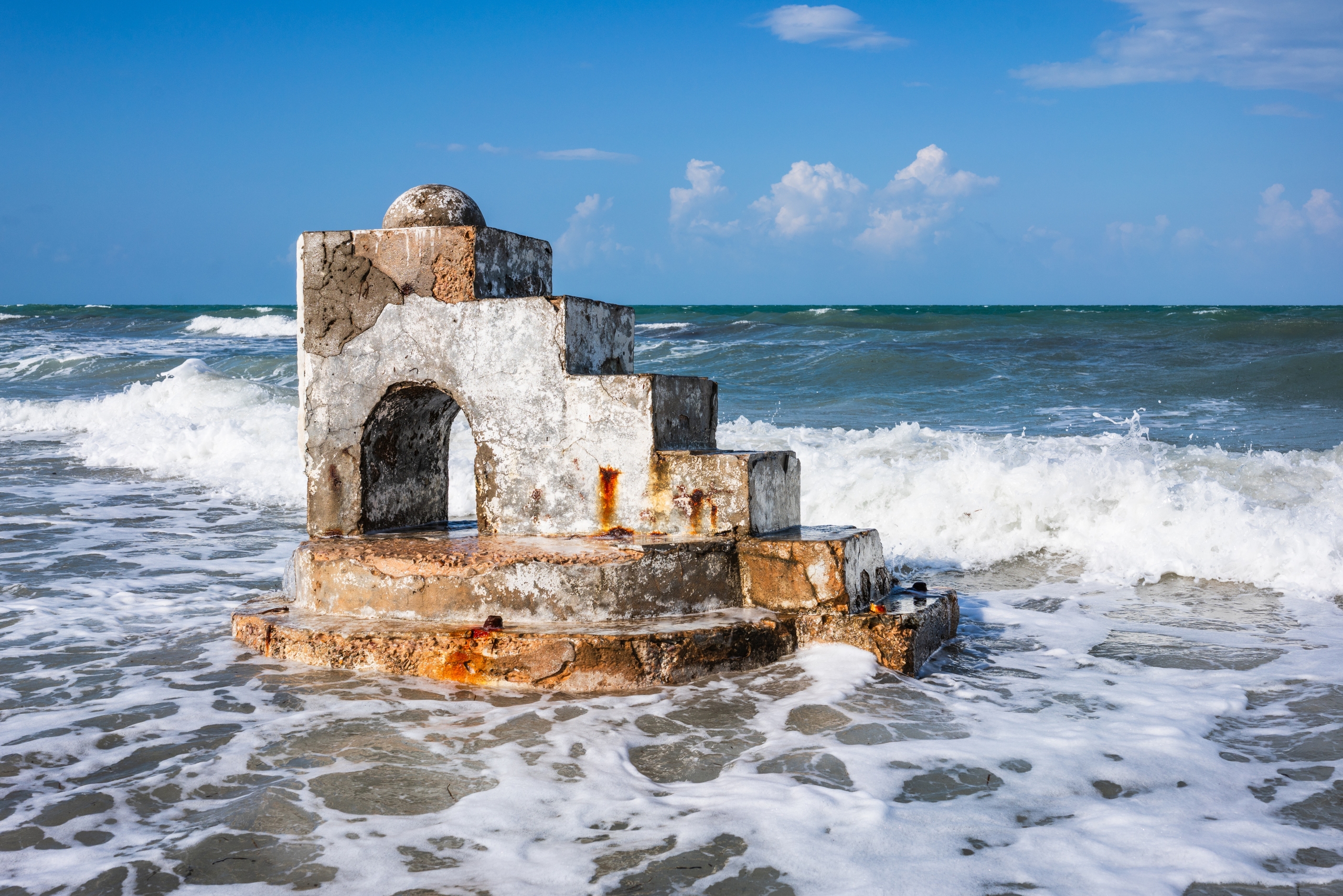
The island of Djerba does not belong to a single canonical pilgrimage route. Its significance emerges instead from circulation: maritime corridors, seasonal crossings, and layered traditions that connect North Africa to the central and eastern Mediterranean. To frame a “pilgrimage” through Djerba is therefore to reconstruct a network rather than a path—one that intersects with classical literature, Jewish continuity, and contemporary heritage recognition.
Homeric geography and the lotus motif
In ancient Greek literature, Djerba is often associated—though not conclusively—with the land of the Lotus-Eaters described in the Odyssey by Homer. In this episode, Odysseus’s companions encounter a population whose consumption of lotus fruit induces forgetfulness and detachment from home.
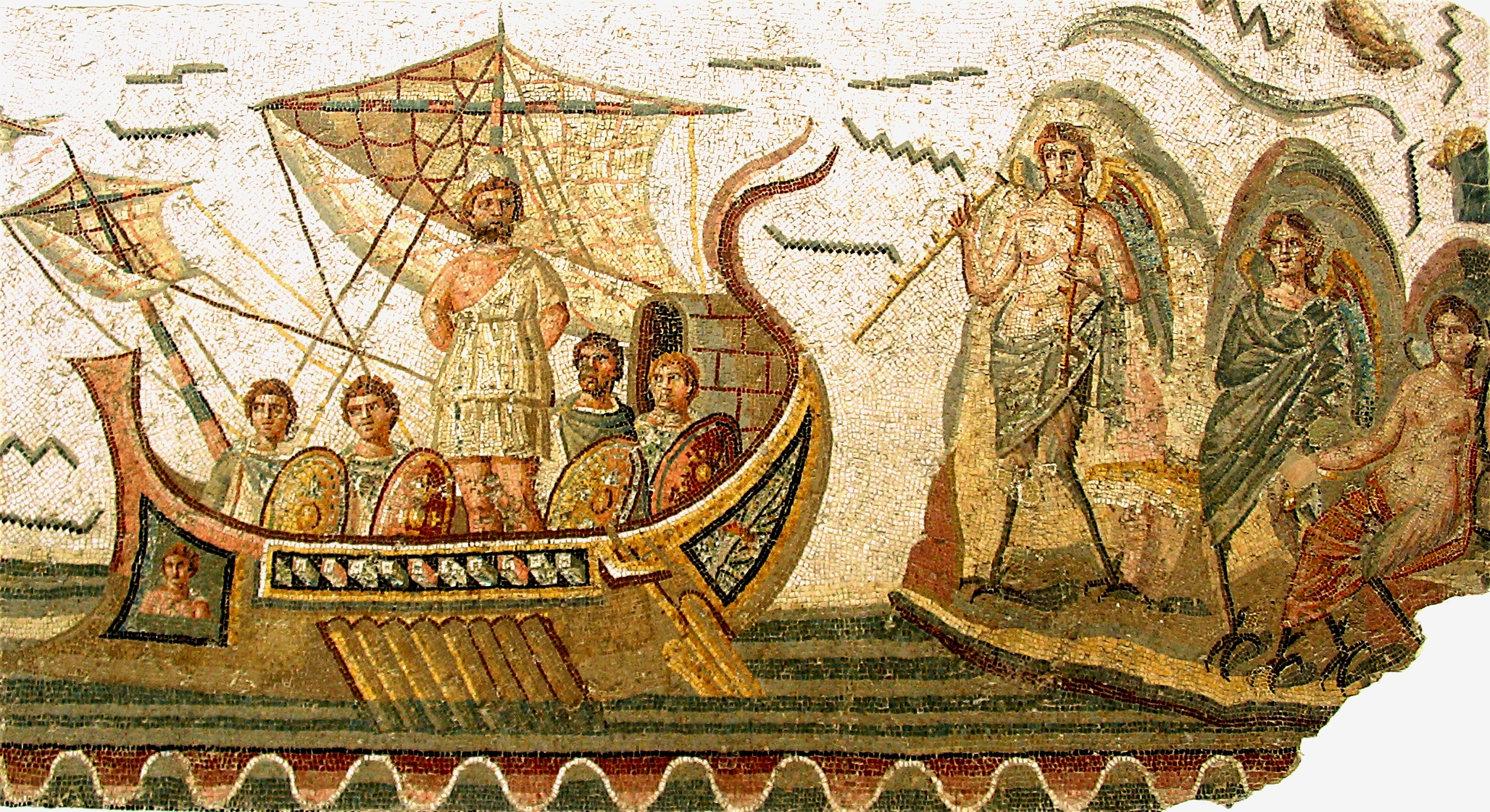
This literary association situates Djerba within an early Mediterranean imagination of travel as disorientation. The island appears not as a destination of arrival but as a place where direction dissolves. Later geographical writers placed the episode along the North African coast, contributing to Djerba’s identification with this narrative zone.
While no archaeological evidence confirms the connection, the persistence of the association reveals how the island entered a symbolic map of the Mediterranean: one defined as much by storytelling as by navigation.
Maritime corridors from Carthage to Rome
From the first millennium BCE onward, Djerba stood near key maritime routes linking Carthage, Sicily, and the Italian peninsula. Phoenician and later Roman networks integrated the island into systems of trade and communication that connected agricultural hinterlands with urban ports such as Ostia.
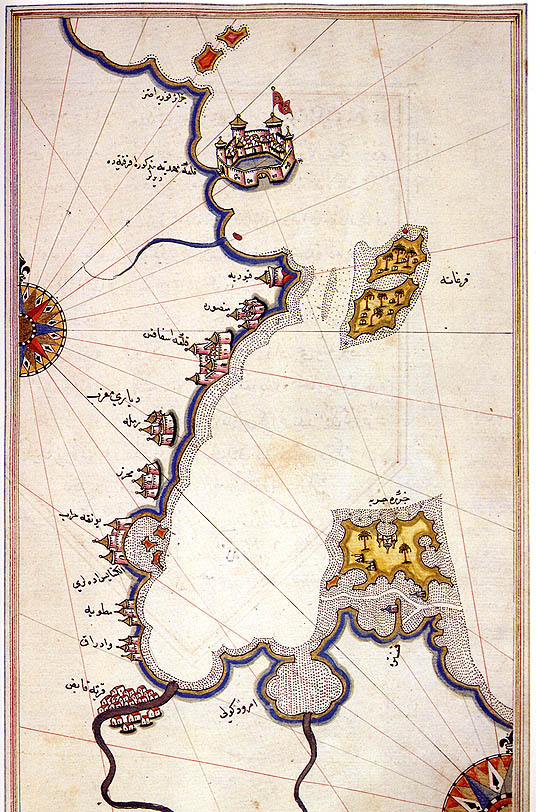
Travel across these waters was rarely framed as pilgrimage in the later, institutional sense. Yet repeated crossings—by merchants, scholars, and migrants—produced a form of habitual mobility that shaped shared cultural space. In this context, Djerba functioned as a waypoint: a place of anchorage, exchange, and transition.
Such routes would later overlap with the trajectories described in late antique texts, including those of Augustine of Hippo, whose journeys across North Africa and Italy reflect similar maritime pathways, even if he does not mention Djerba directly.
El Ghriba: A localized pilgrimage tradition
Within this broader network, Djerba hosts a clearly defined pilgrimage practice centered on the El Ghriba Synagogue. This site, associated with one of the oldest Jewish communities in North Africa, becomes a focal point during the annual Lag BaOmer gathering.
Participants—originating from Tunisia, Europe, and Israel—travel to the island to engage in collective rituals, social exchange, and commemoration. The event operates on multiple levels: as a religious observance, a diasporic reunion, and a reaffirmation of continuity within a historically rooted community.
The presence of this synagogue and its associated practices highlights Djerba’s role as a localized pilgrimage destination embedded within a wider Mediterranean circulation.
A recognized cultural landscape
In 2023, Djerba was inscribed on the UNESCO World Heritage List—not for a single monument, but for its entirety: a cultural landscape composed of dispersed settlements (menzels), mosques, synagogues, and traditional agricultural systems.
This recognition emphasizes continuity. Over time, Jewish, Muslim, and Berber-speaking communities have shared the territory, creating a spatial organization still visible in architecture and landscape.
For visitors today, this changes the way the island is experienced. There is no single central point. The interest lies in the journeys: from one village to another, from a place of worship to the coast, from one agricultural setting to the next. Rather than a monumental itinerary, it is a route shaped by coexistence and adaptation.
Djerba and the contemporary imagination
To this network of ancient narratives, a more recent layer of meaning has been added. Djerba has also served as a setting for a global modern mythology: some of its locations were used as filming sites for the universe of Star Wars.
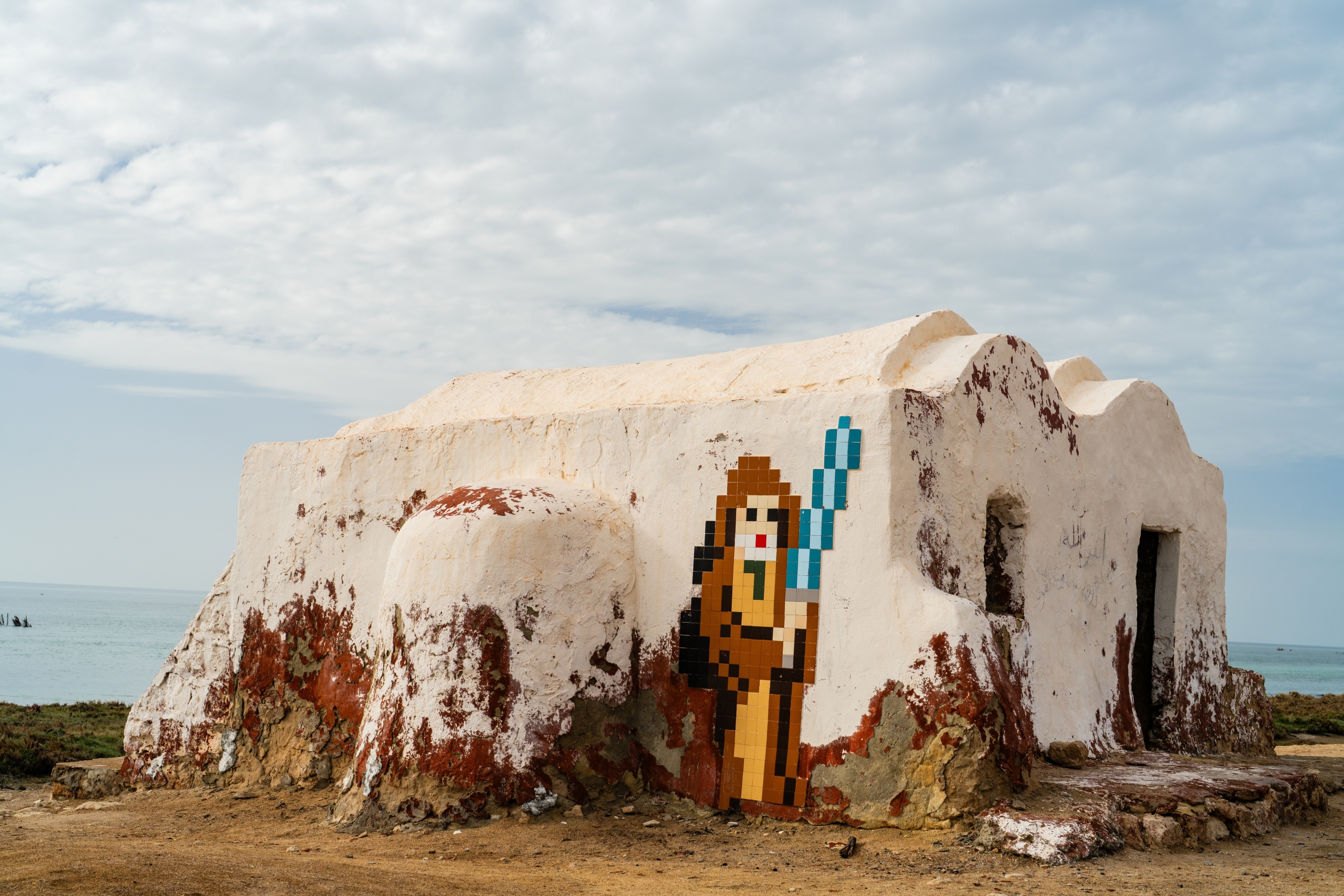
Specifically, parts of the island were used to depict the desert planet Tatooine, including elements associated with the iconic spaceport of Mos Eisley. Beyond anecdote, this detail reinforces the idea of Djerba as a place of imaginative projection: a territory that different cultures, in different periods, have reinterpreted through their own narratives.
Just as in Antiquity it was linked to episodes of the Odyssey, today it forms part of a cinematic imagination that has reached a global scale. In this way, the island continues to act as a meeting point between real geography and symbolic storytelling.
An open path in the Mediterranean
To think of a pilgrimage route that includes Djerba is to accept that it is not a closed path. One possible itinerary might begin in Carthage, follow the North African coast to the island, and continue toward Sicily and southern Italy. Another could place Djerba within a broader arc linking Libya, Tunisia, and Algeria. Unlike linear routes, there is no clear endpoint here. What gives meaning to this journey is repetition: of voyages, encounters, and returns.
Djerba occupies a particular position in the Mediterranean. It appears in ancient texts as a place where memory is transformed, in historical geography as a node in maritime networks, and today as a space where a living pilgrimage tradition endures and new ways of imagining the world continue to emerge.
Any route that passes through the island must accept this condition. There is no single way to experience it. Djerba does not fix a path; it forms part of a system of movements that has connected shores for millennia.
And within that system, travel is less about arriving at a destination than about understanding what happens in between: exchanges, shared stories, and the traces that remain.
AI Transparency Notice
PilgriMaps uses artificial intelligence tools to assist in the research, drafting and translation of editorial content. All AI-assisted content is reviewed, edited and verified by our editorial team before publication. We contrast information against primary sources, specialist literature and on-the-ground knowledge to ensure accuracy, cultural sensitivity and editorial integrity.
AI is one tool among many in our workflow. The judgement, curation and responsibility for everything published on this platform remain entirely human.
Viator Media S.L. — in compliance with the EU Artificial Intelligence Act (Regulation EU 2024/1689).
This post is also available in: