- Address
Sqaq Il-Knisja, Ħaż-Żebbuġ, Malta
- Web
https://www.quddies.com.mt/churches/403/San-Filippu-ta-Aggira/Zebbug - Visiting Hours
Unknown - What to see
Silver statue of St Philip
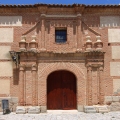
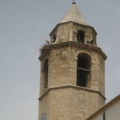
The church of St. Philip of Agira (1st century AD saint) in Żebbuġ, Malta, has a rich history dating back to its beginnings in the 15th century. Founded in 1412 on land donated by Filippo de Catania, this medieval church was functioning as a parish as early as 1436, according to the report of Bishop Senatore de Mello. The importance of the church grew after the Great Siege of Malta, and between 1599 and 1632, the present church was built according to plans attributed to Vittorio Cassar and with enlargements by Tommaso Dingli in 1660. The church, dedicated on May 13, 1729, has undergone modifications over the years, most notably the addition of side aisles in 1913.
St. Philip of Agira Church is a spiritual landmark on the Maltese Way, housing notable works of art. The titular statue of St. Philip, made entirely of silver by Luigi Fontana in 1864 and blessed by Pope Pius IX, is a devotional gem. Other highlights include paintings by artists such as Luca Garnier, Antonio Sciortino and Francesco Żahra, the latter belonging to the Favray school. With its centuries-old history and its role as a center of devotion, the church of St. Philip of Agira enriches the experience of pilgrims walking the Maltese Way.
AI Transparency Notice
PilgriMaps uses artificial intelligence tools to assist in the research, drafting and translation of editorial content. All AI-assisted content is reviewed, edited and verified by our editorial team before publication. We contrast information against primary sources, specialist literature and on-the-ground knowledge to ensure accuracy, cultural sensitivity and editorial integrity.
AI is one tool among many in our workflow. The judgement, curation and responsibility for everything published on this platform remain entirely human.
Viator Media S.L. — in compliance with the EU Artificial Intelligence Act (Regulation EU 2024/1689).
This post is also available in: