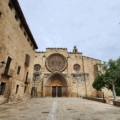
The Church of Madonna del Buon Consiglio stands on the Colle del Buon Consiglio and overlooks the Altopiano di Navelli to the northwest and the Valle Peligna to the southeast. Originally built in the 15th century as a rest stop for pilgrims on the Tratturo Magno linking L’Aquila and Foggia, the church features a horizontal, plastered façade with a central wooden portal framed by an architrave and topped with a lunette. A stone string course and a small cornice accent the upper part of the façade. Access is provided by six steps leading to the entrance, reminiscent of the style seen in the local parish church. Inside, the single-nave layout houses two stucco altars on the side walls that contain a fresco set in a niche and a statue, while an upper chapel on the left—raised by one step and covered with a vault—was built in 1866, as noted on a plaque. The presbytery is similarly raised, and remnants of 17th-century frescoes have reemerged on the back wall after the collapse of a plaster layer from 1629. The flooring consists of red cement quadrangular slabs with a central line of white slabs, and the roof is formed by vaults along the church’s length, crowned by a small dome in front of the presbytery. The rectangular façade, in Romanesque style, is externally fortified by three buttresses on each side.
- Address
Via del Cimitero, Collepietro, Italy - Web
None - Visiting Hours
Closed - What to see
17th-century frescoes, landscape
AI Transparency Notice
PilgriMaps uses artificial intelligence tools to assist in the research, drafting and translation of editorial content. All AI-assisted content is reviewed, edited and verified by our editorial team before publication. We contrast information against primary sources, specialist literature and on-the-ground knowledge to ensure accuracy, cultural sensitivity and editorial integrity.
AI is one tool among many in our workflow. The judgement, curation and responsibility for everything published on this platform remain entirely human.
Viator Media S.L. — in compliance with the EU Artificial Intelligence Act (Regulation EU 2024/1689).
This post is also available in: