In Naples, Christmas begins in the kitchen. Homes fill with voices. Streets smell of frying oil. Families, even those long dispersed, return to a shared table. Food becomes language—an active archive, an emotional geography.
Anthropologists have long observed this dynamic. Ernesto De Martino described the “sacrality of the everyday,” a concept that finds concrete expression during Christmas. Ingredients turn into ritual: fish, meat, sweets. Each dish carries a story. Each story, a lineage.
Christmas Eve: The sea at the table
Christmas Eve belongs to the sea. In Naples, di magro does not imply restraint. It means fish. The practice is longstanding. Eighteenth-century records from the Bourbon port document large arrivals of anchovies, squid, and salted cod. Food historians link the custom to Naples’ economic structure as a Mediterranean capital shaped by maritime trade.
Fish soup often opens the evening meal. Cultural scholar Marino Niola once described it as “a maritime tale served in a bowl.” Its origins lie among fishing communities; today it functions as a civic symbol.
Fried dishes follow. Salt cod with Christmas broccoli. Zeppole made from risen dough, plain or filled with anchovies. This dough began as inexpensive, practical food – quick and accessible. At Christmas, it becomes celebratory. Frying itself signals festivity.
Capitone: Symbol, fear, folklore
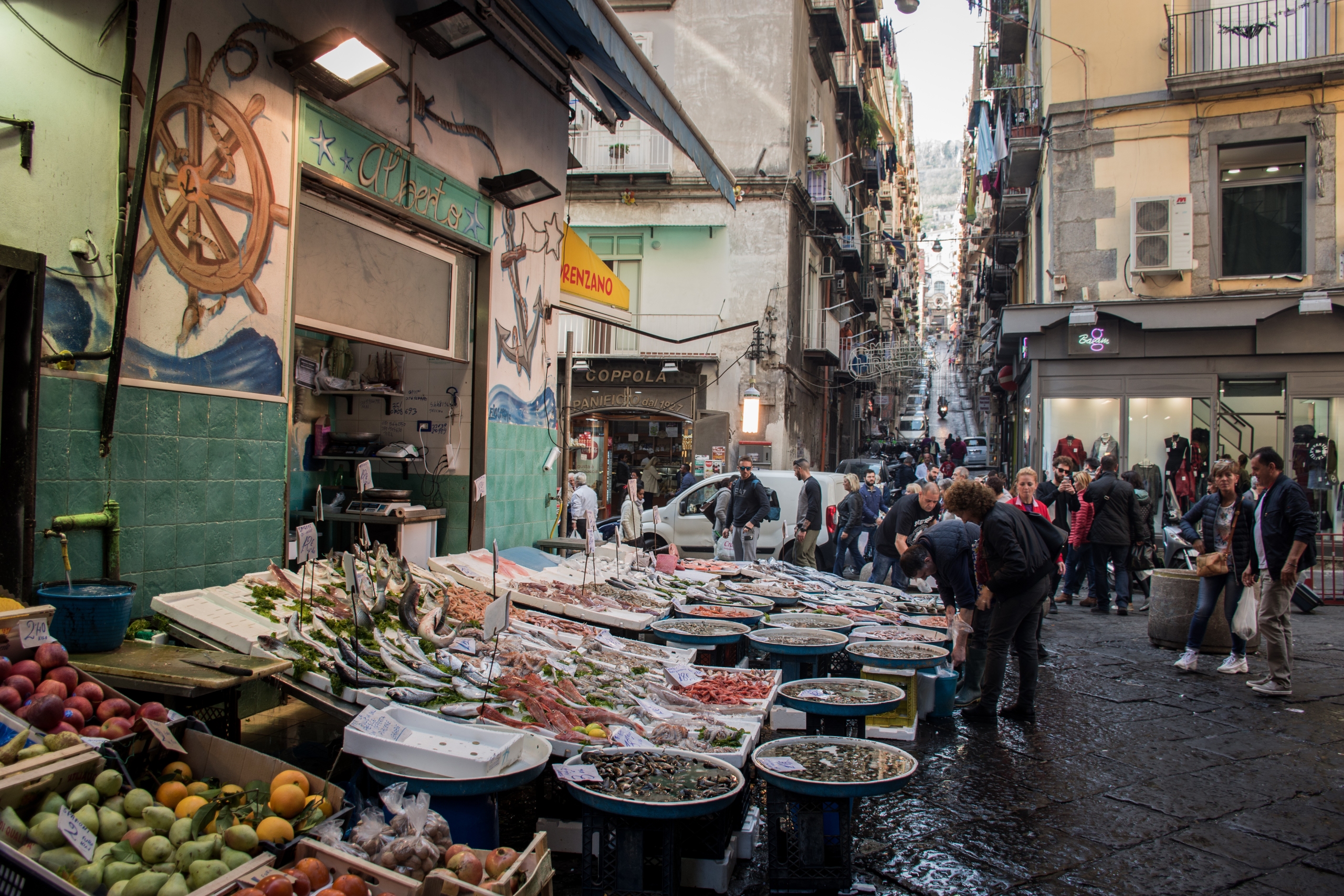
The most debated dish of Christmas Eve is capitone, the female eel. There is little sentimentality here. The practice reflects an old ritual. Written sources date it to the nineteenth century. Popular markets – Porta Capuana, Pignasecca, the Carmine – once displayed tubs of live eels.
Its meaning is layered. Some ethnographers associate it with Christian symbolism of overcoming evil, echoing the biblical serpent. Others interpret it as a gesture of good fortune rooted in agrarian culture. Preparation varies by household: fried, roasted, or stewed. Each method carries family memory.
For decades, capitone also functioned as public spectacle. Eels attempted escape. Children shouted. Shoppers selected the largest one. A near-theatrical scene. Less common today, it remains visible in working-class neighborhoods.
A night without sleep
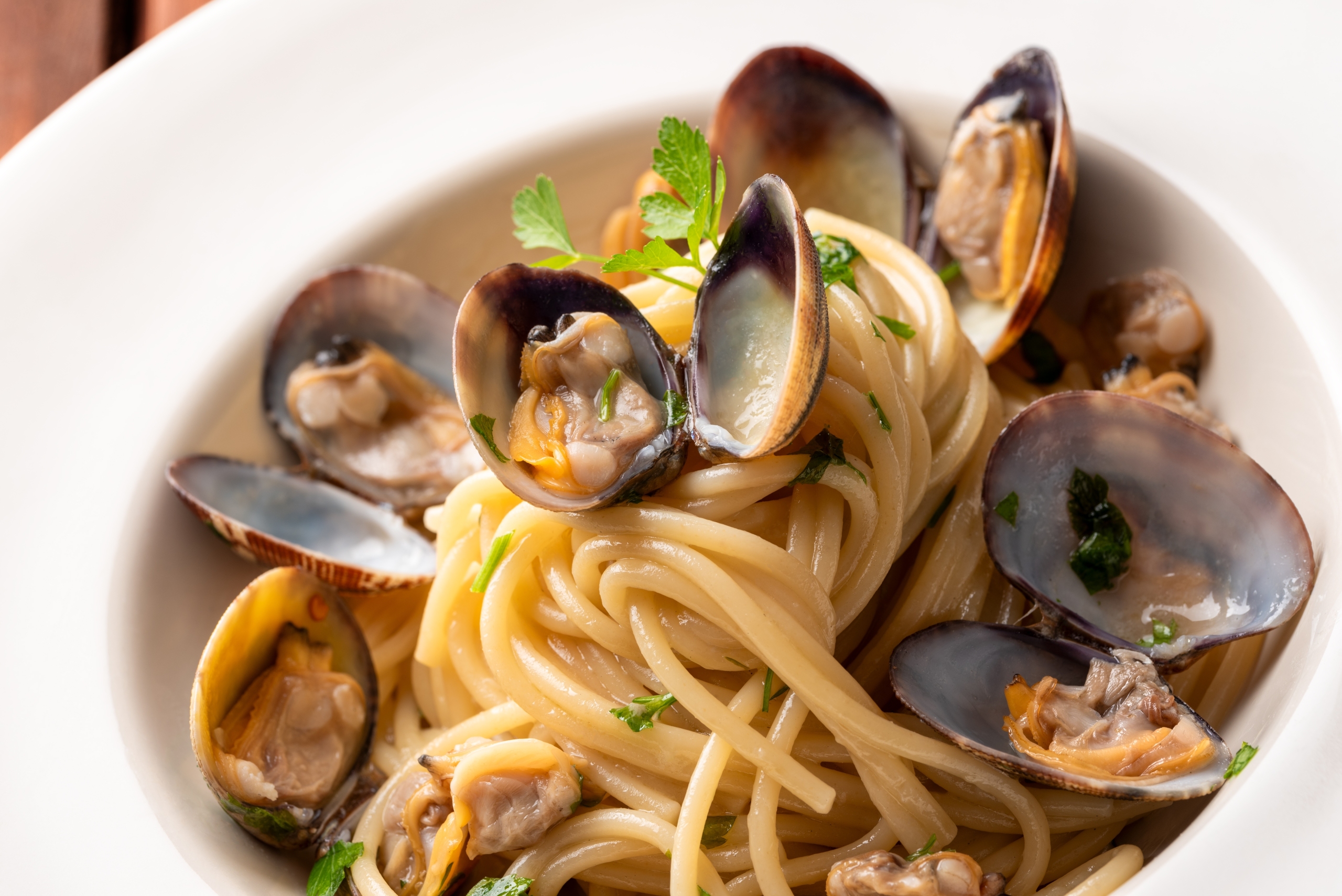
Christmas Eve dinner unfolds slowly. It often begins with a pettola – a fried dough ball offered to neighbors and relatives. Then come spaghetti with clams, a defining dish. Writer Matilde Serao described it in the late nineteenth century, when clams were plentiful in the Gulf. Today they come from protected zones. The dish remains a marker of identity.
After dinner, games begin. Neapolitan tombola, introduced in 1734 during the reign of Charles III of Bourbon, carries the night forward. Food stays on the table. Stories circulate. Families resist fatigue. Each year repeats the same sequence
December 25: The return of the land
If Christmas Eve belongs to the sea, December 25 returns to the land. This reflects an old agricultural rhythm. Meals often begin with minestra maritata, documented in sixteenth-century recipe collections. Its name – “married soup” – refers to the union of vegetables and mixed meats. A winter dish. A communal one.
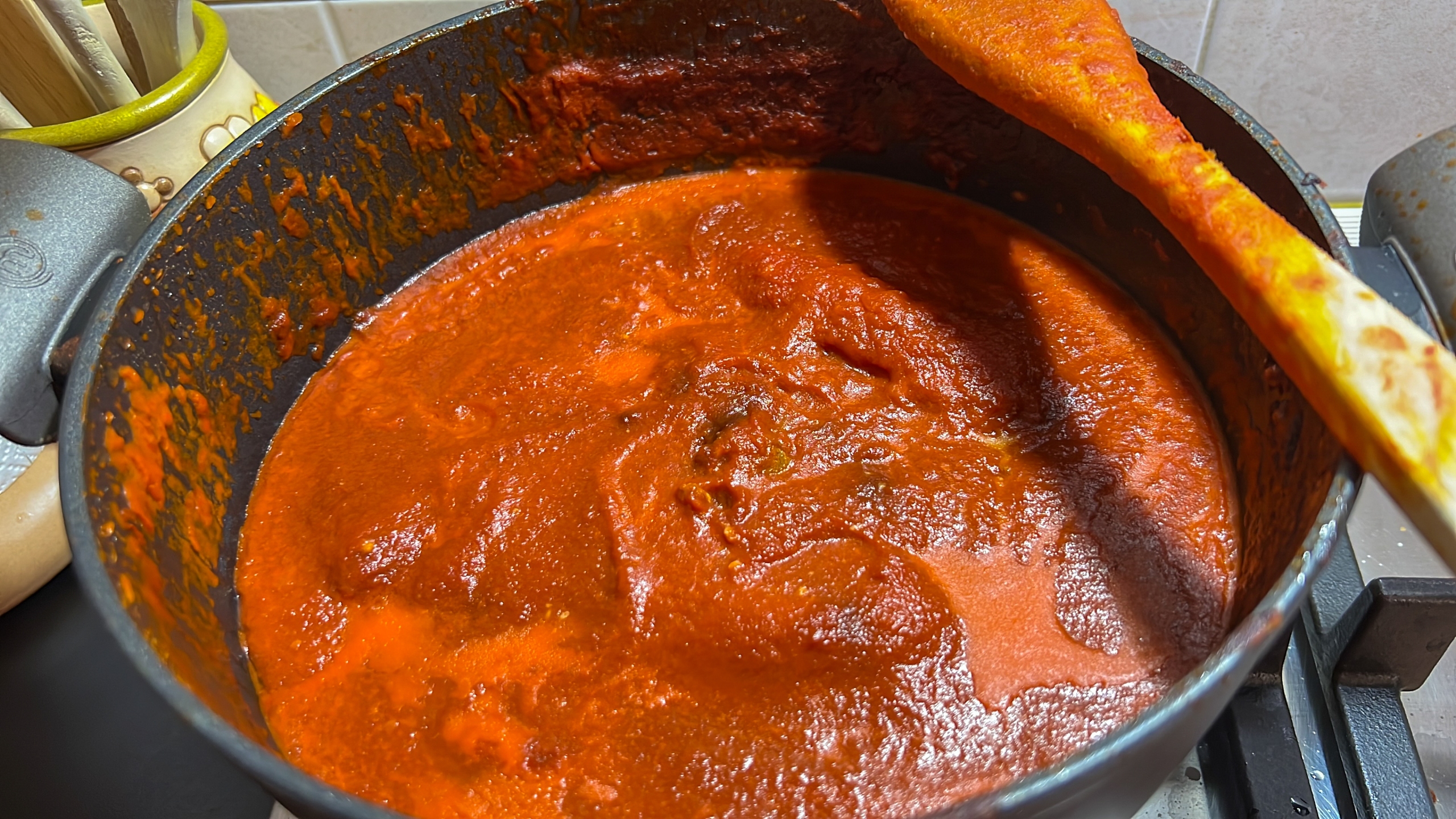
Next comes Neapolitan ragù. Slow. Ceremonial. Eduardo De Filippo devoted a poem to it. ’O rraù is not simply sauce; it is a test of patience.
Christmas lasagna follows, defined by monumental layers. Eighteenth-century sources already mention filled lasagne for winter festivities. Ricotta, cured sausage, mozzarella. Each household adds a variation. None removes an element.
Sweets: Convents and transmission
Neapolitan Christmas sweets often trace back to monastic kitchens. Nuns were skilled in sugar and spices, and recipes circulated between convents.
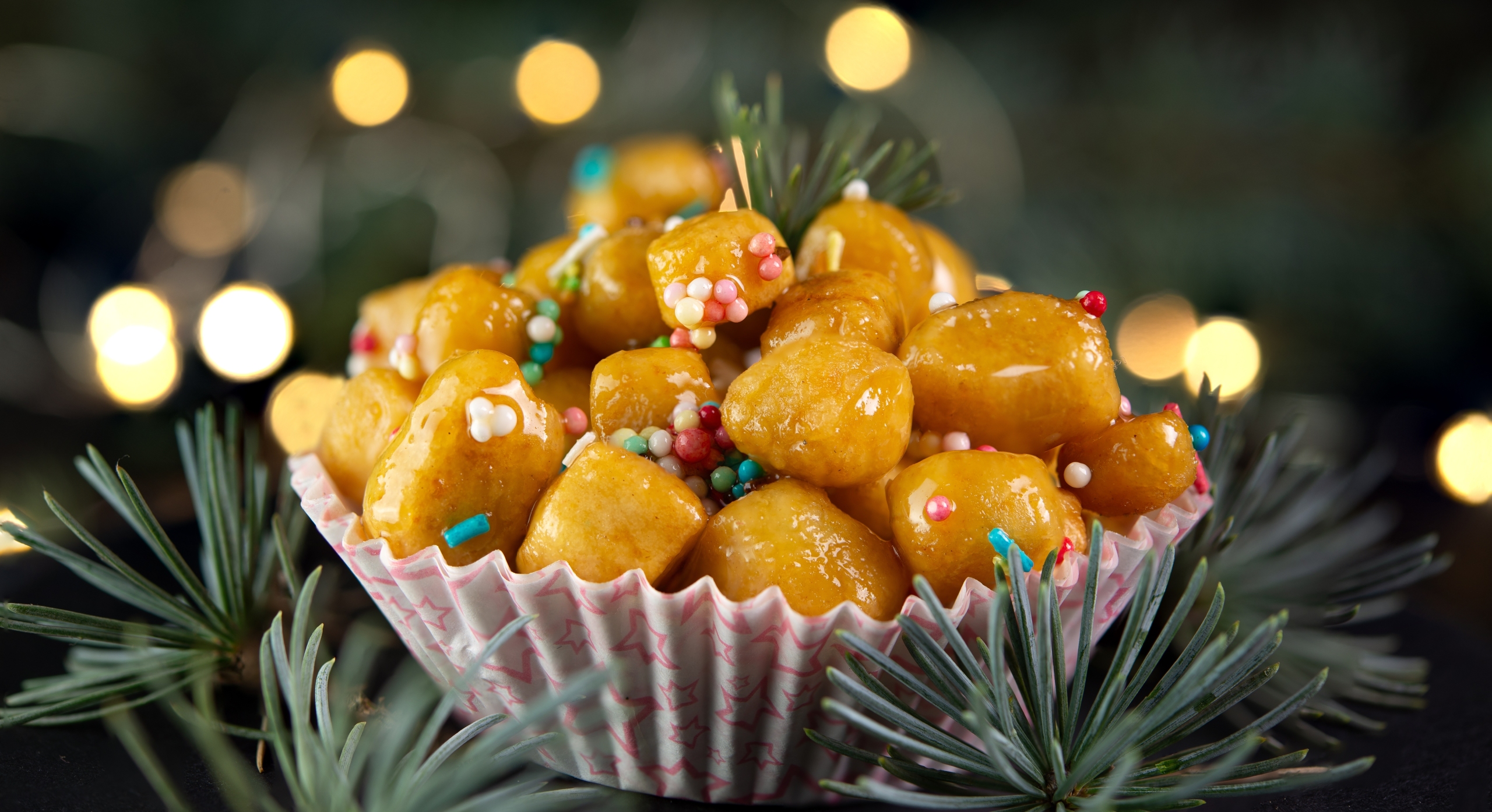
Struffoli appear in seventeenth-century texts. Some scholars link them to Greek traditions; the name may derive from strongylos, meaning “round.” Nuns at the convent of Santa Maria dello Splendore distributed them to benefactors at Christmas. Since then, they have been inseparable from the season.
Roccocò emerged in the eighteenth century – dense, aromatic with citrus and Eastern spices. Mustacciuoli, coated in dark chocolate, have medieval roots. Susamielli, shaped like an “S,” were associated with artisan households, made with honey, almonds, and cinnamon.
Pastiera occasionally appears at Christmas tables, though it remains more closely associated with Easter. Its origins are ancient, possibly linked to pre-Christian fertility rites. In Naples, traditions migrate. They adapt.
New Year’s Eve: Signs and continuity
The Christmas cycle extends to December 31, a night oriented toward auspices. The central dish is cotechino with lentils, a practice shared across Italy. Lentils symbolized coins in ancient Rome. In Naples, they entered domestic ritual during the nineteenth century and remain a sign of hoped-for prosperity.
Many families also serve capitone if it was not prepared earlier. In some districts, it persists as a protective gesture. Fish completes a symbolic circle.
Struffoli last until Epiphany – the final trace of the departing season.
Memory across distance
Neapolitan Christmas food functions as folklore and as living memory. It has endured famine, war, and migration. Emigrants carried these recipes to the Americas. In Buenos Aires during the 1920s, struffoli appeared at gatherings of Italian societies. In New York, Little Italy markets sold live eels until the 1960s, as period photographs attest.
Christmas becomes a bridge—a shared ritual, even for those far from the Gulf.
Family stories
In Montesanto, a woman recalls her grandmother preparing spaghetti with clams while murmuring a short prayer before salting the water – a gesture of gratitude, habitual rather than doctrinal.
In Forcella, a man remembers delivering roccocò to neighbors as a child and receiving three in return. The neighborhood was poor. No one went without sweets.
In Posillipo, an elderly woman repeats a proverb: “If the capitone escapes toward the door, it brings travel. If it escapes toward the window, it brings wind.” Folklore. Apprehension. Hope.
Christmas today
The city changes. So does its cooking. Restaurants offer lighter versions. Pastry shops reinterpret struffoli. Fishmongers preserve Christmas Eve rituals. Younger generations return to their grandparents’ recipes. The cycle continues.
Christmas food in Naples forms a collective narrative – of sea and land, belief and superstition, scarcity and abundance, families who endure, flavors that persist.
Each dish is a page. Each page, an inheritance. Naples continues to write it – every December, every long night, whenever oil begins to fry or ragù starts to simmer. Here, Christmas tastes like history.
AI Transparency Notice
PilgriMaps uses artificial intelligence tools to assist in the research, drafting and translation of editorial content. All AI-assisted content is reviewed, edited and verified by our editorial team before publication. We contrast information against primary sources, specialist literature and on-the-ground knowledge to ensure accuracy, cultural sensitivity and editorial integrity.
AI is one tool among many in our workflow. The judgement, curation and responsibility for everything published on this platform remain entirely human.
Viator Media S.L. — in compliance with the EU Artificial Intelligence Act (Regulation EU 2024/1689).
This post is also available in: