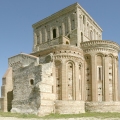
Saint-Tugdual Cathedral stands in Tréguier (Côtes-d’Armor) and was the cathedral of the former Diocese of Tréguier, one of the nine historic dioceses of Brittany until 1790. Today it is linked to the Parish of Saint-Yves de Tréguier and remains a major pilgrimage sanctuary because Saint Yves (St Ivo of Kermartin) is buried here. Around 19 May, the feast of Saint Yves brings a large Breton pardon (a traditional pilgrimage and celebration), making the cathedral one of the seven key stops on the Tro Breiz route.
Built mainly in Gothic style from the 13th to the 15th century, it still preserves a Romanesque survivor: the Hastings Tower, the last remnant of an earlier cathedral. The building is famous for its unusual silhouette: three towers rise over the transept (none on the west façade), and the tallest belfry with its openwork spire is set at the southern end of the transept, giving the exterior a strikingly off-centre drama.
Inside, Saint-Tugdual holds major treasures: the neo-Gothic cenotaph of Saint Yves (completed in 1890) and the tomb of Duke John V of Brittany, a 17th-century organ case originally from Bégard Abbey, and a celebrated set of carved choir stalls made in the early 16th century. The cloister galleries shelter additional tomb slabs and funerary monuments gathered from the region. Its heritage status is heavyweight: it was listed as a historic monument in 1840, and was raised to a minor basilica in 1947 by Pope Pius XII for the 600th anniversary of Saint Yves’ canonisation.
- Address
Place du Martray – Tréguier – France - Web
https://www.cotesdarmor.com/fr/fiche/patrimoine-culturel/cathedrale-saint-tugdual-treguier_TFOPCUBRE0220HA6396/ - Visiting Hours
Unknown - What to see
Saint Yves’ cenotaph (1890), Hastings Tower (Romanesque), the cloister and funerary slabs
AI Transparency Notice
PilgriMaps uses artificial intelligence tools to assist in the research, drafting and translation of editorial content. All AI-assisted content is reviewed, edited and verified by our editorial team before publication. We contrast information against primary sources, specialist literature and on-the-ground knowledge to ensure accuracy, cultural sensitivity and editorial integrity.
AI is one tool among many in our workflow. The judgement, curation and responsibility for everything published on this platform remain entirely human.
Viator Media S.L. — in compliance with the EU Artificial Intelligence Act (Regulation EU 2024/1689).
This post is also available in: