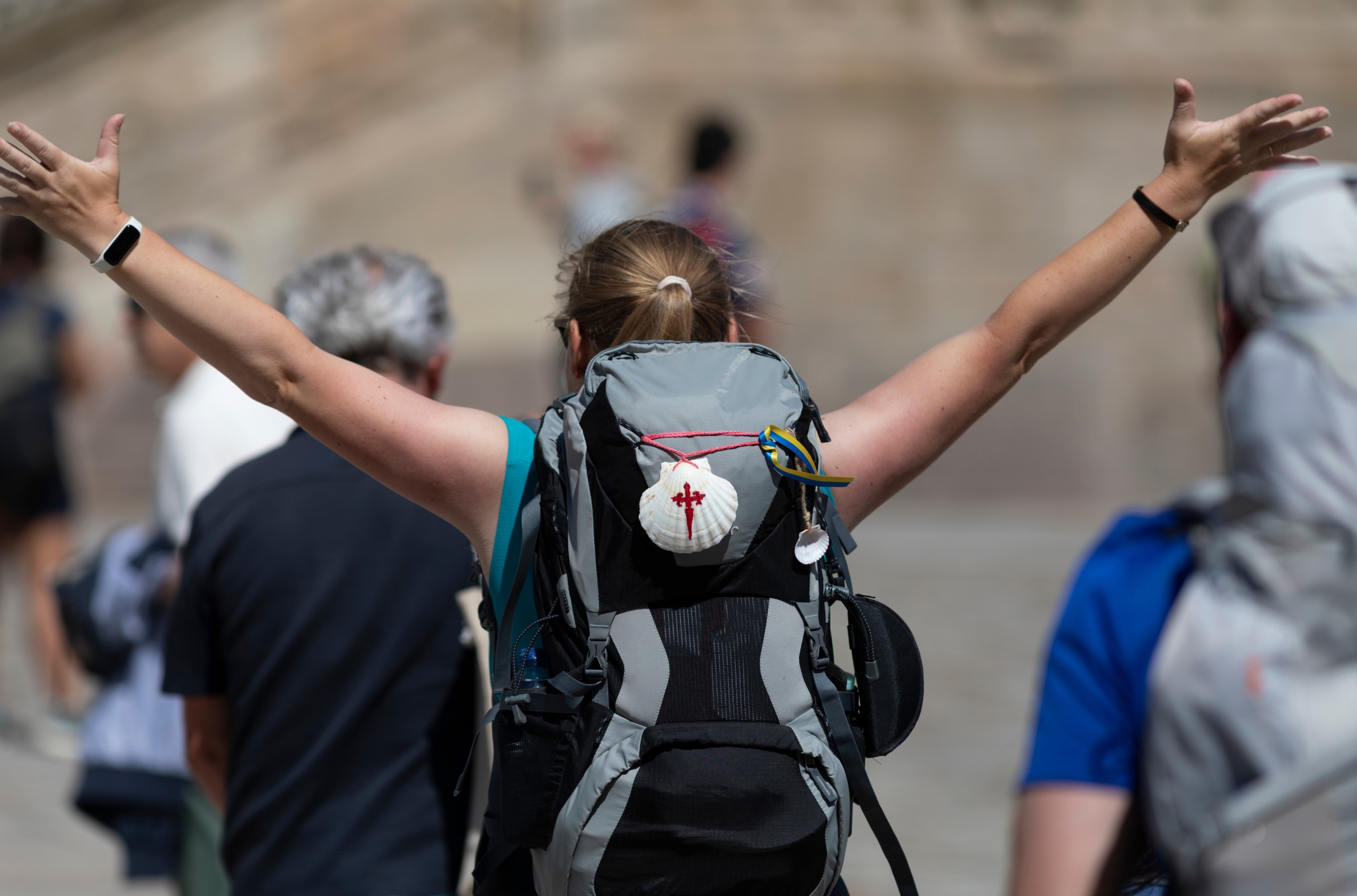
The Camino de Santiago — a network of historic routes culminating in Santiago de Compostela in northwestern Spain — has continued its long-term growth as a destination for cultural walking, outdoor travel, and personal journeying. After decades of rising participation and renewed global interest following pandemic downturns, 2025 saw the highest number of registered completions in the recorded modern era.
According to official data from the Oficina del Peregrino at the Cathedral of Santiago de Compostela, 530,987 pilgrims received a Compostela certificate in 2025, surpassing all previous annual totals. This marks the first time that more than half a million people have completed a Camino route and registered their arrival at Santiago on the same calendar year.
These figures reflect the number of pilgrims who met the minimum official distances (usually at least 100 km on foot or 200 km by bicycle) and chose to document their journey with a credential and certificate.
Context: What this record means
The trend toward rising pilgrim numbers has been evident over the last decade. Before 2025’s record:
- 2024 saw figures approaching 500,000 registered pilgrims, itself a significant milestone.
- Going back further, pilgrim totals grew steadily after pandemic declines and have exceeded pre-pandemic levels from 2019 onward.
That 2025 eclipses these earlier totals indicates a sustained broadening of interest in the Camino, not only from traditional European participants but also from global walkers seeking cultural and experiential travel.
Who walks the Camino today
The demographic profile of Camino pilgrims in 2025 shows a wide range of origins and motivations:
- Women accounted for a slight majority (about 53.4 % of those receiving certificates), a continuation of a trend seen in recent years.
- Nationality distribution remains international: Spanish walkers form the largest single group, followed by hikers from the United States, Italy, Germany, Portugal, and many more.
- Some pilgrims cite a blend of motivations — cultural, recreational, personal challenge, and experiential travel — alongside or instead of religious reasons.
These shifts reflect the Camino’s place as a global walking route that draws diverse participants who are often as interested in landscapes, cultural exchange, and heritage as in tradition alone.
Route patterns: Where pilgrims go
While numerous paths lead to Santiago, several stand out in the 2025 statistics:
- The Camino Francés remains the most popular route, chosen by nearly half of all pilgrims in 2025.
- The Camino Portugués (central and coastal) continues to grow as a significant second option, reflecting broader trends in route diversification.
- Other traditional ways — such as the Camino Inglés, Camino del Norte, and Camino Primitivo — maintain steady participation, collectively adding texture and choice to the Camino network.
Understanding these patterns offers insights into how different landscapes, cultural experiences, and logistical factors influence pilgrim choices.
Interpreting the growth
Several factors contribute to the Camino’s rising visitation:
- Global awareness and travel infrastructure. Reliable information, accommodation networks, and transport access make the routes more approachable for international visitors.
- Experiential travel trends. More people seek slow-paced journeys that combine physical challenge with cultural immersion.
- Post-pandemic revitalization. After travel restrictions lifted, demand for outdoor and purposeful travel surged.
- Non-religious engagement. Many participants undertake the Camino for personal or cultural reasons rather than purely religious ones — broadening the appeal.
Looking ahead: 2026 and beyond
With statistics from early 2025 already indicating continued year-on-year growth, and with the next Holy Year (when 25 July falls on a Sunday) scheduled for 2027, many observers expect pilgrim numbers to continue rising.
This trajectory raises questions about route management, sustainability, and the experience of pilgrimage itself — especially on popular segments such as the Francés. Yet it also underscores the enduring draw of the Camino as a route that links landscape, heritage, and personal story across centuries.
AI Transparency Notice
PilgriMaps uses artificial intelligence tools to assist in the research, drafting and translation of editorial content. All AI-assisted content is reviewed, edited and verified by our editorial team before publication. We contrast information against primary sources, specialist literature and on-the-ground knowledge to ensure accuracy, cultural sensitivity and editorial integrity.
AI is one tool among many in our workflow. The judgement, curation and responsibility for everything published on this platform remain entirely human.
Viator Media S.L. — in compliance with the EU Artificial Intelligence Act (Regulation EU 2024/1689).
This post is also available in: