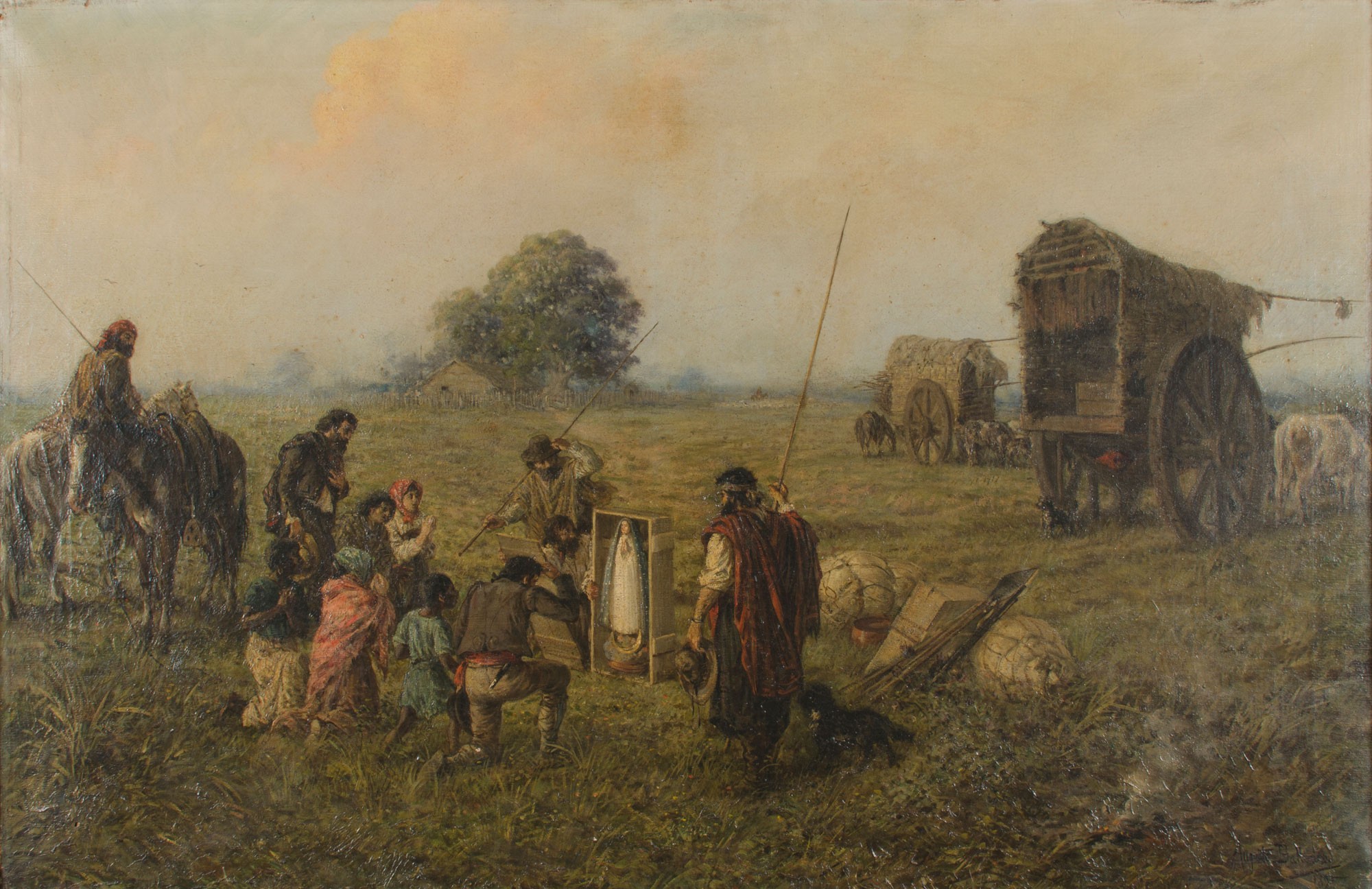
In 1630, a caravan was making its way through the vast pampas of the Río de la Plata. The oxen pulling one of the carts suddenly refused to advance, no matter how much the drivers urged them on. The load was light—just a few crates containing two small clay figures of the Virgin Mary sent from Brazil to Santiago del Estero—yet the animals remained firmly rooted. When one of the images was removed, the cart moved forward with ease. To the travelers, the meaning was immediate: the small terracotta figure, only 38 centimeters tall, would remain by the banks of the Luján River.
This image, a colonial representation of the Immaculate Conception, had been crafted in São Paulo or Pernambuco in the distinctive Hispano-Luso style of the time. Its counterpart eventually reached its intended destination and became known as the Virgin of Consolation of Sumampa. But the figure that stayed behind would transform a remote riverside outpost into Argentina’s most important pilgrimage destination.
Among the witnesses of that episode was a man who otherwise passed unnoticed: Manuel, an enslaved African who, from that moment, became inseparable from the image.
The unexpected custodian
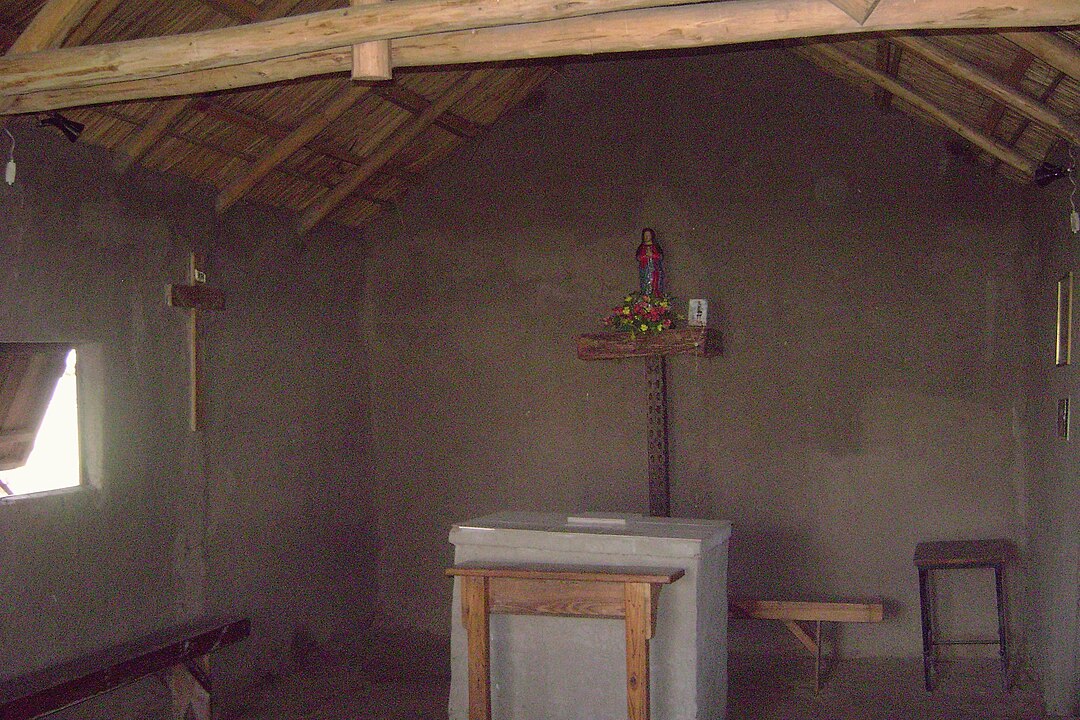
The owner of the land where the caravan had stalled built a modest mud-and-thatch chapel to house the statue. He entrusted its care to Manuel, who remained its only guardian for decades. While most regarded the image as a minor devotional object, Manuel lit the lamp, swept the oratory, and welcomed the occasional traveler. In doing so, he laid the foundations of what would become a national sanctuary.
His devotion was recognized in a highly unusual act for the time: the heirs of his owner formally transferred his servitude to the Virgin herself, declaring him free from human masters but bound in service to the sacred image. Manuel summarized this with a phrase remembered in popular tradition: “Slave of the Virgin, and nothing more.”
Life of Manuel Costa de los Ríos
Born around 1604 in Cape Verde, Manuel was captured as a child and taken into slavery. After baptism and transport to Brazil, he eventually reached Buenos Aires, where he was sold into the household of Captain Bernabé González Filiano near the Luján River.
Illiterate and living on scarce means, Manuel developed a reputation for simplicity and steadfastness. Early chroniclers describe him with a long beard, dressed in coarse clothing, resembling an ascetic figure. He was known to offer water to travelers, comfort the sick, and share what little food he had. For many of the first pilgrims, he became the human face of the sanctuary: the humble figure who welcomed them at the door of a small riverside chapel.
Relocations and growing tensions
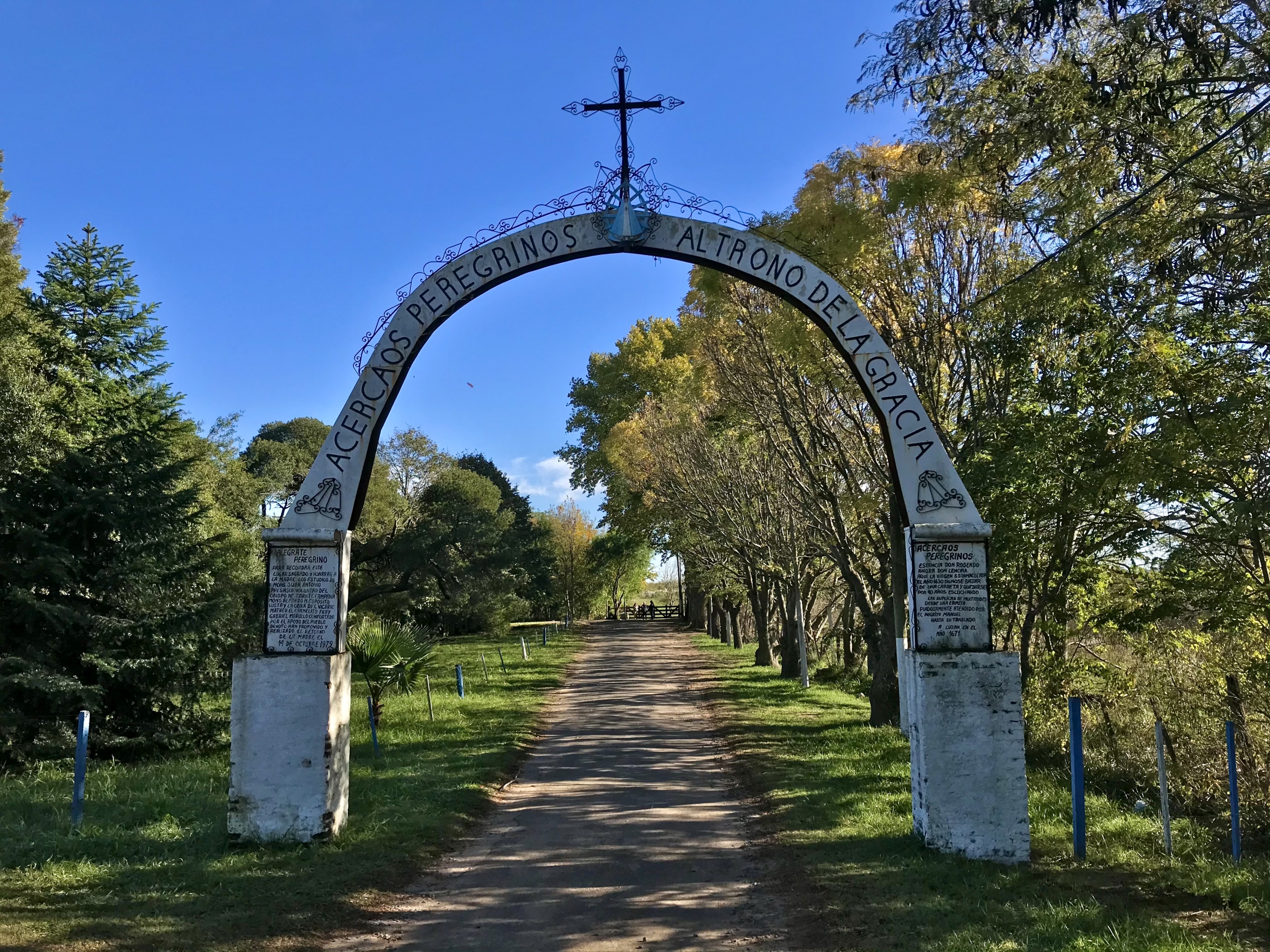
As word spread, the modest oratory where Manuel lived with the image proved inadequate. Its location—low-lying, prone to flooding, and distant from the main road—was difficult for visitors. In 1671, a local woman named Ana de Matos petitioned to move the image to her estate in Luján, which was safer and more accessible.
Tradition recounts that the statue repeatedly returned to Manuel, reappearing at its former site despite being relocated. Whether symbolic or literal, this narrative reinforced the idea that the African caretaker and the image were inseparable.
By 1674, Ana de Matos formally purchased Manuel so that he could continue his guardianship within her new chapel. This marked the beginning of a more permanent sanctuary, soon to grow into the town of Luján. There, Manuel carried on as before—maintaining the lamp, praying, and receiving visitors—now in a setting where devotion could expand without hindrance.
Final years and legacy
Manuel died in 1686 after more than half a century of service. According to accounts, he predicted his passing on a Saturday, which indeed occurred. He was buried near the statue he had guarded throughout his life.
Documentation about him is scarce, but memory preserved his story. Pilgrims remembered him as the sanctuary’s first servant, a man whose humility embodied the spirit of welcome. Folk art, murals, and popular songs later celebrated him as “El Negro Manuel,” a symbol of fidelity and simplicity.
In the 21st century, his life has drawn renewed attention. The Catholic Church has opened a process for his beatification, presenting him as a model of devotion. At the same time, Afro-Argentine communities have reclaimed his memory as part of a silenced heritage, emphasizing his endurance and dignity in the face of enslavement.
Memory in the present
Today, visitors to the Basilica of Luján encounter references to Manuel in its artworks and in the smaller “Casita de la Virgen,” which commemorates the original chapel. For many pilgrims, his figure is inseparable from the image itself.
The narrative of Manuel Costa de los Ríos highlights the intersections of colonial history, African diaspora experiences, and popular devotion in South America. More than a footnote to a statue’s arrival, his life illustrates how an enslaved man, marginalized and nearly invisible in official records, shaped the origins of Argentina’s most widespread pilgrimage tradition.
AI Transparency Notice
PilgriMaps uses artificial intelligence tools to assist in the research, drafting and translation of editorial content. All AI-assisted content is reviewed, edited and verified by our editorial team before publication. We contrast information against primary sources, specialist literature and on-the-ground knowledge to ensure accuracy, cultural sensitivity and editorial integrity.
AI is one tool among many in our workflow. The judgement, curation and responsibility for everything published on this platform remain entirely human.
Viator Media S.L. — in compliance with the EU Artificial Intelligence Act (Regulation EU 2024/1689).
This post is also available in: