


Across the plains of southern Iraq, where the Euphrates drifts through dust-colored towns and ancient mounds rise like islands in the light, lies one of humanity’s earliest spiritual landscapes. Among these tells and riverbeds stands the ruined city of Ur—its ziggurat still commanding the horizon after four millennia. Tradition holds that here, in this cradle of urban civilization, the figure of Abraham was born. His story, shaped by later centuries, begins not in a wilderness but in the world’s first cities—places where writing, worship, and migration first intertwined.
To speak of Abraham in Iraq is to consider the origins of the very idea of pilgrimage: the human impulse to leave one’s home in search of meaning.
The Land of Beginnings
The land between the Tigris and Euphrates was the setting of humanity’s first sustained experiments in settlement and sanctity. From the fourth millennium BCE onward, Sumerian city-states—Eridu, Uruk, Lagash, and Ur—created temples that served both administrative and spiritual functions. The ziggurat, a stepped tower linking earth and sky, embodied a belief in proximity to the divine through architecture and ascent.
Pilgrimage, in its earliest form, emerged here as civic ritual. Citizens journeyed to the temples of Enlil in Nippur or Inanna in Uruk to offer tribute, to participate in festivals, or to seek omens. Movement toward sacred centers thus preceded monotheism by millennia. When later traditions situated Abraham’s story in this region, they inherited a geography already charged with millennia of sacred travel.
Abraham of Ur
Archaeology places ancient Ur (Tell al-Muqayyar) near the modern city of Nasiriyah in southern Iraq. Excavations led by Leonard Woolley in the 1920s uncovered a vast complex of temples, palaces, and royal tombs dating to the early second millennium BCE. The great ziggurat, built under King Ur-Nammu around 2100 BCE, remains one of the best-preserved monuments of Sumer.
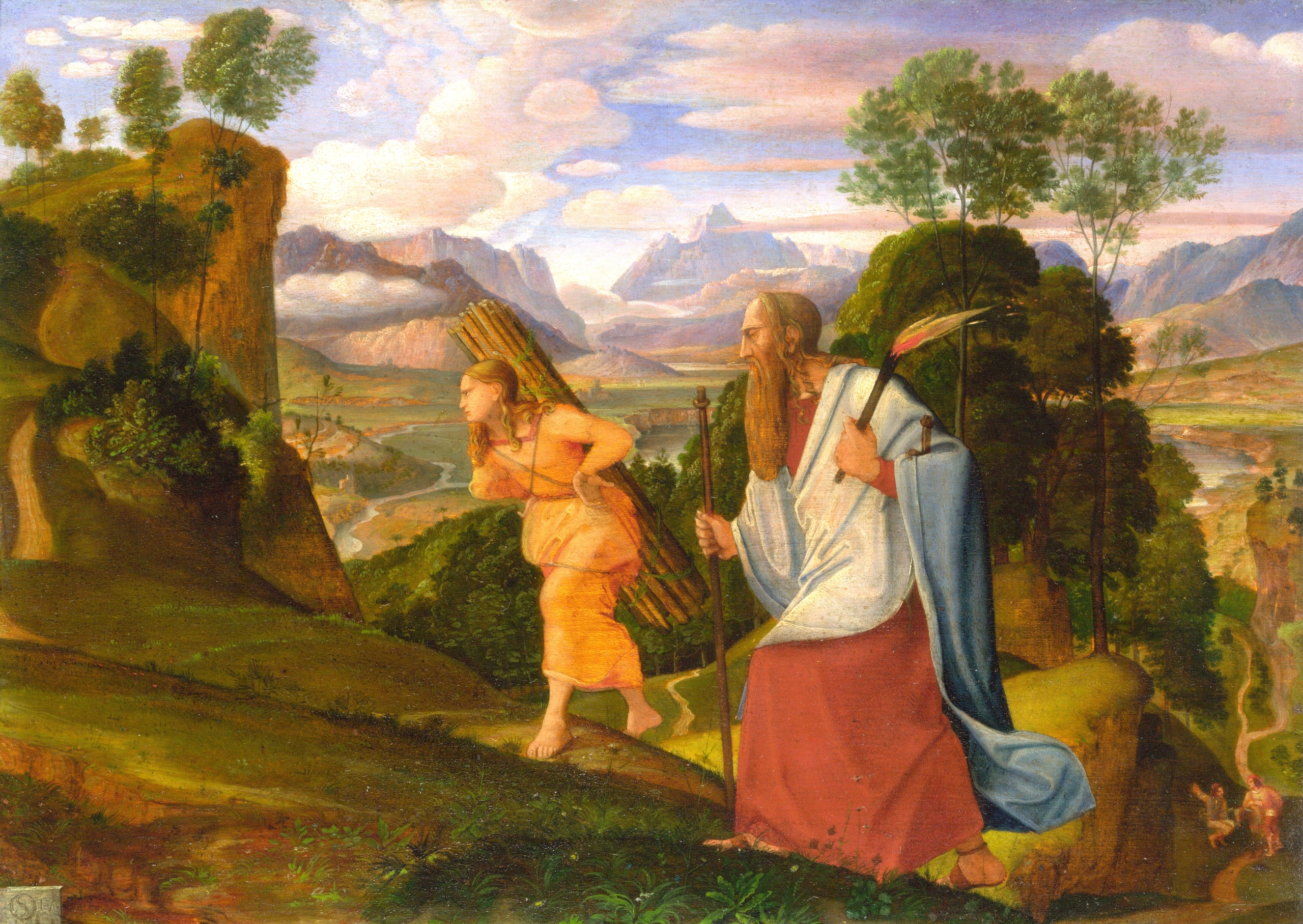
In the later Hebrew and Qurʾanic traditions, this city became “Ur of the Chaldees,” birthplace of Abraham—the patriarch who left Mesopotamia for a land of promise. Whether or not his historicity can be established, the association reveals how deeply the memory of Mesopotamia shaped later conceptions of origin and exile. Abraham’s departure from Ur can be read not only as a theological act but also as a reflection of Mesopotamian migration patterns: the movement of families, traders, and dreamers along the river corridors toward new frontiers.
Seen through an archaeological lens, Abraham represents the first recorded pilgrim of world literature—a traveler whose journey transformed geography into narrative.
Iraq and the Geography of Pilgrimage
Iraq occupies a singular place in the cartography of sacred travel. It is both the source of ancient religious imagination and the continuing landscape of devotion. The idea of pilgrimage—movement from the known to the unknown—has unfolded here in multiple epochs.
In pre-Islamic times, routes connected the temples of Babylon and Nippur; in the early Islamic era, new pathways linked Kufa, Karbala, Samarra, and Najaf. Each site expressed a different articulation of faith and remembrance, yet all drew upon the same Mesopotamian instinct to sacralize geography. The pilgrim roads of Iraq trace an unbroken cultural thread from Sumerian processions to modern ziyarat.
To stand at Ur and gaze northward toward Najaf is to see not a contrast of eras but a continuity of gesture: the act of walking toward meaning. The landscapes of Irak—its marshes, deserts, and river valleys—have long shaped a theology of movement where the terrain itself becomes a teacher.
Memory in Stone and Sand
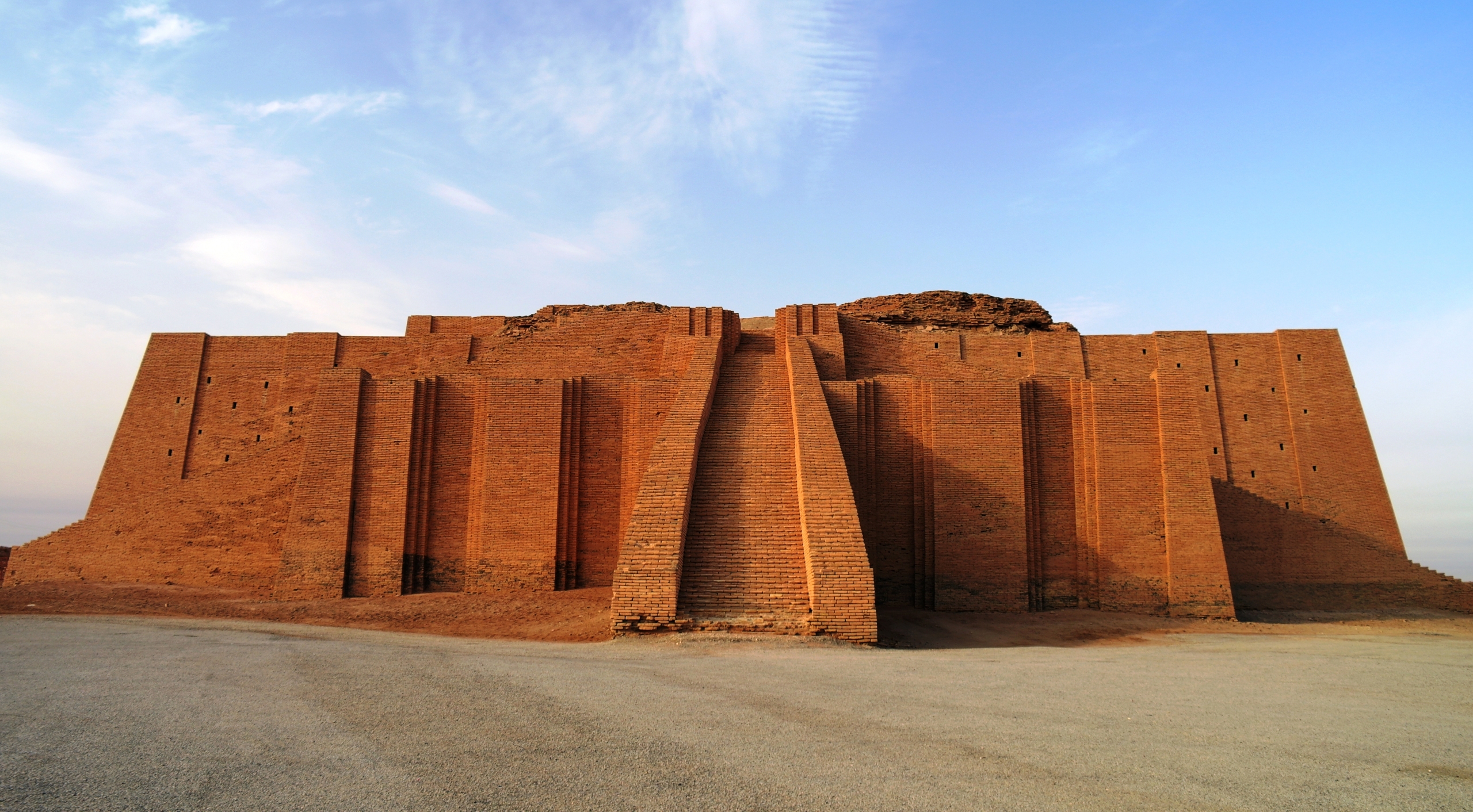
Ur remains today an archaeological site surrounded by military installations and quiet desert plains. Visitors ascend the restored stairway of the ziggurat, its baked bricks stamped with cuneiform inscriptions naming kings who ruled four thousand years ago. The wind carries little sound but carries memory: of hymns once sung to Nanna, the moon god, and of stories later told of a man who left this very land in pursuit of an unseen truth.
Other Mesopotamian sites echo this continuity. Babylon, once a seat of empire and myth, became the backdrop for narratives of exile. Nippur, sacred to Enlil, continued to attract scholars into the first millennium BCE. Each was both a city and a destination, sustained by the belief that place could embody the sacred.
In the Islamic centuries, the pattern persisted. Najaf, where ʿAlī ibn Abī Ṭālib is buried, became a center of pilgrimage and learning; Karbala, where Husayn was martyred, drew millions annually. These journeys—emotional, physical, intellectual—belong to a cultural lineage that began with the Mesopotamian awareness that the divine might be approached through travel.
Iraq as a Symbolic Homeland
In the wider imagination of pilgrimage, Iraq stands as both origin and crossroads. It is the land of the first cities, the first maps, the first recorded prayers—and also the point of departure for countless journeys outward. Through Abraham, the narrative of migration acquires universal resonance: the notion that meaning is found in motion, that the sacred begins with a step away from home.
Today, Ur’s ziggurat, Najaf’s golden dome, and Karbala’s shrines form a triad of human aspiration—ancient, enduring, and interlinked. Pilgrims and travelers who visit them participate in a dialogue across time: between the temple processions of Sumer, the migrations of prophets, and the ritual journeys of modern faith.
In this sense, Iraq is not only a geographic place but a symbolic landscape—a memory of beginnings that continues to shape how humanity conceives of pilgrimage itself. From Ur’s sun-baked terraces to Najaf’s luminous courtyards, the Mesopotamian plain remains what it has always been: a corridor of belief, a land of departure, and a horizon of return.
AI Transparency Notice
PilgriMaps uses artificial intelligence tools to assist in the research, drafting and translation of editorial content. All AI-assisted content is reviewed, edited and verified by our editorial team before publication. We contrast information against primary sources, specialist literature and on-the-ground knowledge to ensure accuracy, cultural sensitivity and editorial integrity.
AI is one tool among many in our workflow. The judgement, curation and responsibility for everything published on this platform remain entirely human.
Viator Media S.L. — in compliance with the EU Artificial Intelligence Act (Regulation EU 2024/1689).
This post is also available in:


