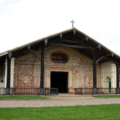
The Abbey of San Pietro ad Oratorium is a Benedictine abbey located in Capestrano, in the province of L’Aquila, and was declared a national monument in 1902. Originally founded as “San Pietro in Trite” in the 8th century by King Desiderio—when it was a dependency of the Abbey of San Vincenzo al Volturno—it was rebuilt in the Romanesque style between the late 11th and early 12th centuries. The renovation was promoted by Rectors Gherardo, Benedetto, and the monk Antonio, and the abbey was officially consecrated by Pope Pasquale II, who brought relics of St. Peter for the occasion.
The exterior retains its original stone structure with regular blocks up to the lateral naves, featuring a small portal decorated with vegetal motifs and traces of frescoes depicting St. Peter, as well as a notable slab known as the “Sator square” with the inscription “ROTAS OPERA TENET AREPO SATOR.” Inside, the church is organized into three naves divided by round arches resting on square-based pillars, with an apse at the end of each nave. The presbytery houses a 13th-century altar and ciborium, while the apse preserves a cycle of frescoes and the triumphal arch bears traces of an image of Christ with the evangelists and the twenty-four watchers of the Apocalypse.
- Address
6RW4+PC, Capestrano, Italy - Web
https://cultura.gov.it/luogo/chiesa-di-san-pietro-ad-oratorium - Visiting Hours
Every day from 10:00 to 12:30 and from 15:00 to 18:00 - What to see
SATOR square, frescoes
AI Transparency Notice
PilgriMaps uses artificial intelligence tools to assist in the research, drafting and translation of editorial content. All AI-assisted content is reviewed, edited and verified by our editorial team before publication. We contrast information against primary sources, specialist literature and on-the-ground knowledge to ensure accuracy, cultural sensitivity and editorial integrity.
AI is one tool among many in our workflow. The judgement, curation and responsibility for everything published on this platform remain entirely human.
Viator Media S.L. — in compliance with the EU Artificial Intelligence Act (Regulation EU 2024/1689).
This post is also available in: