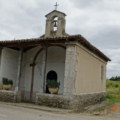
The walls of Avila, with an imposing and solid structure, are one of the jewels of medieval military architecture and one of the best preserved in the world. This monument, which completely surrounds the old city of Avila, was designed to defend and control access to the city. Its nearly 2.5 kilometers long and more than 2,500 battlements include 87 semicircular towers. Each gate stands out for its architectural and historical peculiarity. The Alcázar Gate and the San Vicente Gate, of great beauty and detailed stonework, are the most recognizable entrances, allowing us to understand the advanced defensive design of the time.
The walls of Avila, in addition to its architectural and historical value, is an important point on both the Camino de Santiago de Levante and the Teresian Route, which passes through the key places in the life of St. Teresa of Jesus. The Puerta del Alcázar, in particular, allows pilgrims on the Pilgrim’s Way to Santiago de Compostela and followers of the Teresian Route to enter the historic quarter, linking this medieval fortress with the spiritual and cultural heritage of the city and its most illustrious saint.
- Address
C. Conde Don Ramón 15, Ávila - Web
https://muralladeavila.com/en/ - Visiting Hours
Everyday from 10:00 to 20:00 - What to see
Medieval Walls, Gates
AI Transparency Notice
PilgriMaps uses artificial intelligence tools to assist in the research, drafting and translation of editorial content. All AI-assisted content is reviewed, edited and verified by our editorial team before publication. We contrast information against primary sources, specialist literature and on-the-ground knowledge to ensure accuracy, cultural sensitivity and editorial integrity.
AI is one tool among many in our workflow. The judgement, curation and responsibility for everything published on this platform remain entirely human.
Viator Media S.L. — in compliance with the EU Artificial Intelligence Act (Regulation EU 2024/1689).
This post is also available in: