There are national cuisines—Italian, French, Turkish—and then there is one named not for a country but a city: Wiener Küche, or Viennese cuisine. No other urban centre has lent its name to an entire culinary tradition, and that singularity says much about Vienna’s place in European history. Born from centuries of empire, migration, and courtly ritual, Viennese cuisine stands as the edible memory of a multicultural world that once radiated from the Habsburg capital across Central Europe.
The birth of a city’s table
Vienna’s cuisine took shape in the 18th and 19th centuries, when the city was the administrative and cultural heart of the Austro-Hungarian Empire. For centuries, the imperial kitchens had drawn ingredients, methods, and tastes from the empire’s vast reach: the Alps, the Balkans, Bohemia, Galicia, and beyond. Cooks from Prague, Budapest, and Trieste brought their regional repertoires, while merchants introduced coffee from the Ottoman frontier, spices from the Levant, and chocolate from the Americas.
The result was neither purely Austrian nor wholly foreign. It was a composite table, unified by Viennese refinement and ritual. Dishes that originated elsewhere—goulash from Hungary, strudel from Central Europe, dumplings from Bavaria—were transformed by Viennese technique and presentation. By the late 19th century, the city’s cookbooks and cafés had codified a cuisine distinct enough to carry the city’s own name.
The imperial table
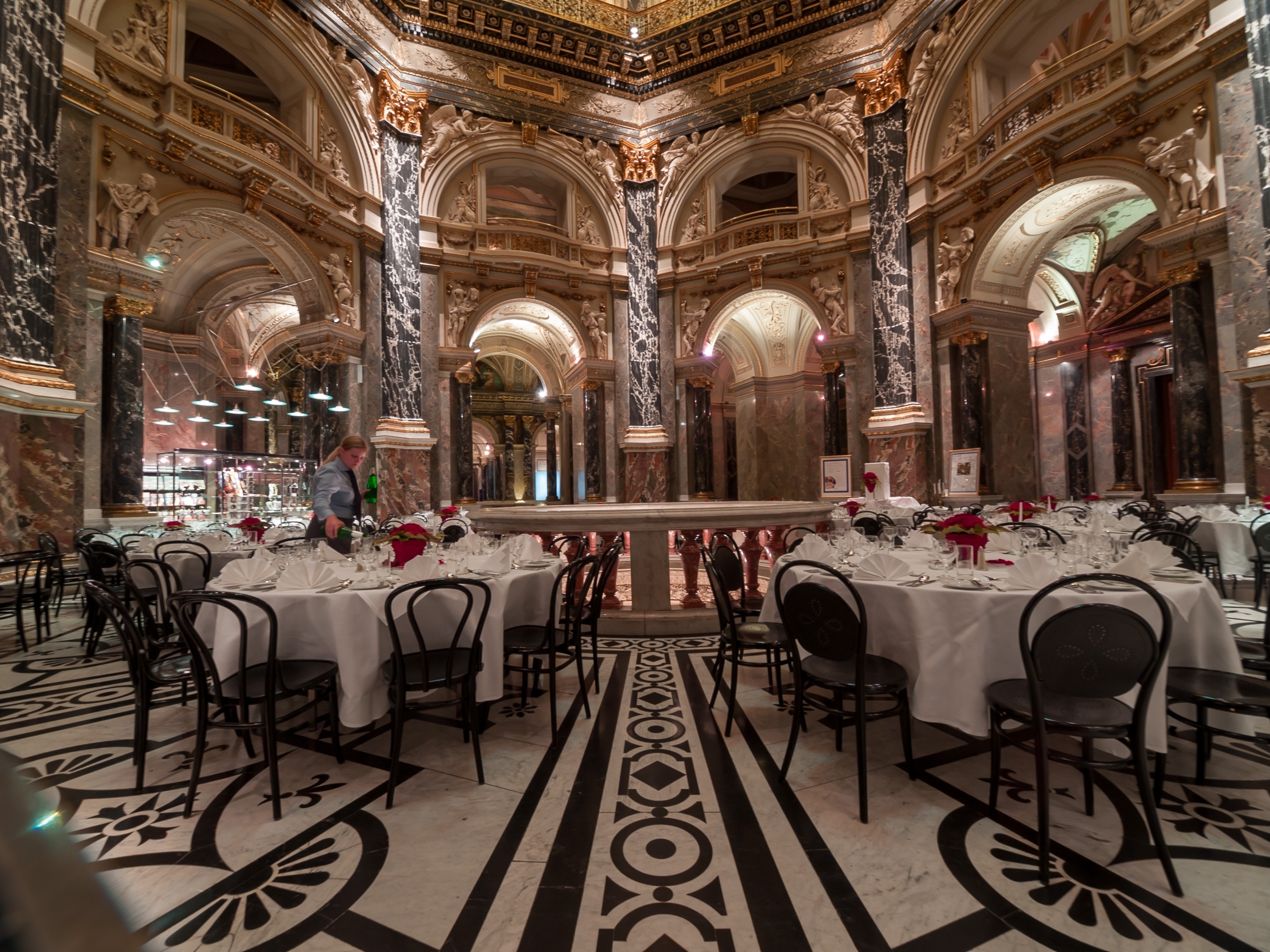
At the Habsburg court, dining was a statement of empire. The Hofküche (imperial kitchen) employed teams of chefs, bakers, and confectioners who merged regional recipes into elegant forms. Menus combined aristocratic French influence with local substance: roasts accompanied by horseradish and caraway, freshwater fish from the Danube, and pastries filled with fruit from Moravia or the Wachau Valley.
The layering of sweet and savory—so characteristic of Viennese taste—owes much to this imperial synthesis. The court’s banquets could feature venison in sour cream beside fruit compotes and nut-stuffed pastries, a contrast that still defines the city’s palate today.
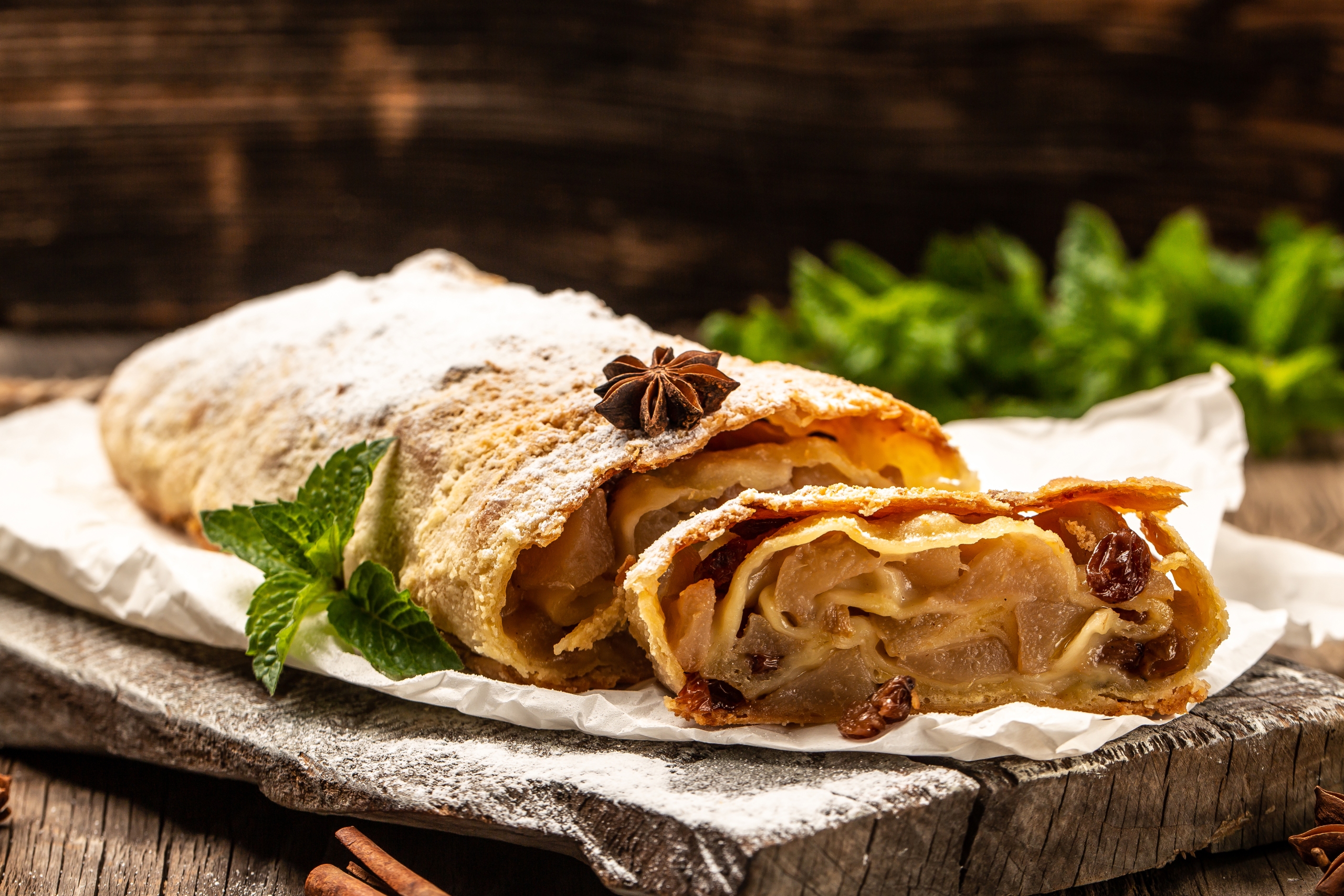
Outside the palace, middle-class households adapted these tastes into manageable domestic versions. By the time of Emperor Franz Joseph, Viennese cooking manuals had become bestsellers, standardizing recipes that remain familiar: Tafelspitz (boiled beef with apple-horseradish sauce), Wiener Schnitzel, Backhendl (fried chicken), and Apfelstrudel.
A city of cafés and kitchens
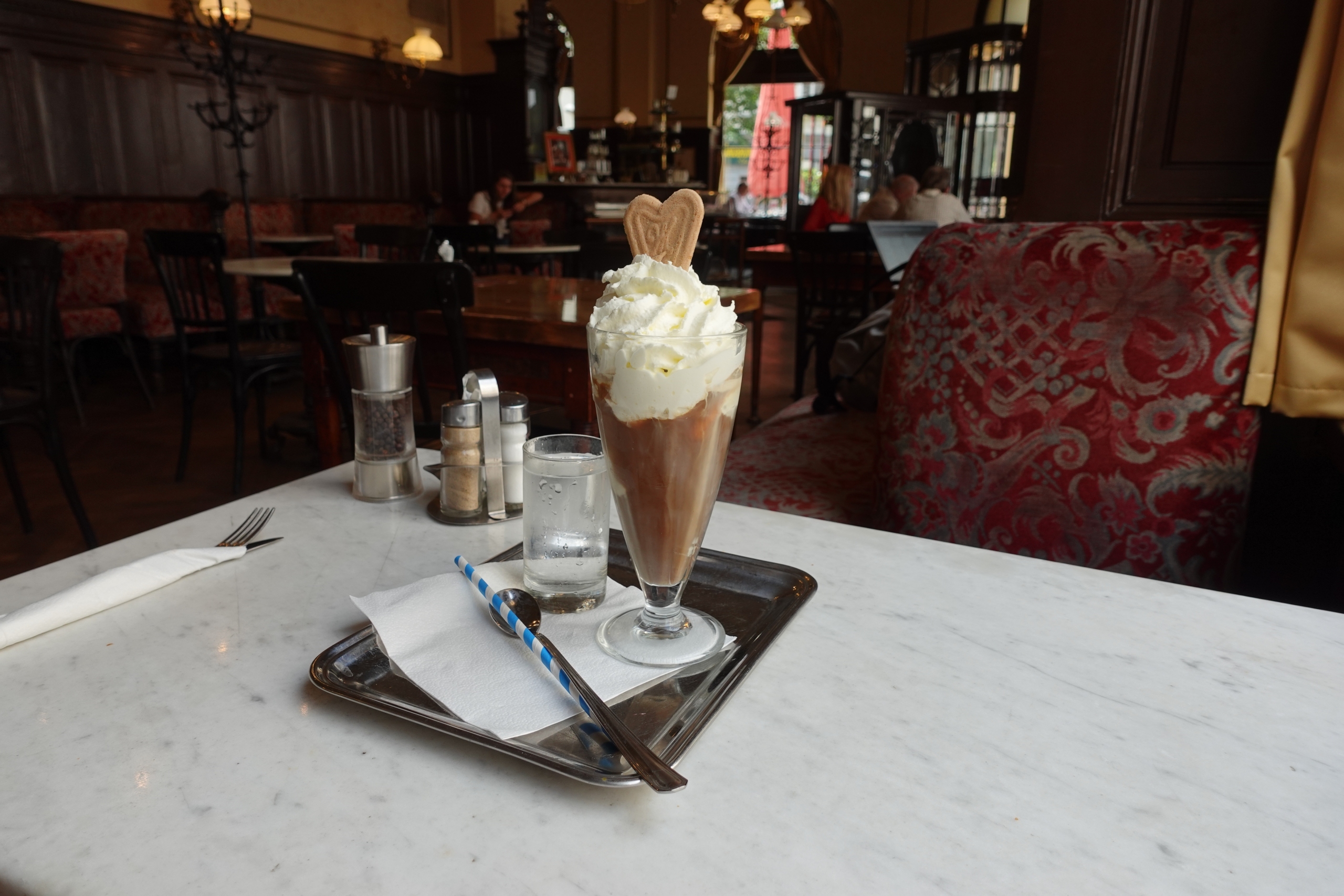
No discussion of Viennese cuisine is complete without its café culture. The first coffeehouses appeared in the late 17th century, after the Ottoman sieges, and soon became a civic institution. By the 19th century, the Viennese café had evolved into a social and intellectual space—half dining room, half reading room—where writers, composers, and merchants lingered for hours over a cup of Melange and a slice of cake.
The cafés helped define the rhythm of urban life and gave birth to a genre of pastry-making unrivalled in precision and artistry. Sachertorte, Linzer Torte, Kardinalschnitte, and Dobostorte are not merely desserts but symbols of the city’s measured indulgence. Each is served with ritual correctness: on porcelain, accompanied by water, with time for conversation.
What makes it Viennese
If there is a single thread uniting Viennese cuisine, it is balance—between elegance and heartiness, formality and comfort, sweetness and salt. The Viennese table reflects an urban temperament: refined yet approachable, sophisticated yet rooted in simple ingredients.
Three features define it:
- Cross-cultural layering. Few cuisines are so openly syncretic. From Bohemian dumplings to Hungarian paprika, Italian pasta to Ottoman coffee, the city absorbed what the empire offered and made it its own.
- Structure and ceremony. Dining in Vienna follows rhythm and ritual: the midday meal, the afternoon coffee, the late-evening wine bar. The structure itself is part of the experience.
- Pastry as art form. Baking, elevated to high craft, stands as the city’s culinary signature. Even humble bakeries carry an air of precision inherited from imperial patisserie.
In its modern form, Viennese cuisine continues to combine nostalgia with innovation. Contemporary chefs reinterpret classics—serving Tafelspitz with modern sauces, Kaiserschmarrn with seasonal fruits—without abandoning the clarity and restraint that define the tradition.
The aftertaste of empire
The fall of the Austro-Hungarian Empire in 1918 transformed Vienna from the capital of a vast multicultural realm to a smaller, introspective city. Yet its cuisine remained a living archive of that vanished world. Dishes still recall the lands once tied to Vienna’s orbit: the caraway-scented stews of Moravia, the stuffed peppers of the Balkans, the delicate pastries of Galicia.
To eat in Vienna today is to encounter a quiet form of memory. The flavors are not those of conquest, but of coexistence—a reminder of how culinary exchange outlives political borders.
Reflections on a named cuisine
That Vienna alone lends its name to a cuisine underscores its singular position in European history. Paris influenced gastronomy, Naples gave its name to pizza, but only Vienna produced a codified “city cuisine” that spoke for an empire. Wiener Küche endures as a testament to the city’s role as crossroads—between north and south, east and west, old Europe and the modern world.
In the glow of a café chandelier, over a plate of Wiener Schnitzel or a slice of Sachertorte, that history remains tangible. Every bite carries traces of its journey—from Bohemian fields, Hungarian plains, Dalmatian coasts, and Alpine farms—to a single table in the heart of Vienna.
AI Transparency Notice
PilgriMaps uses artificial intelligence tools to assist in the research, drafting and translation of editorial content. All AI-assisted content is reviewed, edited and verified by our editorial team before publication. We contrast information against primary sources, specialist literature and on-the-ground knowledge to ensure accuracy, cultural sensitivity and editorial integrity.
AI is one tool among many in our workflow. The judgement, curation and responsibility for everything published on this platform remain entirely human.
Viator Media S.L. — in compliance with the EU Artificial Intelligence Act (Regulation EU 2024/1689).
This post is also available in: