Scattered across the islands of Mallorca and Menorca, the talaiots rise from the Mediterranean soil like mute, stone witnesses. These megalithic towers – cylindrical, conical, or truncated – have stood since the late second millennium BCE, forming the architectural backbone of what scholars call the Talaiotic culture, a Bronze and Iron Age society unique to the Balearic Islands.
Although their exact functions remain debated, their enduring presence in the landscape suggests more than just military or domestic use. These structures were seemingly part of a ritualized environment – nodes in a network of prehistoric movement, gathering, and perhaps even what we might cautiously call pilgrimage.
Architecture of meaning
The word talaiot comes from the Catalan talaiot, itself rooted in Arabic talāʿ, meaning “watchtower”—a term applied much later, once the islands were integrated into broader Mediterranean linguistic and political currents. But the original builders of the talaiots had no written language. What survives of their intention is encoded in stone: circular platforms, interior chambers, spiral staircases, and proximity to other enigmatic forms like taulas and navetas – monuments whose scale and arrangement indicate coordinated, labor-intensive construction across centuries.
Talaiots often occupy elevated positions, commanding views over arable land, sea routes, and other ritual sites. In this way, they mirror a broader prehistoric logic in which elevation, visibility, and access were not simply strategic but symbolic. Their spatial dominance may have reinforced both social cohesion and spiritual cosmology.
A ritual landscape
Although archaeologists have long debated whether talaiots were primarily defensive, residential, or ceremonial, recent scholarship increasingly emphasizes their role within a ritualized settlement pattern. Many are found in association with communal gathering spaces, sacred enclosures, and water sources – features consistent with long-term social and ceremonial use.
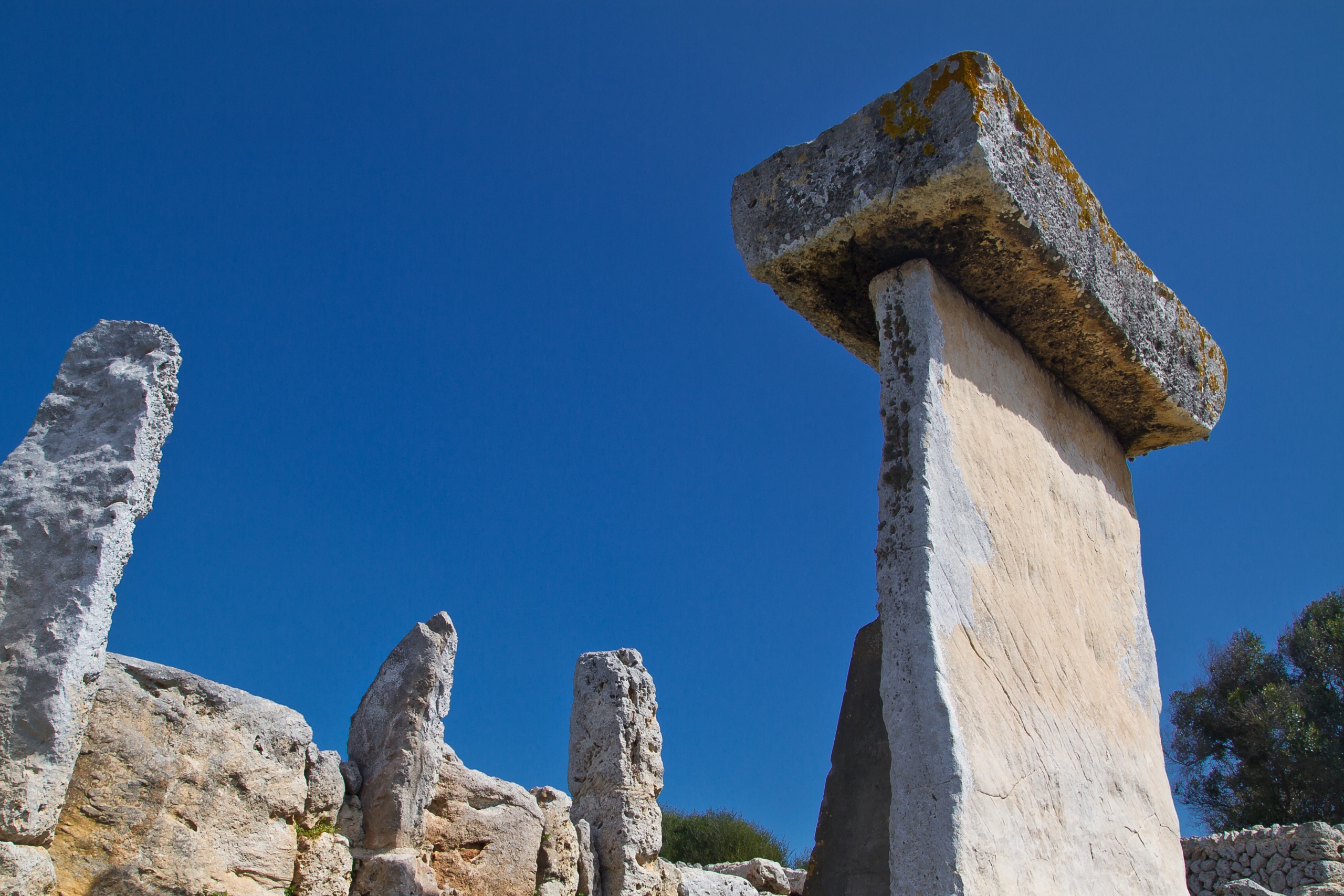
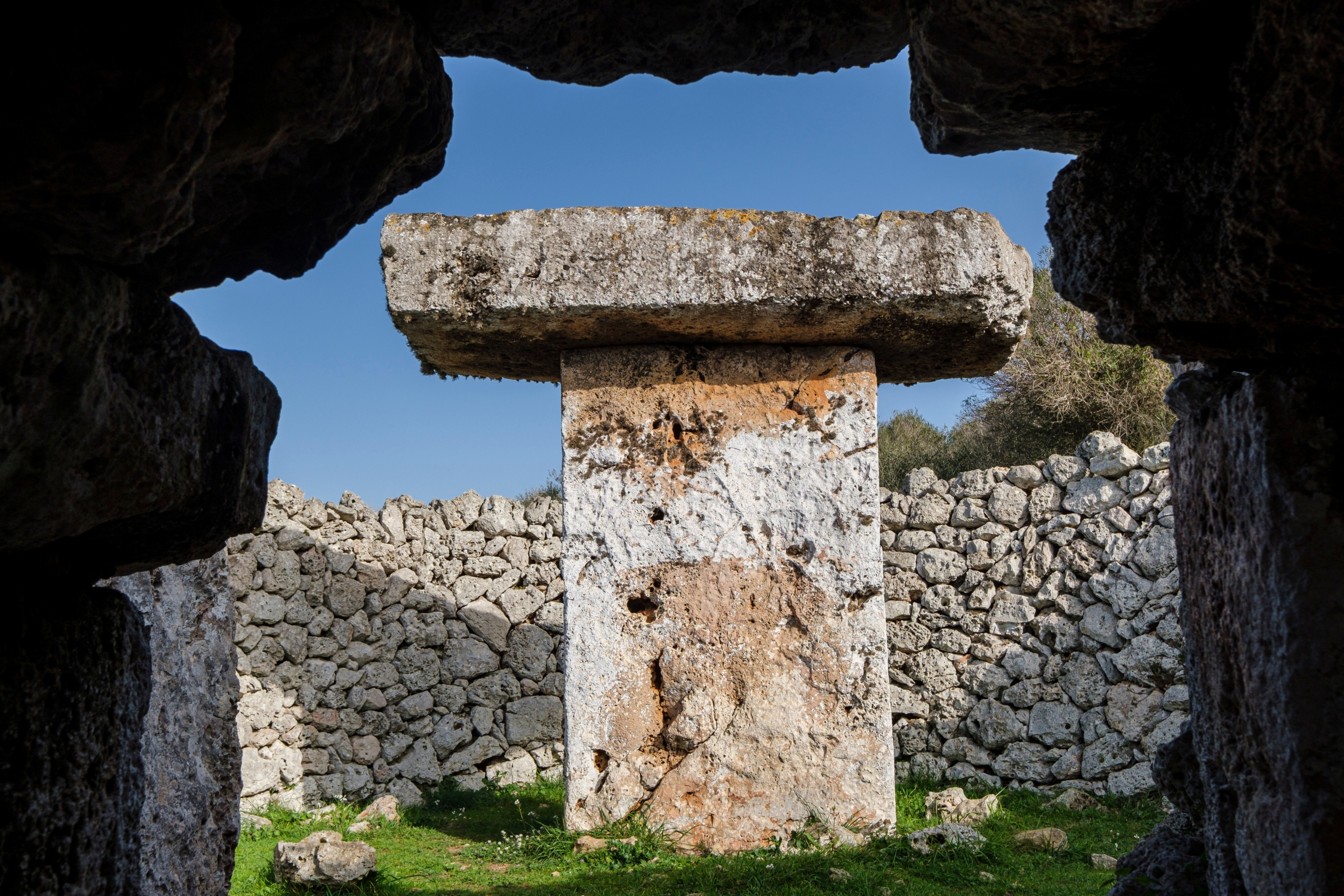
In Menorca, for example, talaiots are often paired with taulas, T-shaped monoliths whose axial orientation hint at religious and/or astronomical functions. These sites were not built haphazardly; they formed part of a sacred geography in which stone structures articulated cosmological meaning.
The resemblance to other prehistoric ritual centers is not superficial. Like Göbekli Tepe in southeastern Anatolia – constructed over 6,000 years earlier – Balearic talaiots suggest the gathering of dispersed communities for ritual events centered on stone-built symbols. Though the cultural contexts differ profoundly, both sites show that monumental construction preceded or paralleled settled agriculture and state formation, indicating that belief systems and collective memory may have catalyzed early architectural complexity.
Pilgrimage before doctrine
To speak of pilgrimage in the prehistoric Balearics is necessarily speculative. There are no written prayers, no named deities, no canonized traditions. Yet, the repetition of forms, the placement of talaiots in relation to each other, and the presence of ceremonial objects – including bronze votive offerings and faunal remains – suggest rhythmic human movement to these sites. Seasonal festivals, initiation rites, funerary rituals, or astronomical observances could all have drawn people repeatedly to these same stones.
Pilgrimage here must be understood not as a journey toward a final destination but as a circulation – between life and death, land and sky, human and animal. The talaiots may have functioned as ceremonial thresholds, liminal zones where the community gathered to rearticulate its social bonds and cosmological position.
Some scholars propose that the route between settlements – marked by aligned structures or sightlines to the sea or solar events – constituted a form of sacred pathway. These may have operated like proto-processional routes, threading together ancestral presence, seasonal rhythms, and collective identity in the absence of centralized temples.
Endurance in stone
The Talaiotic culture eventually faded, absorbed by Phoenician traders, Roman expansion, and Christianization in late antiquity. Yet the stones remain. Today, sites like Capocorb Vell in Mallorca or Torre d’en Galmés in Menorca attract visitors drawn by the power of their silence. These are not functioning pilgrimage sites in a religious sense, but they are memorial landscapes – places where the very act of approaching them invokes a sense of time layered in stone.
Their endurance parallels other prehistoric ritual architectures around the world, from Britain’s stone circles to the Cycladic figurines of the Aegean. Each represents a kind of lithic memory, where human intention – spiritual, communal, aesthetic – is pressed into enduring forms.
AI Transparency Notice
PilgriMaps uses artificial intelligence tools to assist in the research, drafting and translation of editorial content. All AI-assisted content is reviewed, edited and verified by our editorial team before publication. We contrast information against primary sources, specialist literature and on-the-ground knowledge to ensure accuracy, cultural sensitivity and editorial integrity.
AI is one tool among many in our workflow. The judgement, curation and responsibility for everything published on this platform remain entirely human.
Viator Media S.L. — in compliance with the EU Artificial Intelligence Act (Regulation EU 2024/1689).
This post is also available in: