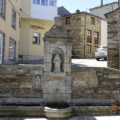
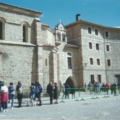
The Cathedral of L’Aquila, officially the Metropolitan Cathedral of Saints Maximus and George, is a central symbol of religious and cultural life in the city. As the seat of the archdiocese, it has served as a spiritual hub since its foundation in the 13th century, when L’Aquila became an episcopal see under Pope Alexander IV. The cathedral holds profound significance for the community, housing the relics of Saint Maximus, patron saint of the city, and serving as a site of major liturgical celebrations and pilgrimages.
Artistically, the cathedral is a testament to centuries of craftsmanship and evolving architectural styles. The neoclassical facade, completed in 1928, and the Baroque interior with a Latin cross layout highlight the building’s artistic evolution. It houses masterpieces such as the tomb of Cardinal Amico Agnifili by Silvestro dell’Aquila and frescoes by renowned artists like Francesco da Montereale and Venanzio Mascitelli. These elements, combined with its religious role, make the cathedral not only a historical monument but also a beacon of faith and cultural heritage.
- Address
P.za Duomo, L’Aquila, Italy - Web
None - Visiting Hours
Every day from 9:15 to 20:15 - What to see
Paintings by Francesco di Montereale and Baccio Carpi
AI Transparency Notice
PilgriMaps uses artificial intelligence tools to assist in the research, drafting and translation of editorial content. All AI-assisted content is reviewed, edited and verified by our editorial team before publication. We contrast information against primary sources, specialist literature and on-the-ground knowledge to ensure accuracy, cultural sensitivity and editorial integrity.
AI is one tool among many in our workflow. The judgement, curation and responsibility for everything published on this platform remain entirely human.
Viator Media S.L. — in compliance with the EU Artificial Intelligence Act (Regulation EU 2024/1689).
This post is also available in: