Set on the windswept Altiplano near the southern shore of Lake Titicaca, the ruins of Tiwanaku emerge from the earth like fractured geometry—cyclopean stones, carved monoliths, and ceremonial platforms scattered across a stark, luminous landscape. Though its empire vanished long before Inka expansion and Spanish colonization, Tiwanaku remains a sacred site of memory and identity in the Andean world. For centuries, it has drawn pilgrims, scholars, and seekers to its altars and horizons.
Long before the rise of Cusco, Tiwanaku functioned as a ritual and astronomical center, embedded in the cyclical logic of the Andean cosmos. It was not a city in the urban sense, but rather a ceremonial capital, perhaps the most influential in pre-Inka South America, sustained by agricultural surplus and seasonal movement.
Tiwanaku: An ancient Andean pilgrimage center
At its peak between 600 and 1000 CE, the Tiwanaku polity extended across the southern Andes—from present-day Bolivia into parts of Peru, Chile, and Argentina. But its core remained fixed on the Altiplano, where a complex of ritual architecture and hydrological engineering transformed highland terrain into sacred space.
Pilgrimage in Tiwanaku culture likely involved more than a journey to a temple; it was a passage through cosmic architecture. Movement across thresholds, plazas, sunken courts, and stairways enacted a dialogue between past and future, life and death, earth and sky. Pilgrims may have traveled from distant communities to offer maize beer (chicha), llamas, or textiles to ancestral forces associated with the site.
Though no written language survives to describe the rituals, archaeological evidence suggests that Tiwanaku functioned as a center for seasonal rites, solar observances, and political-religious gatherings—a ceremonial attractor at the heart of a loose federation of settlements.
Kalasasaya and the architecture of time
The most prominent structure at Tiwanaku is the Kalasasaya, a large elevated ceremonial platform built from finely cut sandstone blocks. Its name, meaning “standing stones” in Aymara, refers to the massive vertical slabs that enclose the rectangular space. Within this enclosure stands the Ponce Monolith, a carved figure nearly three meters tall, holding ritual objects and wearing a tunic that evokes cosmic order.
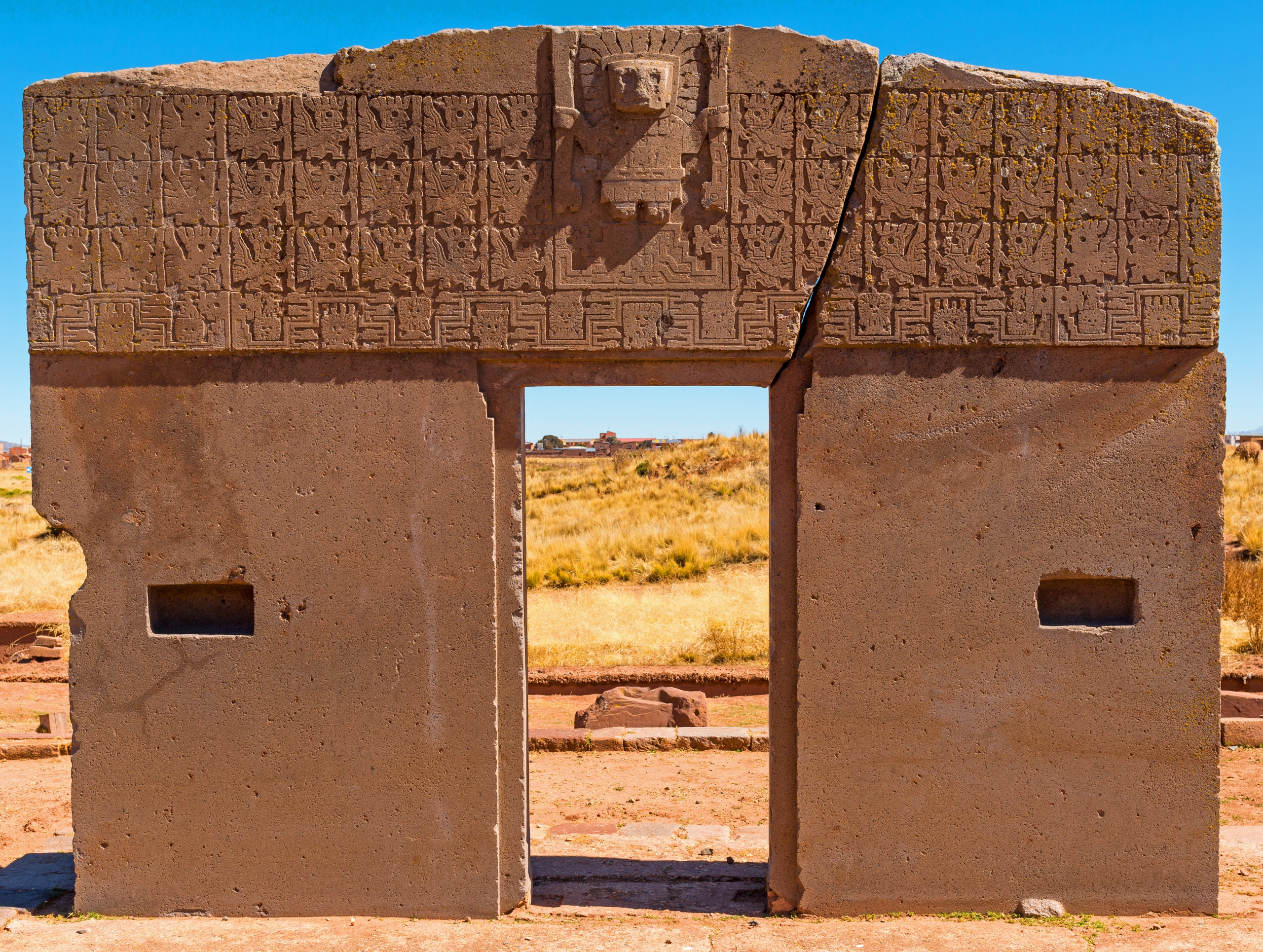
At the western edge of Kalasasaya stands the Gate of the Sun—perhaps Tiwanaku’s most iconic element. Carved from a single block of stone, the gate contains complex iconography centered on a radiant figure sometimes interpreted as a solar deity or sky-being. Radiating from this figure are rows of smaller winged beings, perhaps messengers or celestial attendants.
Crucially, the architecture aligns with solstitial points. During the June solstice, the sun rises and sets precisely between specific portal stones, indicating that Kalasasaya was engineered to track solar movement and regulate ceremonial time. These alignments transformed the structure into a calendrical instrument, tying collective ritual to agricultural cycles and celestial order.
Puma Punku: Megalithic precision and mythic imagination
To the southwest of the main complex lies Puma Punku, a monumental platform known for its enigmatic masonry. Gigantic stone blocks—some weighing over 100 tons—are cut with astonishing precision, featuring intricate recesses, drill-holes, and dovetail joints.
While much of Puma Punku has collapsed or been quarried over the centuries, its scale and complexity suggest it was the focus of high-status rituals, perhaps related to origins or the underworld. Some Andean oral traditions regard Puma Punku as a primordial site, the place from which the ancestors first emerged.
Tiwanaku in the Inka and postcolonial imaginary
By the time the Inka expanded into the Titicaca Basin in the 15th century, Tiwanaku had long since fallen into decline. Yet it retained symbolic power. The Inka incorporated its ruins into their own narratives of origin, identifying it as a foundational space where the first humans were created. The Inka ruler Tupac Yupanqui is believed to have visited the site during his southern campaigns, performing rituals to link imperial legitimacy to ancestral ground.
In the colonial and republican periods, Tiwanaku continued to serve as a site of indigenous memory—at times marginalized, at times reclaimed. In the 20th century, archaeologists and nationalist movements reinterpreted the ruins as evidence of a glorious pre-Hispanic civilization, helping to forge new narratives of Bolivian identity.
Today, Tiwanaku is more than an archaeological zone; it is an active place of ritual practice, especially during the Andean New Year on the June solstice. Thousands gather to greet the rising sun at Kalasasaya, a modern pilgrimage rooted in ancient cosmology and revitalized tradition.
Visiting Tiwanaku: Logistics and ethical travel
Located about 70 kilometers west of La Paz, Tiwanaku is accessible via road, with regular buses and guided tours operating from the capital. The site is open to visitors year-round, though June 21 sees the highest concentration of activity due to solstice celebrations.
Highlights include:
Museo Lítico de Tiwanaku: Housing the original Bennett Monolith and other major sculptures
Akapana Pyramid: A partially reconstructed step pyramid once associated with water rituals
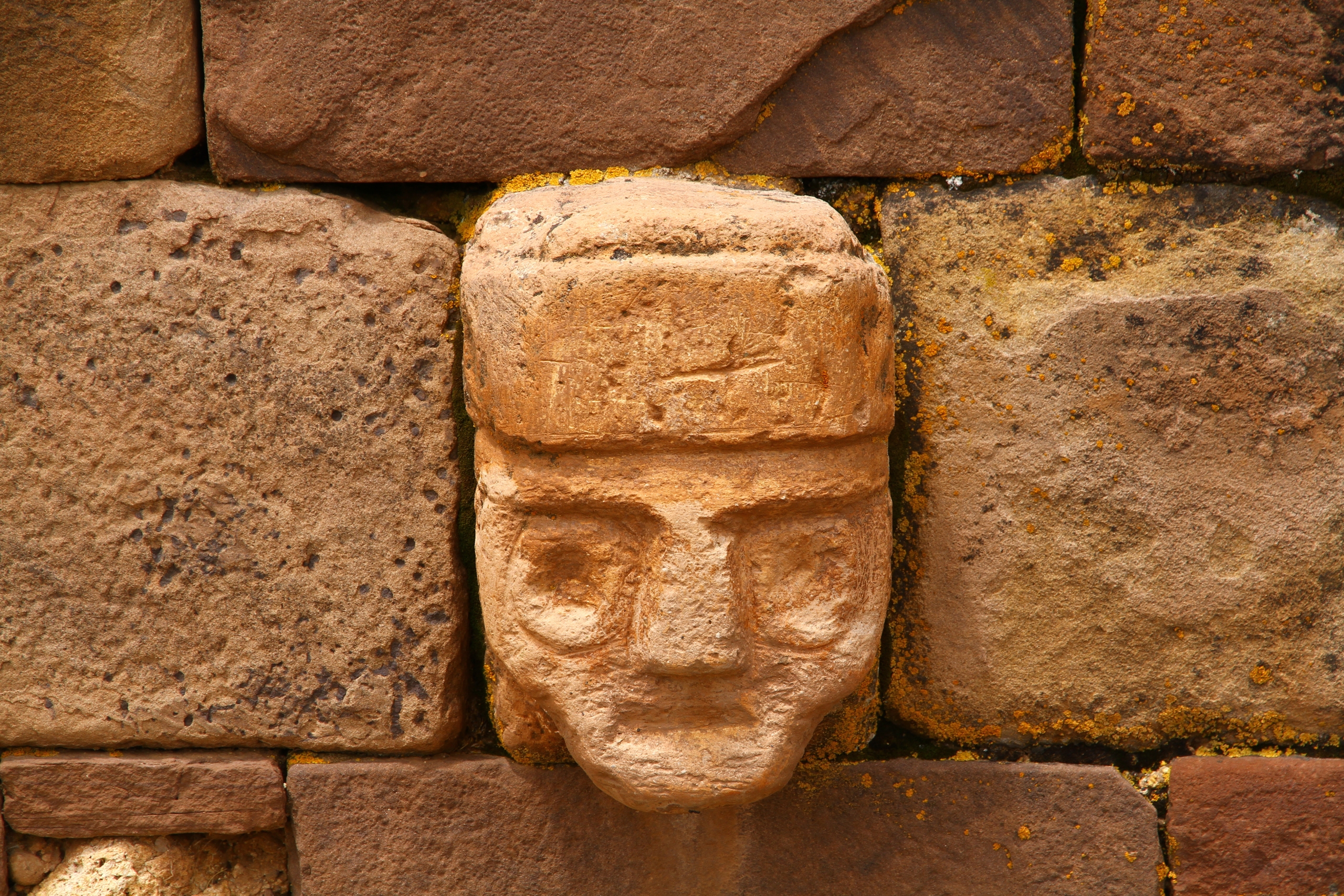
Semisubterranean Temple: A sunken courtyard lined with carved heads, possibly representing ancestral lineages or conquered peoples
Visitors are advised to respect the ongoing ritual significance of the site, especially during indigenous ceremonies. Photography is generally permitted, though drone use may be restricted.
Beyond the ruins: Pilgrimage as reconnection
To walk through Tiwanaku is to engage with deep time and cultural endurance. The site offers no single narrative—only layers of alignment, stone, memory, and return. For Andean communities today, pilgrimage to Tiwanaku is an act of reconnection: with ancestors, with land, with sky.
For travelers, it provides an entry point into a non-linear understanding of the sacred—a landscape where cosmology is carved in stone, and where the journey itself is part of the ritual.
AI Transparency Notice
PilgriMaps uses artificial intelligence tools to assist in the research, drafting and translation of editorial content. All AI-assisted content is reviewed, edited and verified by our editorial team before publication. We contrast information against primary sources, specialist literature and on-the-ground knowledge to ensure accuracy, cultural sensitivity and editorial integrity.
AI is one tool among many in our workflow. The judgement, curation and responsibility for everything published on this platform remain entirely human.
Viator Media S.L. — in compliance with the EU Artificial Intelligence Act (Regulation EU 2024/1689).
This post is also available in: