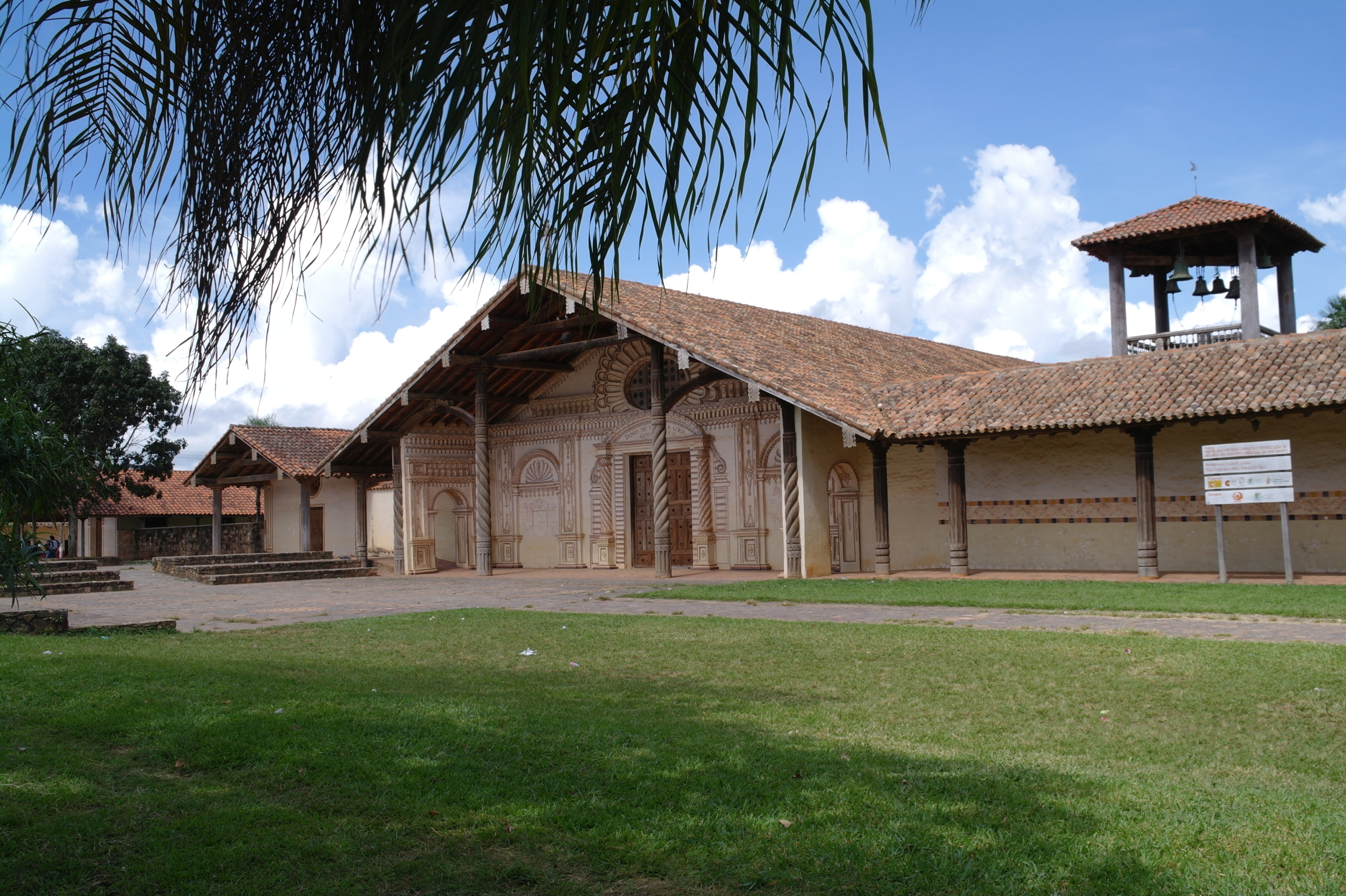
The San Javier Mission, founded in 1691 by Father José de Arce, was the first missionary settlement established by the Jesuits in the Chiquitano region of Bolivia. This mission, considered the starting point for the foundation of other cities and missions in the area, has played a crucial role in the cultural and religious development of the region. In addition to being an important religious center, San Javier stands out for its musical heritage, being home to the first music school founded by Father Martin Schmid in 1730. This musical tradition is kept alive today with the preservation of historical musical instruments and the production of violins, harps and other instruments in a local workshop.
San Javier is also known for its outstanding local crafts and gastronomy, with villagers skilled in weaving and dairy products. Its colonial architecture, with a temple and mission house restored between 1987 and 1993, attracts visitors interested in exploring the region’s rich history and culture. As part of the Music Route in Bolivia, San Javier plays a key role in the preservation and promotion of Jesuit Baroque musical traditions, offering visitors a unique experience where they can immerse themselves in the music, crafts and history of the Chiquitano region.
-
- Address
PFGV+5WJ, 10, San Javier, Bolivia - Web
None - Visiting Hours
Everyday from 8:30 to 12:00 and from 14:00 to 18:00 - What to see
Ancient church from colonial times
- Address



AI Transparency Notice
PilgriMaps uses artificial intelligence tools to assist in the research, drafting and translation of editorial content. All AI-assisted content is reviewed, edited and verified by our editorial team before publication. We contrast information against primary sources, specialist literature and on-the-ground knowledge to ensure accuracy, cultural sensitivity and editorial integrity.
AI is one tool among many in our workflow. The judgement, curation and responsibility for everything published on this platform remain entirely human.
Viator Media S.L. — in compliance with the EU Artificial Intelligence Act (Regulation EU 2024/1689).
This post is also available in: