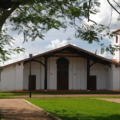
The Church of El Salvador in Arrubal is an architectural and artistic treasure that reflects the evolution of religious construction over the centuries. Built in the first half of the 16th century, it has a nave with three bays covered with a ribbed ceiling and an octagonal chancel with three panels. Its lateral chapels and the tower with two octagonal floors stand out. The main altarpiece, the work of the Romanist master Juán Fernández Vallejo, is a piece of great artistic value, with polychrome carvings of the Evangelists and a Mannerist Christ guarded by the Virgen Dolorosa and San Juan. In addition, the church houses other treasures, such as a 17th century baptismal font and precious 18th century rococo pediments.
The church also has valuable pieces of imagery, such as the carvings of San Antonio Abad and San Antonio de Padua, patron saints venerated in Arrúbal. On the exterior, the 16th century county coat of arms in the chapel of the Rosary evokes the history and connection of the church with the Cistercian Order. These elements, together with the main altarpiece and other ornamental details, make the Church of the Savior a place of great historical and cultural importance in Arrúbal.
- Address
C. la Iglesia, 3, Arrúbal, La Rioja - Web
https://www.arrubal.com/index.php/turismo/puntos-intereses/243-iglesia-salvador - Visiting Hours
Sunday from 13:00 to 14:00 - What to see
Altarpiece, imaginery, Baptismal font
AI Transparency Notice
PilgriMaps uses artificial intelligence tools to assist in the research, drafting and translation of editorial content. All AI-assisted content is reviewed, edited and verified by our editorial team before publication. We contrast information against primary sources, specialist literature and on-the-ground knowledge to ensure accuracy, cultural sensitivity and editorial integrity.
AI is one tool among many in our workflow. The judgement, curation and responsibility for everything published on this platform remain entirely human.
Viator Media S.L. — in compliance with the EU Artificial Intelligence Act (Regulation EU 2024/1689).
This post is also available in: