In a misty corner of ancient Armorica, resistance to Roman rule did not take shape only through village defiance or legendary potions. Another, quieter form of endurance also emerged – one that proved far more lasting. It arrived by sea, carried by itinerant religious figures from across the Channel, equipped not with weapons but with staffs, stoles, and a worldview that blended ascetic discipline with a vivid symbolic imagination.
In Brittany, a land dense with legends, stories circulated of men who confronted dragons, tamed wolves, and officiated rituals from the backs of whales. These were not figures from popular fiction but the foundational characters of a regional tradition that still feels distinct within France. In Breton narrative culture, saints killed dragons – quite literally, according to medieval sources.
Within the Christian imagination of the Middle Ages, the slaying of a dragon functioned as more than a dramatic exploit. It symbolized the imposition of order over chaos, of a new moral framework over older cosmologies. Saints, portrayed as agents of this transformation, took on roles comparable to later chivalric heroes, though without swords or armor. Few regions in Europe developed this narrative with as much intensity or consistency as Brittany.
Seven saints, seven deeds
Brittany’s landscape of moss-covered stone, ancient place names, and enduring folklore is often associated with druids, megaliths, and forests. Alongside these elements stands a group of seven foundational figures, traditionally said to have arrived from Wales or Ireland during the early medieval period. Their stories combine missionary activity with accounts of healing, navigation, and encounters with extraordinary animals.
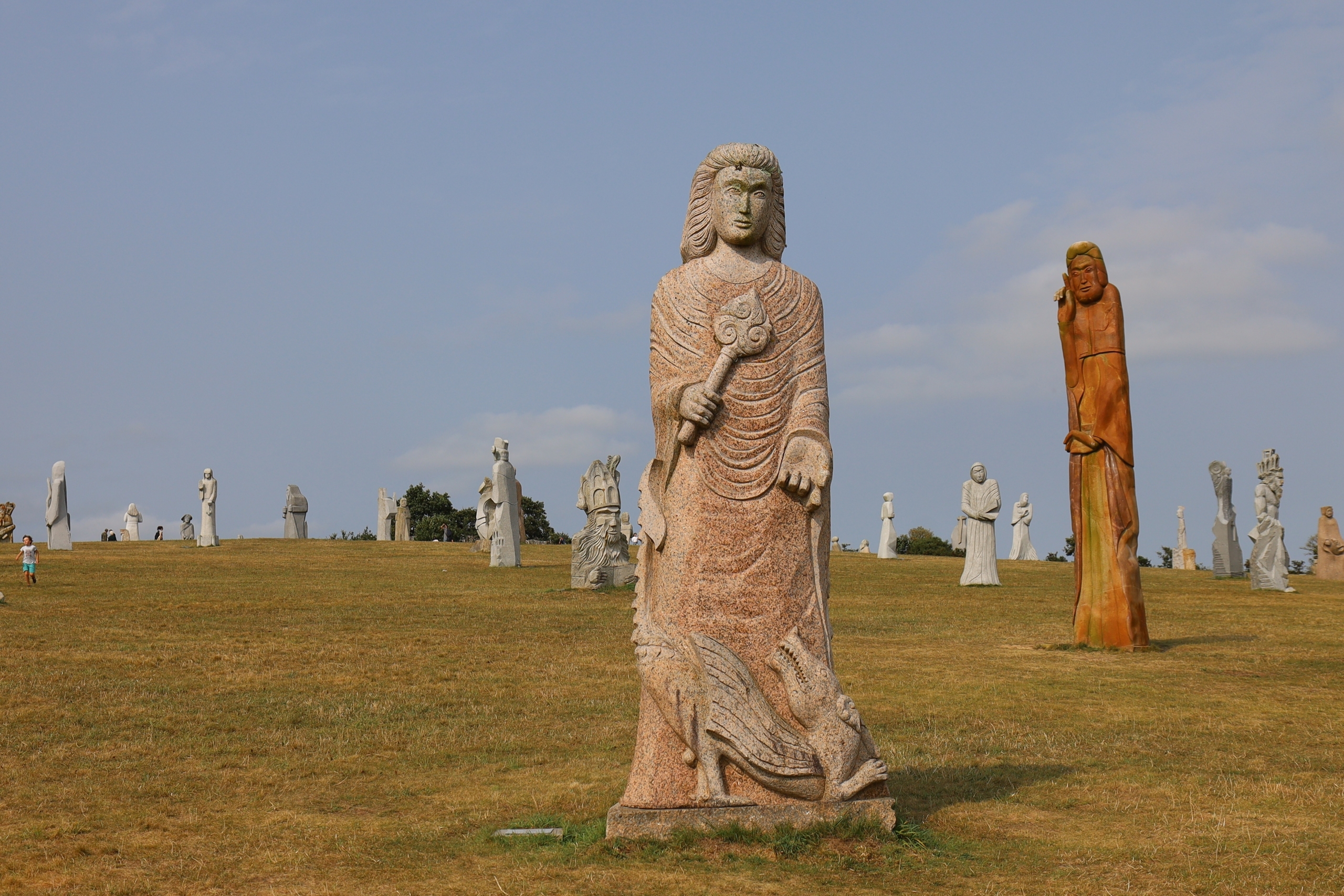
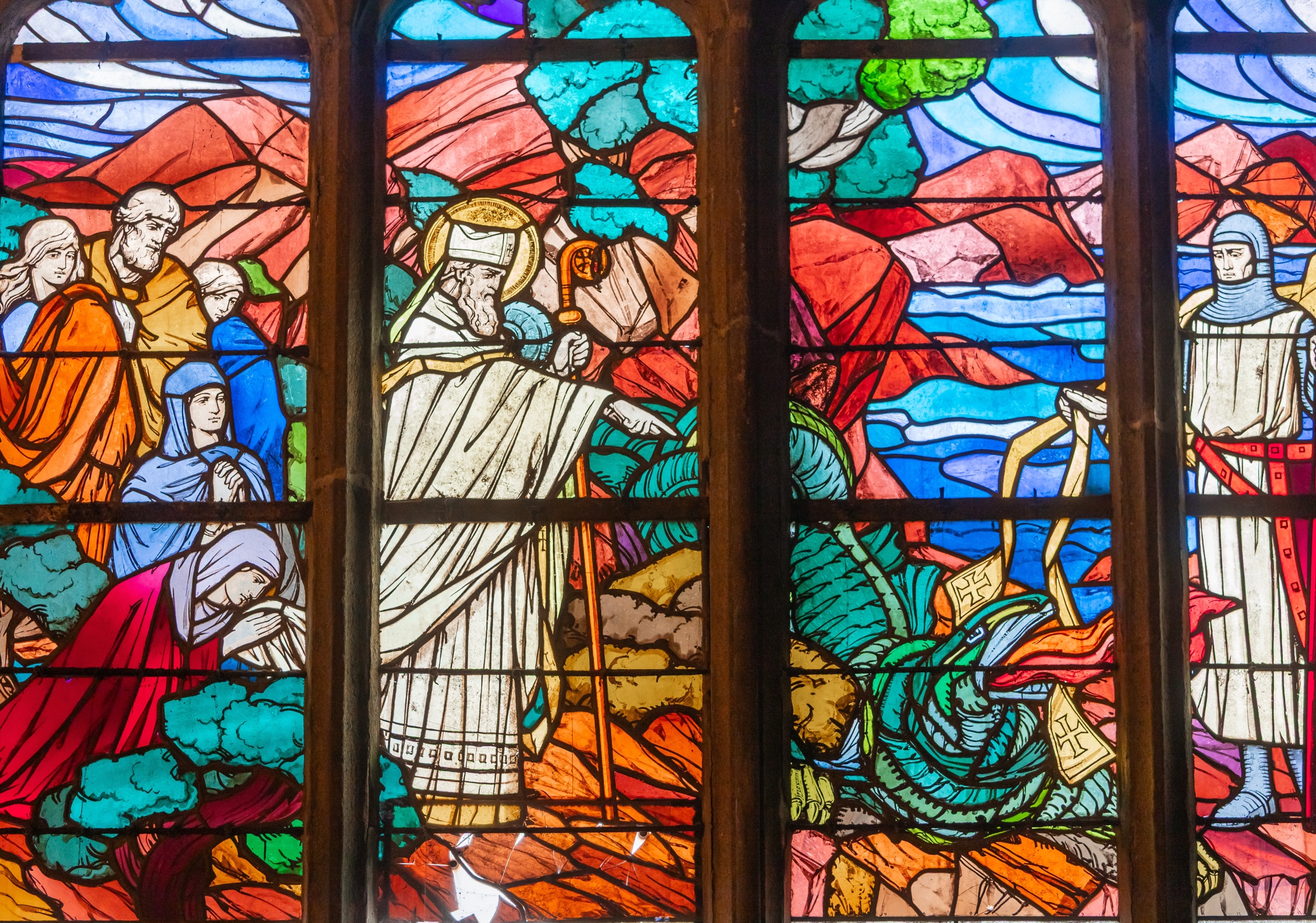
Saint-Pol-de-Léon traces its origins to Pol Aurélien, described as confronting a dragon on the island of Batz. According to tradition, he subdued the creature using his stole, a gesture interpreted symbolically as the triumph of spiritual authority over threat. In Tréguier, Tugdual is associated with a colossal serpent, rendered harmless at the site of his monastic foundation.
Malo, remembered in Saint-Malo, appears in narratives involving sea travel and a famous episode in which he is said to have celebrated a ritual atop a whale. Brieuc, linked to Saint-Brieuc, is portrayed as calming wolves that threatened local communities. Samson, associated with Dol-de-Bretagne, features in accounts of healing and conflict mediation.
Further south, Corentin of Quimper is remembered for the story of a fish that regenerated daily after providing sustenance, while Patern, linked to Vannes, gained recognition only posthumously, when his burial site became a focus of local devotion.
These accounts, preserved in medieval vitae and Breton oral tradition, create a symbolic geography. Each city anchors a narrative that connects place, community, and moral order. Breton religious art reflects this tradition vividly: stained glass, sculptures, and carvings often depict these figures alongside animals, staffs, or maritime elements, situating human activity in constant dialogue with the natural and the fantastic.
Beasts as symbols
In this narrative system, animals function as more than decorative motifs. The dragon, as elsewhere in medieval Europe, represents disorder and danger – sometimes explicitly associated with pre-Christian beliefs. Subduing it signals the redefinition of a landscape’s meaning and authority. The stole attributed to Pol Aurélien is not merely clothing but a visual shorthand for institutional legitimacy.
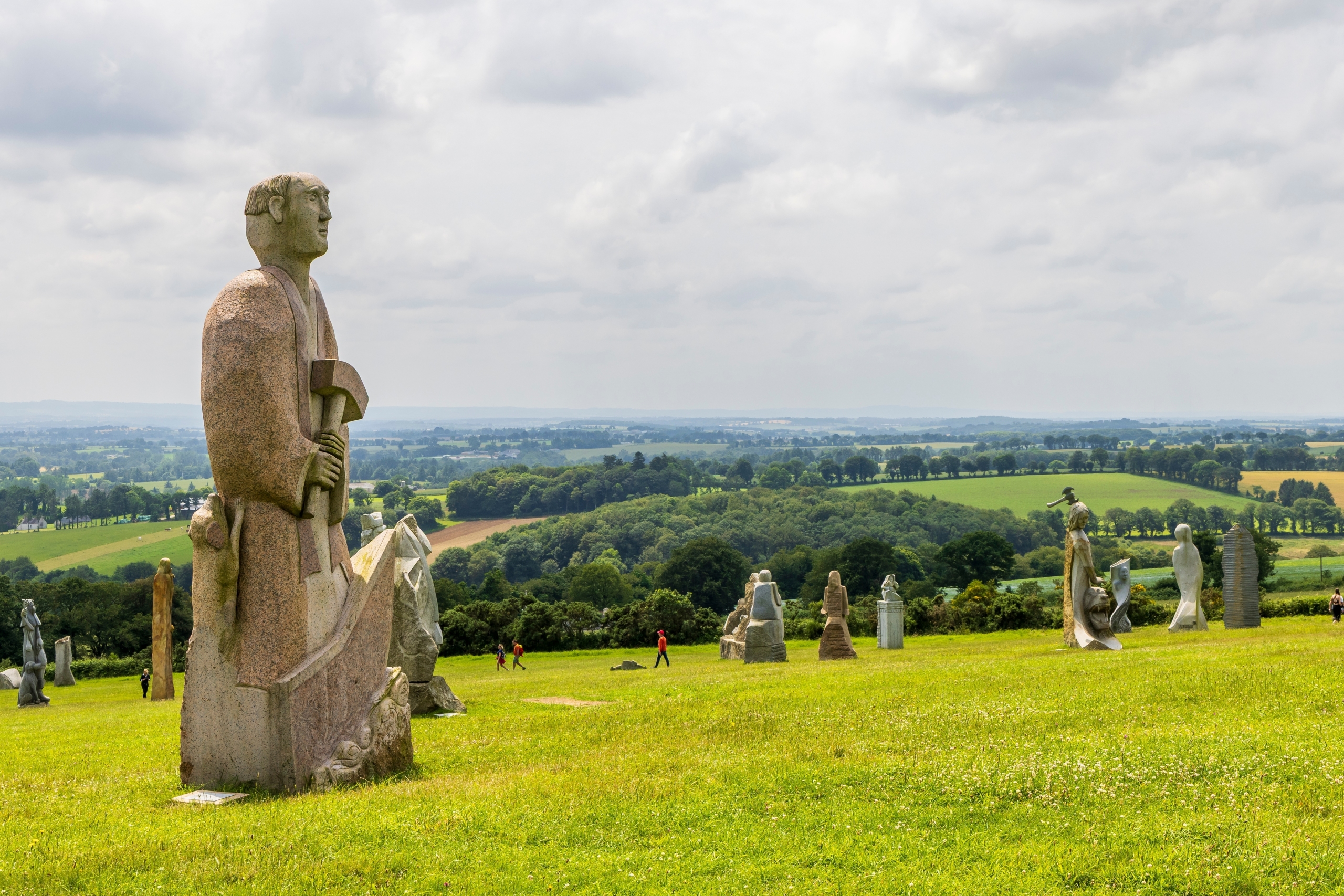
The recurring fish in Corentin’s story echoes older symbolic languages of sustenance and continuity, while wolves and serpents recall elements of earlier Celtic cosmologies, where animals often served as intermediaries between visible and invisible realms. Brittany’s folklore has long blurred the boundary between the tangible and the imagined.
A Celtic Christianity
What distinguishes these figures from other early medieval saints in France is their origin. Most are said to have come from the British Isles, crossing the Channel in fragile vessels or, in legend, by more miraculous means. They brought with them a form of Christianity shaped by monastic austerity, mobility, and a strong engagement with landscape and symbolism.
For centuries, Brittany maintained closer cultural ties to Britain than to inland Gaul. The Breton language remains closely related to Welsh and Cornish, and regional identity proved resilient even during periods of political and cultural centralization. This background helps explain the persistence of practices such as the Tro Breiz, a circular route linking the seven founding cities.
Today, the Tro Breiz has experienced a notable revival. Walked in stages or in full, it functions as a cultural itinerary rather than a strictly religious obligation – an act of historical memory that reconnects participants with local landscapes and narratives.
Walking with dragons
To follow the Tro Breiz today is to move through a terrain shaped by chapels, standing stones, and granite crosses, while stories surface along the path. Dragons are no longer expected, but the symbolic challenges remain: fatigue, uncertainty, or the search for meaning. As with the early travelers whose stories anchor the route, the journey is defined as much by transformation as by distance.
Within this framework, “killing the dragon” reads less as a supernatural feat than as a durable metaphor. It is one of the oldest narrative devices for expressing inner change. And in Brittany – where each stone carries a name and each legend leaves a trace – it remains a compelling way to understand why people still walk these roads today.
Celtic Christian History: Saints, Monasteries, and Pilgrimages
AI Transparency Notice
PilgriMaps uses artificial intelligence tools to assist in the research, drafting and translation of editorial content. All AI-assisted content is reviewed, edited and verified by our editorial team before publication. We contrast information against primary sources, specialist literature and on-the-ground knowledge to ensure accuracy, cultural sensitivity and editorial integrity.
AI is one tool among many in our workflow. The judgement, curation and responsibility for everything published on this platform remain entirely human.
Viator Media S.L. — in compliance with the EU Artificial Intelligence Act (Regulation EU 2024/1689).
This post is also available in: