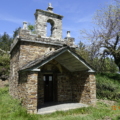
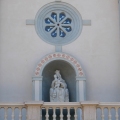
The Convent of San Cosimato, located 30 km east of Rome, has a rich history dating back to the 6th century. Originally dedicated to the medical saints Cosmas and Damian, it was destroyed on several occasions by barbarian invasions and Saracen looting. It was later restored and occupied by various religious orders, including the Benedictines and Cistercians. However, its spiritual importance declined over time and it was eventually annexed to the Abbey of St. Sebastian at the Catacombs. In the 17th century, the Franciscans revitalized it, restoring the church and caves associated with monastic life. The monastery was temporarily suppressed in the 19th century, but was reestablished and restored in the 20th century. Today it functions as a place of spiritual retreat and tourist accommodation, run by a local social cooperative.
The relationship between the Convent of St. Cosimato and St. Benedict of Norcia is significant, as St. Benedict is believed to have lived in these caves before moving permanently to Subiaco. The caves attached to the convent are of historical and spiritual importance, as important events in St. Benedict’s life, such as an attempted poisoning, are believed to have taken place in them. Over the centuries, these caves have been visited by pilgrims and devotees seeking spiritual inspiration. The connection to St. Benedict adds a special element to the Convent of St. Cosimato, making it an important destination for those interested in the history and spirituality of this holy founder of Western monasticism.
- Address
Vicovaro, Metropolitan City of Rome Capital, Italy
- Web
https://www.vicovaroturismo.it/localita-chiesa-dei-ss-cosma-e-damiano - Visiting Hours
Unknown - What to see
St Benedict’s grotto
AI Transparency Notice
PilgriMaps uses artificial intelligence tools to assist in the research, drafting and translation of editorial content. All AI-assisted content is reviewed, edited and verified by our editorial team before publication. We contrast information against primary sources, specialist literature and on-the-ground knowledge to ensure accuracy, cultural sensitivity and editorial integrity.
AI is one tool among many in our workflow. The judgement, curation and responsibility for everything published on this platform remain entirely human.
Viator Media S.L. — in compliance with the EU Artificial Intelligence Act (Regulation EU 2024/1689).
This post is also available in: