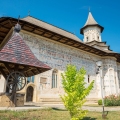
San Pedro el Viejo de Huesca, a national monument since 1885, is an architectural and spiritual treasure in the heart of the old town of Huesca. Its history dates back to the 12th century, when it was founded as a Benedictine monastery, becoming the longest royal seat of the Middle Ages in Spain, housing the remains of kings such as Ramiro II and Alfonso I. This Romanesque building, with its impressive historiated capitals and rectangular cloister, is a living testimony to the rich history of Aragon and Spain. Over the centuries, it has witnessed political and architectural changes, but has endured as a symbol of the faith and cultural greatness of the region.
San Pedro el Viejo de Huesca is much more than a place of worship; it is a melting pot of history and art that invites visitors to immerse themselves in its fascinating past. From its impressive barrel vaults to its Renaissance altarpieces and Gothic artwork, every corner of this temple breathes history and devotion. Although it has suffered periods of deterioration and restoration over the centuries, its splendor and relevance as a cultural and spiritual reference point in Huesca have never waned. Today, it remains an essential destination for those wishing to explore the rich religious and cultural heritage of Aragon.
- Address
San Pedro sq 1, Huesca (Spain) - Web
https://www.sanpedroelviejo.com/ - Visiting Hours
Monday to Friday from 10:00 to 14:00 and from 16:00 to 18:00. Saturday from 10:00 to 14:30. Sunday closed. - What to see
Romanesque church and cloister


Photo Credit
Carmen Alvarez
AI Transparency Notice
PilgriMaps uses artificial intelligence tools to assist in the research, drafting and translation of editorial content. All AI-assisted content is reviewed, edited and verified by our editorial team before publication. We contrast information against primary sources, specialist literature and on-the-ground knowledge to ensure accuracy, cultural sensitivity and editorial integrity.
AI is one tool among many in our workflow. The judgement, curation and responsibility for everything published on this platform remain entirely human.
Viator Media S.L. — in compliance with the EU Artificial Intelligence Act (Regulation EU 2024/1689).
This post is also available in: